




















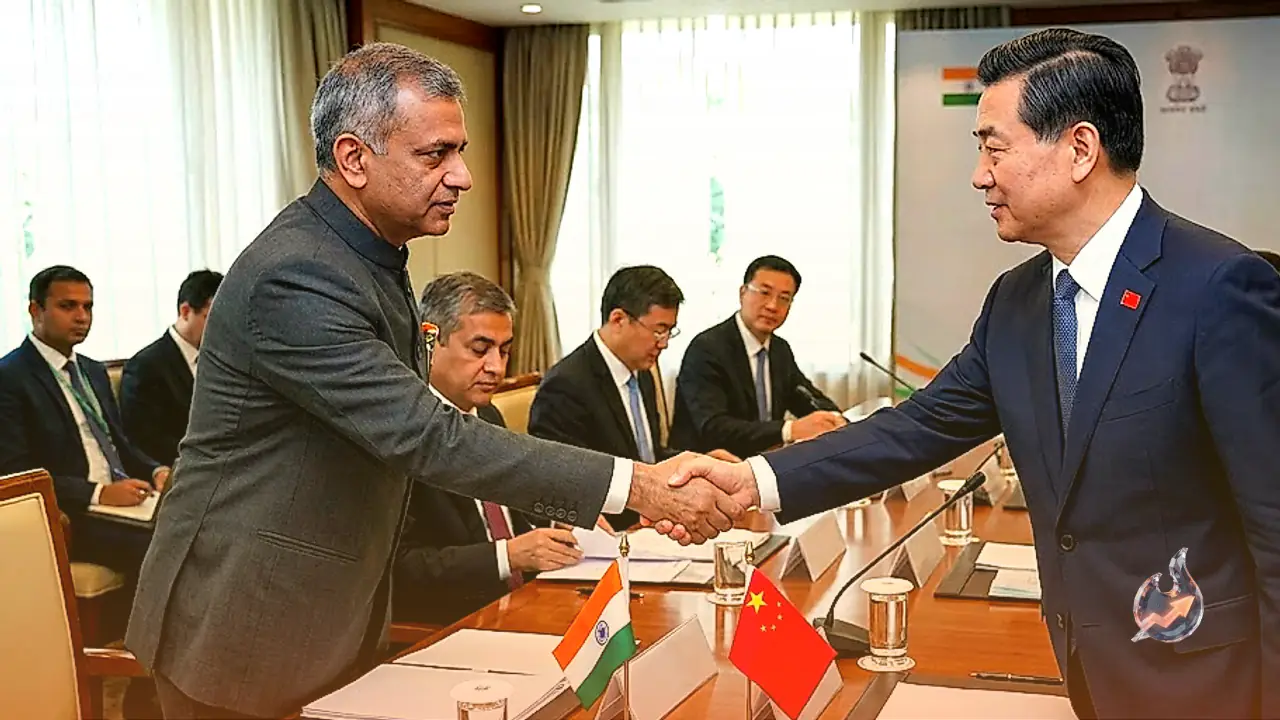

Border stability remains the core condition for diplomatic engagements between India and China. On August 6, officials from both nations gathered in New Delhi for the 36th meeting of the Working Mechanism for Consultation and Coordination on India-China Border Affairs (WMCC). The dialogue went beyond routine consultations to conduct a comprehensive review of the current situation along the Line of Actual Control (LAC). The Indian delegation was led by Sujit Ghosh, Joint Secretary (East Asia) in the Ministry of External Affairs, while the Chinese side was headed by Hou Yanqi, Director-General of the Department of Boundary and Oceanic Affairs of the Ministry of Foreign Affairs. The primary takeaway from the discussion was that advancing broader bilateral relations is inextricably linked to maintaining peace along the frontier.
Sustained Diplomatic and Military Channels for Miscalculation Prevention
During the sessions, negotiators addressed pending border issues while agreeing to maintain robust operational links to avoid miscalculations or misunderstandings. Both sides re-emphasized the importance of existing diplomatic and military mechanisms, including local commander-level meetings alongside WMCC channels. The rationale behind keeping these pathways active is to prevent localized friction from escalating, recognizing that frontier tranquility directly dictates the overall trajectory of bilateral diplomacy.
Frontier Peace as the Foundation for Bilateral Growth
According to the Ministry of External Affairs, both sides underscored that preserving peace and tranquility in border areas is fundamental to the overall development of bilateral relations. The participants reviewed the ground status along the LAC through candid discussions. A shared understanding emerged that resolution of boundary questions must rely strictly on established bilateral protocols and peaceful dialogue mechanisms.
Comprehensive Deliberations on Border Management and Cooperation
The dialogue built upon the outcomes of the 24th Special Representatives (SR) talks, covering structured agendas such as boundary demarcation, border management, mechanism building, and cross-border cooperation. As both countries seek to prevent fresh tension along the frontier, sustaining functional communication remains vital. Both sides stressed keeping field-level commander channels functional to resolve local incidents before they give rise to larger disagreements.
Deliberations on Transborder Rivers and Data Sharing
India prominently brought up the issue of transborder rivers during the meeting. The Indian delegation underlined the necessity of convening the next meeting of the expert-level mechanism at an early date. Furthermore, India highlighted the importance of sharing technical details and hydrological data regarding upstream river projects. Given the sensitivity surrounding shared water resources, regular exchanges between technical experts are viewed as crucial for constructing mutual confidence.
Inter-Departmental Representation and Future Outlook
Statements from the Chinese Foreign Ministry reflected agreement on preserving communication across military and diplomatic spheres to safeguard peace in border areas. Co-chaired by Sujit Ghosh and Hou Yanqi, the discussions included representation from foreign affairs, defence, home, and immigration departments of both nations. This broad participation illustrates that frontier management involves multi-agency coordination beyond military commands. The 36th WMCC meeting concluded with a commitment to keep channels of dialogue open, keeping peace along the LAC as a prerequisites for broader bilateral interaction.