



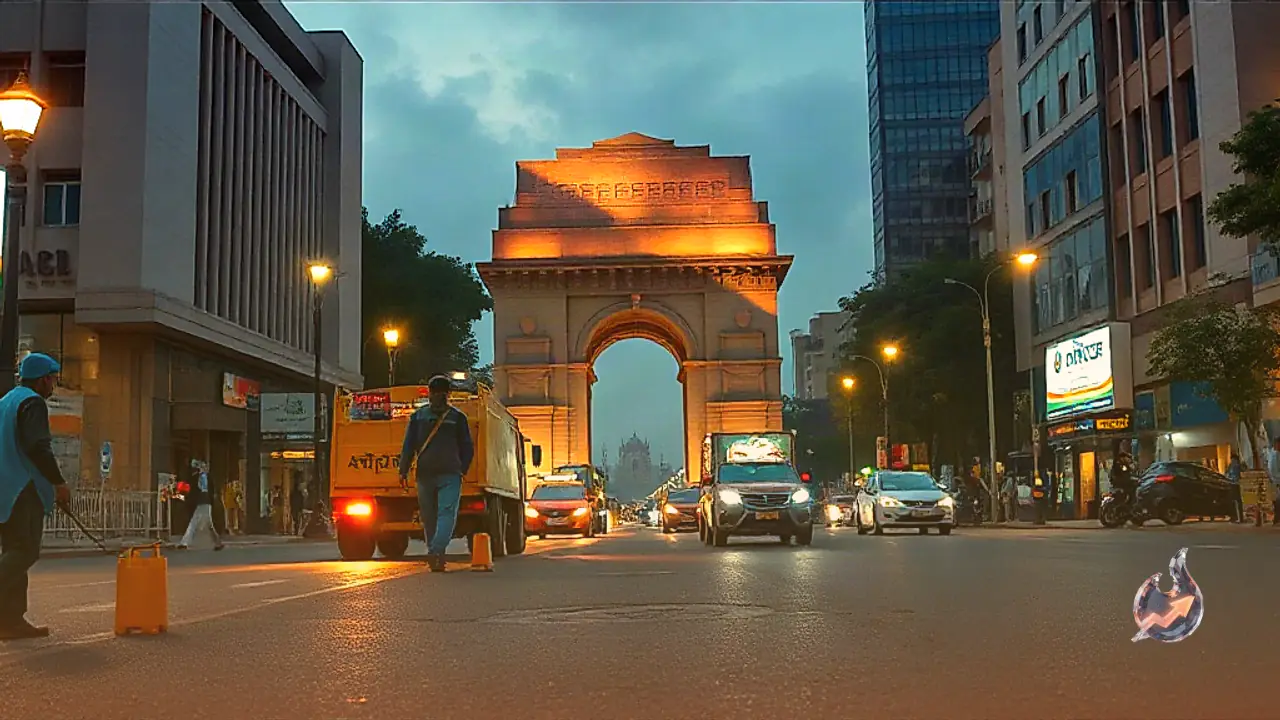

















With the BRICS Summit 2026 set to take place at Bharat Mandapam, the national capital is being scrubbed, swept and polished ahead of the arrival of heads of state and foreign delegations. The New Delhi Municipal Council, known as the NDMC, has rolled out a special sanitation drive across its jurisdiction, extending cleaning work well beyond daylight hours so that the capital's roads and markets look spotless the moment the sun comes up.
Round-The-Clock Shifts Hit Delhi's Roads
The special cleaning arrangement has been in force since September 4. Under it, the NDMC has put close to 300 sanitation workers on duty during the night shift alone, handling everything from sweeping to garbage removal on key roads and stretches. Alongside them, 10 mechanical road sweepers have been deployed on major roads through the night. The idea is straightforward: get the bulk of road cleaning and waste collection done overnight so that streets and public spaces are already clean before the morning rush begins.
Jet Cleaning At Dawn, Three Rounds A Day In Markets
The NDMC's plan goes beyond simply sweeping the streets. The night crew first clears accumulated and scattered garbage and empties dustbins and trolleys placed across the area. Once that is done, roads and public spaces get a jet cleaning early in the morning, essentially a high-pressure wash to leave surfaces looking fresh. The cleaning schedule for major markets has also been tightened considerably, with sanitation work now happening three times a day, in the morning, evening and night. Key roads and important stretches are being kept under constant watch to make sure garbage does not pile up anywhere.
36 Machines Deployed To Speed Up The Cleanup
To push the drive along faster, the NDMC has significantly scaled up its use of machinery. Besides the 10 mechanical road sweepers working the night shift, 15 gobbler machines are being used during the day to collect garbage. On top of that, 11 pressure-jetting machines have been deployed for deep cleaning of roads, footpaths, markets and other public spaces. Taken together, that puts 36 modern machines to work on keeping the capital clean in the run-up to the summit.
Extra Manpower For Markets And Crowded Pockets
Markets, pedestrian pathways and other high-footfall areas are getting additional manual sanitation staff on top of the regular workforce. Garbage collection from homes and shops has also been sped up, so that waste does not pile up in public areas in the meantime. Trolley services used to haul away collected garbage will now run in three shifts, with roughly 120 workers stationed on the evening shift alone, while the rest of the workforce covers the morning shift and handles fresh requirements as they come up.
Supervisory Teams Told To Stay Alert Round The Clock
To make sure sanitation standards do not slip in Delhi's VIP zones and other key areas during the BRICS Summit, the NDMC has directed its supervisory and field teams to remain on alert 24x7. If the situation demands it, leave for sanitation staff could also be restricted or cancelled altogether, underlining how seriously the civic body is treating the run-up to the summit.