


















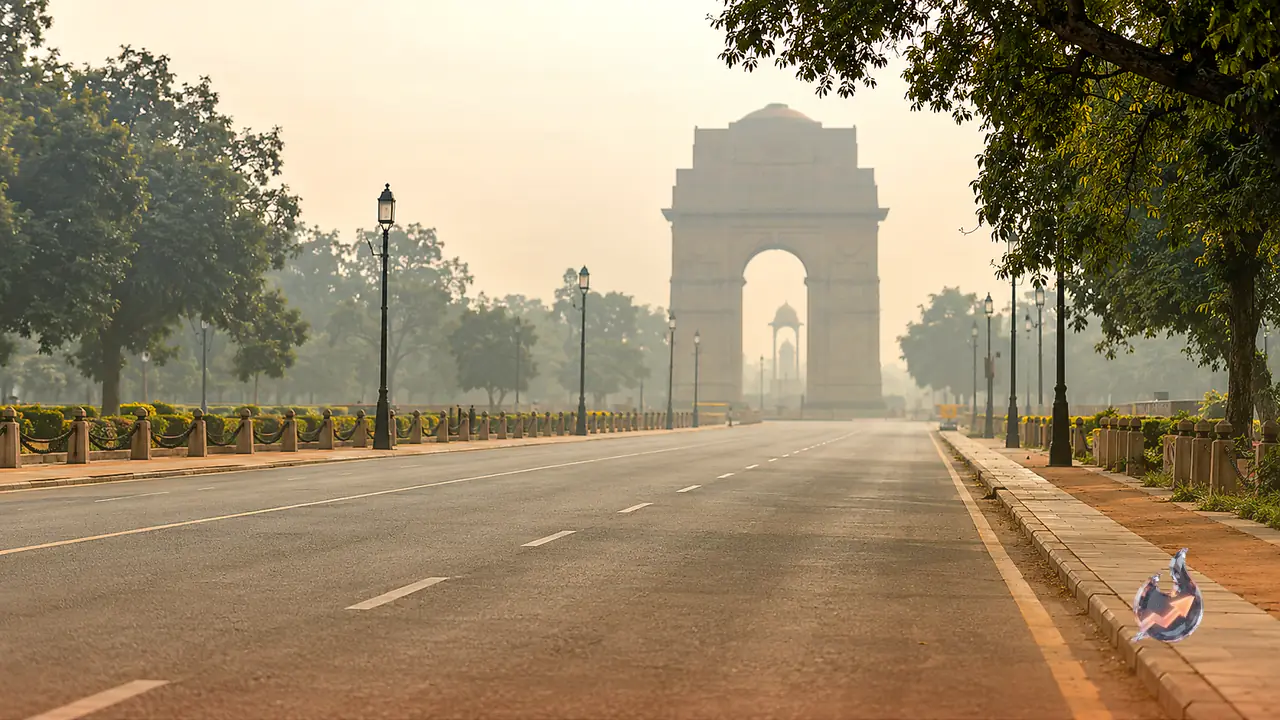

In a concerted effort to keep escalating air pollution levels under strict control during the harsh winter months, the Delhi government is all set to implement a comprehensive Winter Action Plan starting from November 1. Under the framework of this seasonal action plan, all commercial and personal vehicles arriving from outside the capital that do not comply with modern BS-6 emission standards will face a complete entry ban starting November 1 and running through January 31. This straightforward policy means that if your vehicle conforms to older BS-3 or BS-4 norms and happens to be registered outside Delhi, you will not be permitted to enter the national capital during this three-month window. Transport department estimates indicate that this stringent restriction could directly impact more than 10 lakh vehicles arriving from surrounding National Capital Region cities, creating substantial commuting challenges for thousands of daily travelers who depend on seamless interstate movement for their livelihoods.
Surrounding NCR Cities Account for Massive Numbers of Non-Compliant Vehicles
Neighboring industrial and commercial hubs in Haryana such as Gurugram and Faridabad collectively host roughly two lakh vehicles that fail to meet contemporary BS-6 emission criteria. Among these non-compliant vehicles, approximately 70 percent fall squarely into the older BS-3 and BS-4 categories. Departmental projections suggest that these two Haryana districts alone accommodate around 50,000 commercial vehicles that lack proper BS-6 compliance. Moving across to the Uttar Pradesh segment of the NCR, areas like Noida, Greater Noida, and Ghaziabad present an equally concerning picture with over four lakh non-compliant vehicles operating within their boundaries. More than half of these legacy vehicles in Noida and Greater Noida belong to the BS-4 standard, predominantly comprising petrol-driven passenger cars. A senior transport department official noted that Ghaziabad alone accounts for roughly four lakh vehicles that fall short of the BS-6 threshold. These figures collectively highlight the heavy concentration of polluting older fleets operating across these adjacent urban centers.
Daily Commuters and Working Professionals Face the Heaviest Burden
The implementation of this winter restriction plan is expected to generate the most severe disruptions for individuals who must commute daily into Delhi for employment, business operations, and commercial activities. For context, BS-6 compliant vehicles adhere to the nation's newest and most stringent environmental emission standards mandated for motor vehicles. The Bharat Stage norms establish legally binding thresholds for various harmful air pollutants discharged directly from internal combustion engines. To ensure that these regulations are strictly enforced at ground level, administrative authorities are upgrading checkpoint infrastructure along all major territorial entry points surrounding the capital, deploying dedicated enforcement mechanisms to intercept non-compliant traffic before it penetrates deeper into urban zones.
Advanced Border Surveillance Powered by Automated Cameras and AI
To enforce the entry ban effectively across capital perimeters, checking mechanisms along Delhi borders are undergoing major technological strengthening. According to officials, border checkpoints and major arterial routes are now utilizing automated number plate recognition cameras designed to capture and process vehicle registration details instantly. These AI-powered surveillance systems automatically identify incoming vehicles that lack valid emission credentials. A recent report indicates that approximately 300 enforcement personnel will be deployed across active enforcement teams to maintain rigorous checks and penalize violators who attempt to bypass the restricted entry protocols during the winter enforcement period.
Verification Methods for Vehicle Owners and Rules for Local Residents
Vehicle owners seeking to verify whether their automobile meets BS-6 standards can easily check their official registration certificate, where emission compliance details are explicitly documented. Alternatively, motorists can input their vehicle registration particulars into the mParivahan mobile application to ascertain their exact emission category. Addressing two-wheeler applicability, former Delhi Chief Minister Rekha Gupta had stated that these regulations apply universally across petrol, diesel, and CNG-powered vehicle classes. Meanwhile, vehicle owners residing and registering within Delhi must maintain a valid pollution under control certificate, as failing to produce a valid PUCC will result in a denial of fuel dispensing services at local petrol pumps across the capital.