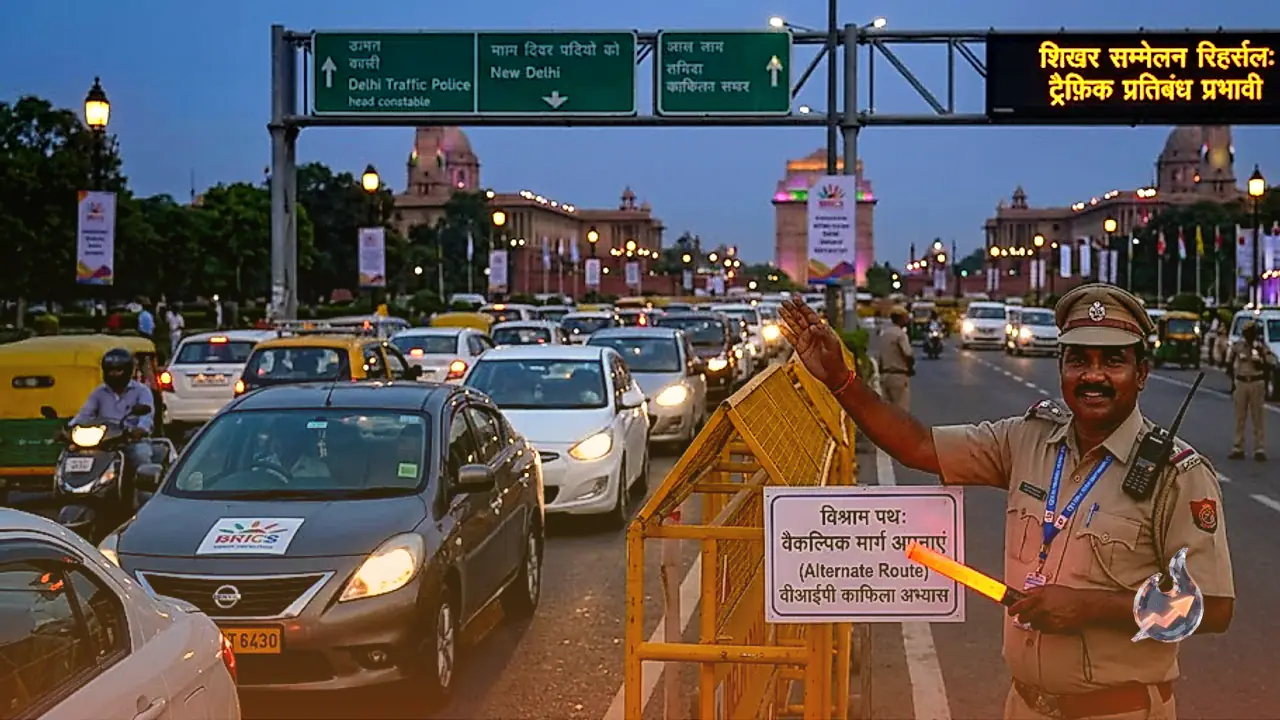





















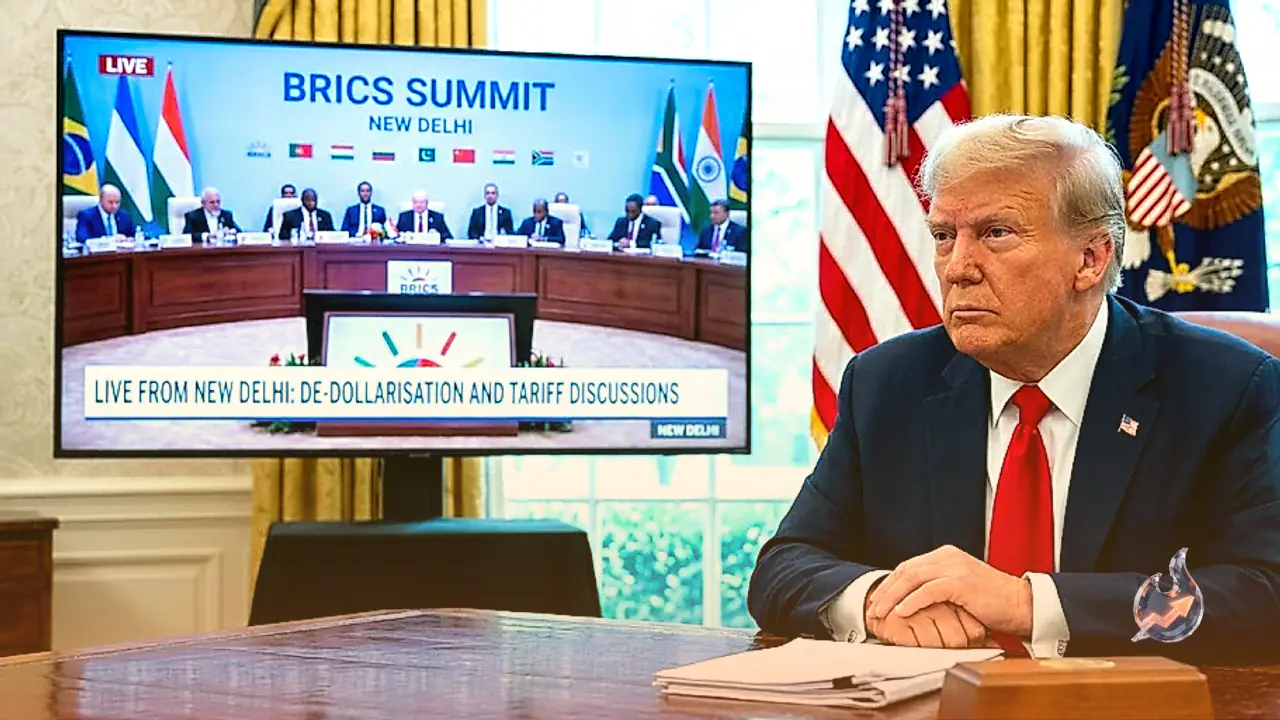

Global diplomatic and economic attention is converging on New Delhi as India prepares to host the annual BRICS Summit on 12 and 13 September 2026. Among world leaders, US President Donald Trump is paying particularly close attention to the proceedings. The convergence of major emerging economies, alongside the participation of nations such as Russia, China, and Iran under India's chair, has elevated the strategic profile of the event. Washington remains acutely focused on discussions within the bloc regarding the diversification of international trade settlement mechanisms and attempts to reduce reliance on the US dollar. President Trump has repeatedly expressed strong reservations about BRICS economic initiatives, warning member countries of steep trade tariffs if they seek to undermine the greenback. Consequently, the Delhi summit is widely viewed as a pivotal moment for global financial stability and geopolitical alignment.
Global South Coalition and the Root of American Concerns
The scope of BRICS has expanded significantly beyond its original founding members Brazil, Russia, India, China, and South Africa. With the formal entry of new members, including Iran, the group's collective economic weight and geopolitical footprint have grown substantially. For Washington and Western policymakers, concern centers on discussions within BRICS regarding structural changes to the existing global financial architecture. Member states have increasingly explored mechanisms to diminish dependency on the US dollar, promote bilateral trade settlement in national currencies, and build robust alternative payment systems. This steady expansion of economic influence and monetary diversification is perceived by US leadership as a long-term challenge to American economic supremacy.
Timeline of Tariff Threats and Donald Trump's Stand
US President Donald Trump has maintained an explicit stance regarding the economic direction of the BRICS grouping, issuing direct warnings across multiple occasions
- November 2024 Warning: President Trump first cautioned BRICS nations in November 2024 that any collective effort to create a new shared currency or back an alternative mechanism designed to bypass the US dollar would be met with 100 percent tariffs on exports to the United States.
- January 2025 Reiteration: In January 2025, he reiterated this warning, reinforcing his administration's readiness to protect the position of the dollar in global commerce.
- February 2025 Statement: In February 2025, Trump explicitly declared that countries attempting to play with the status of the dollar would face immediate 100 percent trade tariffs.
- July 2025 Additional Measures: By July 2025, he expanded his stance further, cautioning that nations aligning with perceived anti-American policies within BRICS could face an additional 10 percent tariff layer.
For President Trump, this debate transcends standard trade friction, striking directly at American economic power and dollar dominance on the world stage.
India's Balanced Position and Trade in Local Currencies
Amid these international tensions, India has maintained a clear, balanced, and pragmatic policy posture. New Delhi has consistently emphasized that BRICS is not intended to function as an anti-US or anti-West alliance. Instead, India views the bloc as a vital platform representing the Global South and fostering practical economic cooperation among developing nations. Regarding currency matters, India has not advocated for the creation of a unified BRICS common currency to replace the dollar. Rather, India's strategy focuses on practical, bilateral arrangements, promoting trade settlements using respective national currencies and enhancing cross-border digital payment connectivity. This approach avoids direct monetary confrontation while facilitating seamless commercial transactions.
Russia's Clarification on De-Dollarisation and Status of the Greenback
The US dollar remains the dominant benchmark currency in global foreign-exchange reserves and international trade settlement. However, various BRICS members facing Western sanctions or geopolitical friction seek alternative payment mechanisms. Clarifying Russia's official position on Tuesday, Kremlin spokesman Peskov stated that Russia's goal is not de-dollarisation per se. According to Peskov, Russia simply seeks openness toward various acceptable payment methods to ensure smooth international trade. This statement underscores that there is no unified, immediate plan within BRICS to forcibly dismantle the dollar system.
Presence of Iranian President Masoud Pezeshkian and Strategic Balancing
The participation of Iranian President Masoud Pezeshkian at the New Delhi summit will be watched with keen interest. Iran, now a formal BRICS member operating under extensive US sanctions, brings an important geopolitical dimension to the gathering. President Pezeshkian's attendance in India reflects the evolving nature of the bloc. While Washington closely monitors interactions among Iran, Russia, and China within BRICS, India faces the strategic diplomatic task of deepening constructive economic ties with fellow member states while maintaining robust, high-priority strategic and economic partnerships with the United States.
Role of the New Development Bank and Infrastructure Funding in India
The institutional strength of BRICS is anchored in its financial frameworks, most prominently the New Development Bank (NDB), commonly referred to as the BRICS Bank. Established in 2015, the NDB was created to mobilize resources for infrastructure and sustainable development projects in emerging economies and developing countries.
The New Development Bank plays a significant role in advancing India's infrastructure roadmap. Official figures through March 2026 indicate that the NDB has approved approximately $9.5 billion in funding across 32 projects in India. This capital supports development in urban transit, roads, bridges, water supply, sanitation, clean energy, and healthcare infrastructure. Key approved allocations include
- Delhi-Ghaziabad-Meerut RRTS: A total of $500 million committed to the Regional Rapid Transit System connecting Delhi, Ghaziabad, and Meerut.
- Bridge Infrastructure in Assam: Funding of $633.8 million allocated across two major bridge construction projects in Assam.
- Renewable Energy Development: Financial approval of $300 million dedicated to renewable energy initiatives.
Through institutional financing and multilateral dialogue, the Delhi BRICS Summit serves as both a focal point for global economic discussion and a driver for tangible infrastructure progress in India.