






















In standard parliamentary and state assembly polls across India, the rule of victory is straightforward: whoever secures the highest number of votes wins the seat. This traditional setup, technically termed the first past the post system, rewards the candidate who crosses the finish line ahead of all rivals, regardless of whether they cross an absolute majority mark. However, elections to the Legislative Council, commonly known as MLC elections, operate on an entirely different footing. Here, leading the tally in the opening round offers no guarantee of victory, and the frontrunner can very easily walk away defeated when all tallies conclude.
Legislative Council contests function on the Single Transferable Vote system using preferential ballots. Success requires reaching a mathematically established victory threshold, often termed the magic quota, rather than simply outscoring the nearest rival. Understanding how preference numbers shift fortunes requires breaking down the core principles governing these elections.
Preferential Voting and How It Operates on Ballot Paper
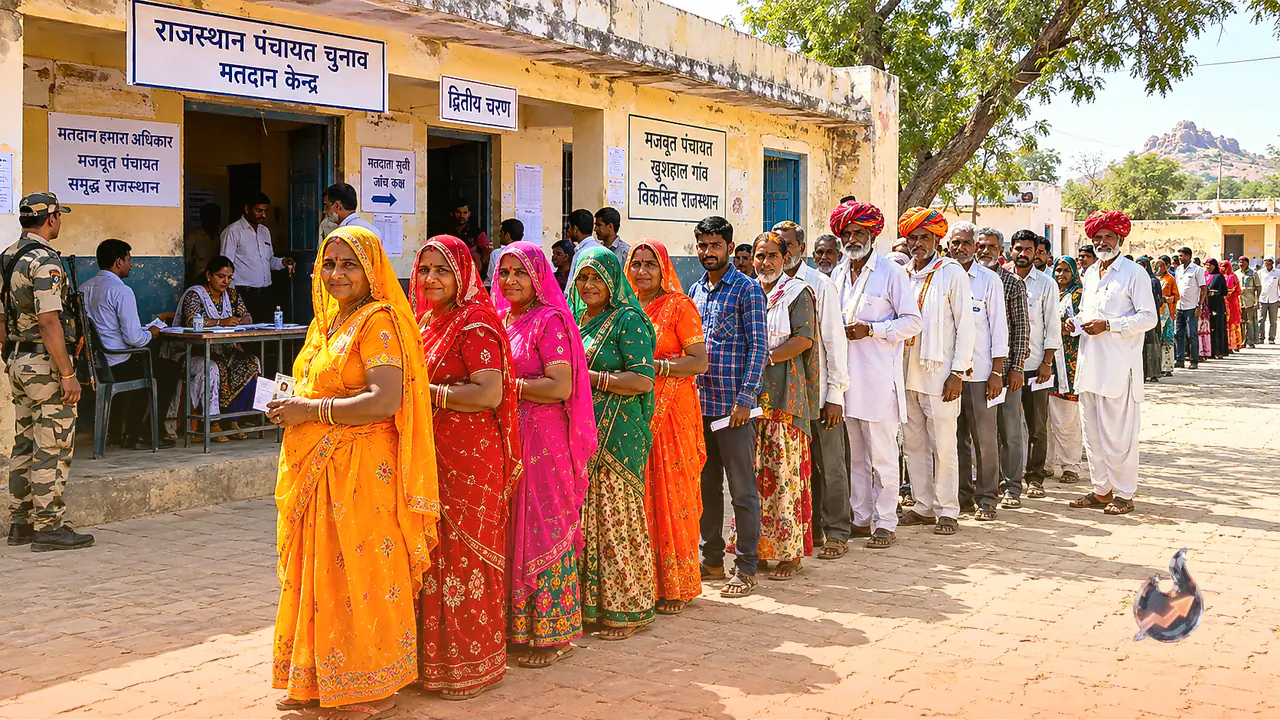
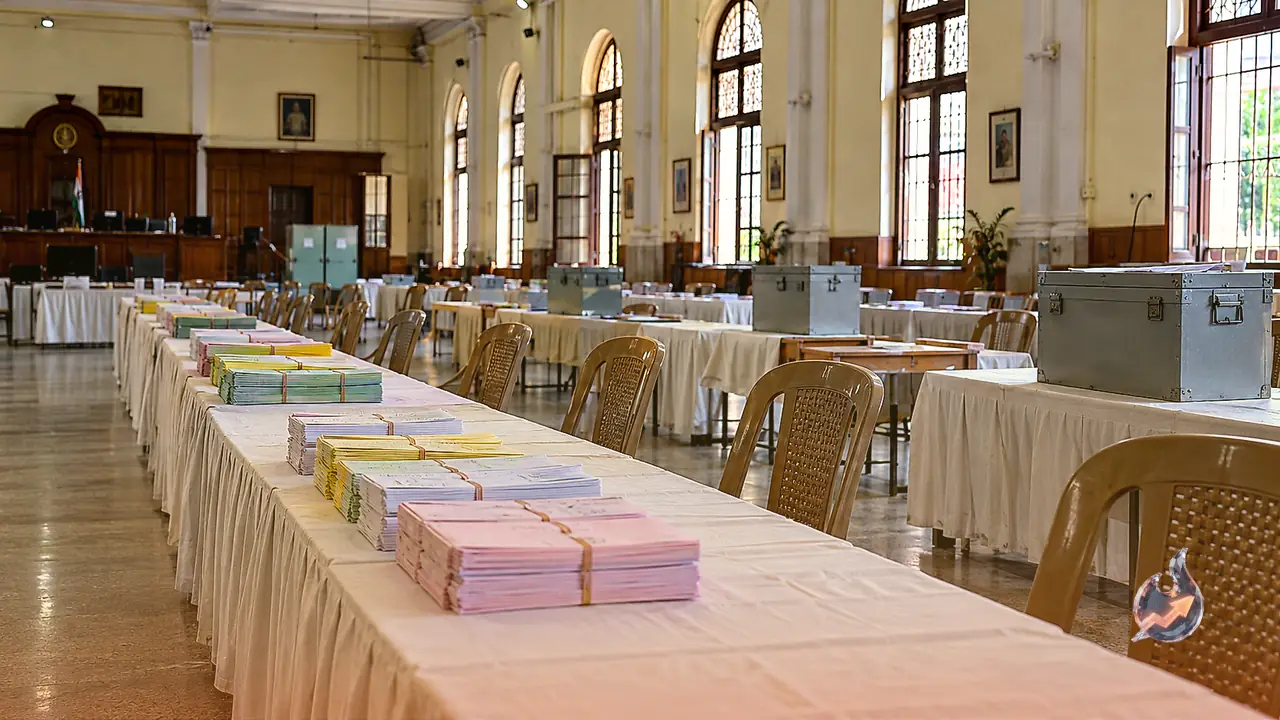
In regular general elections, voters step into booths and press an electronic button beside a preferred candidate on the Electronic Voting Machine. That single action exhausts their voting power, casting one indivisible vote for one individual. By contrast, Legislative Council elections use traditional paper ballots. Voters do not merely single out one candidate; they are required to rank contenders based on personal preference.
When reviewing the ballot paper, a voter writes the numeral 1 next to their top choice, the numeral 2 next to their second alternative, the numeral 3 for their third preference, and so on. Voters have the freedom to grade as many candidates as they wish among those listed on the paper. This mechanism guarantees that even if a voter's primary choice fails to stay in contention, their political voice remains active in deciding the eventual winner through subsequent preferences.
Calculating the Magic Quota Required to Win
Before counting centers begin separating ballots, election officials establish the exact qualifying threshold required to claim a seat. This threshold is calculated using the total volume of valid ballots cast during polling day. It establishes the minimum bar of support a candidate must consolidate to be returned to the upper house.
For an election contesting a single vacancy, the mathematical formula divides the total valid votes by the sum of seats plus one, and then adds one to that result. For instance, if exactly 100,000 valid votes are polled for a single vacant council seat, the calculation divides 100,000 by 2, yielding 50,000. Adding 1 to this quotient establishes the magic quota at 50,001 votes. Any candidate who accumulates 50,001 votes at any point during counting rounds is officially declared elected.
How a Frontrunner Falls Behind in the Opening Round
The defining element of preferential polling is that leading the pack in first-preference votes does not guarantee victory if that lead falls short of the magic quota. Consider an illustrative race with three contenders: Candidate A, Candidate B, and Candidate C, where the qualifying threshold stands at 50,001 votes.
Suppose the counting of first-choice rankings yields the following breakdown
- Candidate A secures 45,000 first-preference votes.
- Candidate B secures 35,000 first-preference votes.
- Candidate C secures 20,000 first-preference votes.
On initial observation, Candidate A holds a dominant position, commanding a substantial 10,000-vote cushion over Candidate B. Yet, Candidate A remains 5,001 votes short of the mandatory 50,001 threshold. Because none of the three hopefuls met the quota in round one, the returning officer cannot declare a winner. This deadlock activates the vote transfer protocol, fundamentally altering the contest.
The Mathematical Reality of Ballot Transfer
Under statutory counting rules, when no contestant crosses the threshold on primary preferences alone, the candidate sitting at the absolute bottom of the tally is eliminated. In our example, Candidate C, having garnered only 20,000 votes, is removed from the running.
Officials do not discard Candidate C's 20,000 physical ballots. Instead, workers re-examine every single one of those ballots to identify which candidate was marked as preference number 2. If an examination shows that 16,000 of those voters assigned their second preference to Candidate B, while only 4,000 chose Candidate A, those transferred choices are added to the existing totals of the remaining contenders.
With this transfer applied, Candidate B's tally surges from 35,000 to 51,000 votes, surpassing the 50,001 quota and clinching victory. Candidate A, who started with a commanding lead, receives only 4,000 transferred votes, finishing with 49,000 and facing defeat. The second-preference choices of Candidate C's supporters completely upend the primary ranking.
Why Educated Voters Still Invalidate Their Ballots
A striking paradox of Legislative Council elections, particularly in graduate and teacher constituencies, is the high rate of rejected ballots despite an entirely educated electorate. Election rules enforce rigorous standards regarding ballot markings, and deviations instantly invalidate the paper. Common causes for vote rejection include
- Failing to use the designated violet sketch pen supplied inside the polling booth, relying instead on personal pens or pencils.
- Writing numbers unclearly, scratching through markings, or overwriting preferences.
- Marking preference 1 against more than one candidate, leaving the voter's primary intention ambiguous.
- Writing preferences in words such as 'one' or 'two', or utilizing Roman numerals like I and II instead of standard international or recognized numerical digits.
Mastering the MLC electoral contest demands more than rallying a loyal base for first-choice markings; it hinges on building broad secondary consensus capable of bridging the final numerical gap to the quota.