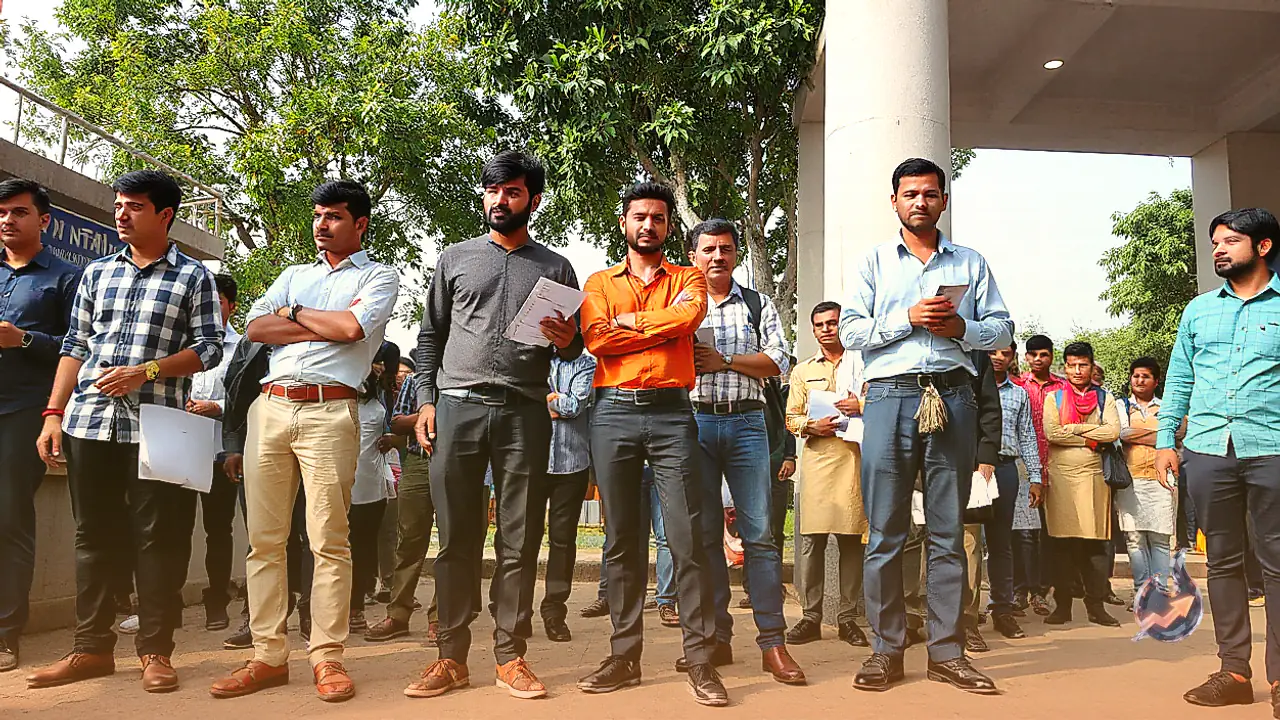





















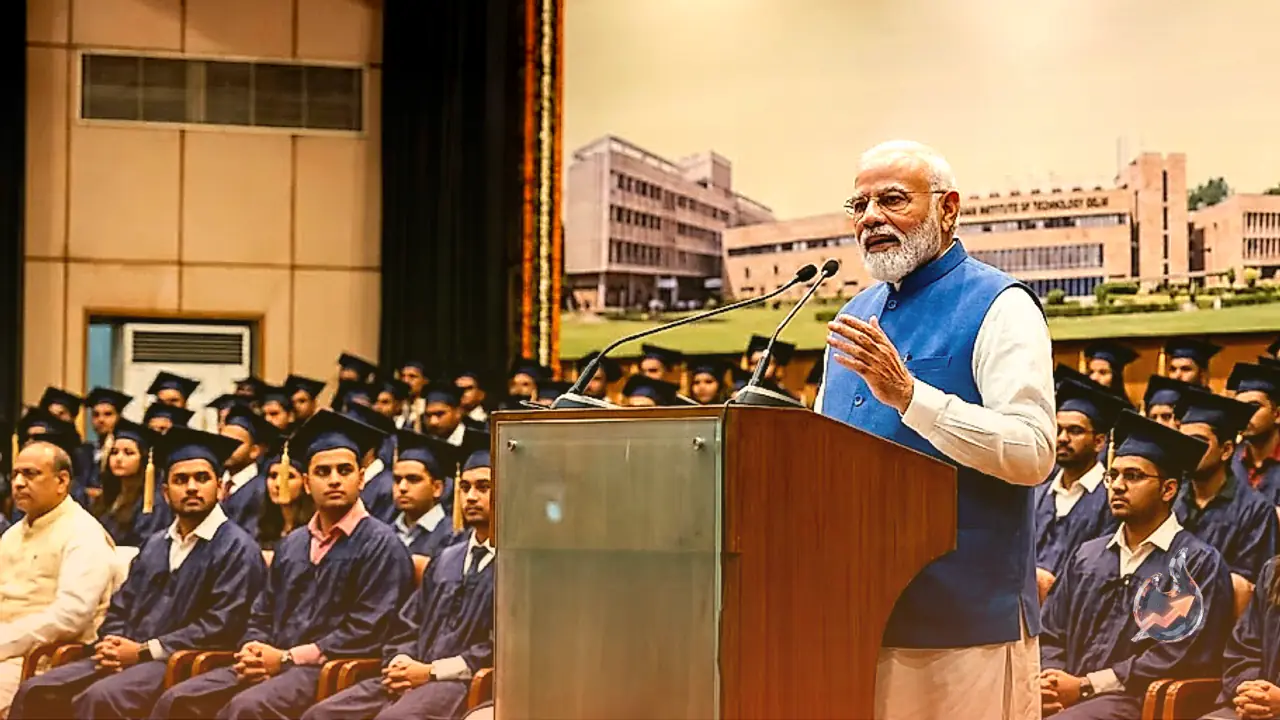

Addressing the graduating class at the 57th convocation of IIT Delhi, Prime Minister Narendra Modi delivered a comprehensive address to the nation's youth and Gen-Z, highlighting the evolving opportunities and structural challenges in a rapidly transforming world. He emphasized that the primary driver behind this global shift is the unprecedented acceleration of technology. With no one able to predict with certainty what the world will look like over the next 20 to 30 years, this period of dynamic change presents both complex hurdles and groundbreaking possibilities. The Prime Minister advised students that individuals who possess the courage to innovate and find fresh solutions to new challenges will consistently convert difficulties into meaningful opportunities. He urged graduates to look beyond merely answering existing questions and instead cultivate the habit of identifying fundamental issues that the world has stopped asking about altogether.
Reflecting on the Student Journey from Admission to Convocation
Recalling the educational trajectory of the graduating cohort, the Prime Minister spoke about the transformative journey from their very first day on campus to their graduation day. As students step out of the institute, each individual harbors distinct aspirations for the future. Some graduates are eagerly anticipating their first paychecks, others are preparing to move to new cities for fresh career starts, several are preparing to launch innovative startups, and many are gearing up for competitive examinations. Injecting a touch of light humor into his address, the Prime Minister remarked that he is not Baba Bageshwar to read minds, yet he deeply understands the ambition and anticipation stirring within the young graduates. He noted that while their individual paths, career choices, and personal dreams may diverge, the underlying determination to excel and contribute remains universal across the entire student body.
Degree as Proof of Problem Solving Beyond Grades and Placements
Highlighting the true value of an IIT Delhi credential, the Prime Minister stated that the degree represents far more than passing rigorous academic examinations, securing an impressive CGPA, or landing lucrative job placements. Instead, it serves as authentic proof of an individual's capability to analyze and resolve highly complex real-world problems. He reminded the audience that earning admission to an IIT and navigating its demanding curriculum was no simple feat. Mastery was built incrementally through intense coursework, intricate laboratory projects, and demanding mid-semester and end-semester examinations. This rigorous academic journey equips graduates with the cognitive resilience needed to confront intricate challenges in their professional careers.
A Practical Strategy for Tackling Complex Challenges
To navigate overwhelming professional and personal obstacles, the Prime Minister shared a pragmatic problem-solving methodology with the graduating class. He suggested that whenever a challenge appears daunting or insurmountable, individuals should avoid panic and instead break the problem down into smaller, manageable components. Drawing parallels to their laboratory experiments and research projects, he recalled moments when students faced apparent dead ends where solutions eluded them for hours or days. Yet, through persistent effort and systematic iteration, those very obstacles were overcome. He noted that in life, major difficulties rarely arrive in isolation; they inevitably bring along unique avenues for growth and discovery.
Nurturing the Learning Instinct in an Evolving Technological Era
Addressing the shifting geopolitical and economic environment, the Prime Minister pointed out that graduates are entering the workforce at a time of profound structural realignment driven by technological velocity. Industry frameworks and professional roles will continue to undergo rapid transformation in the coming years, requiring young professionals to stay adaptable rather than apprehensive. He introduced a memorable guiding phrase, emphasizing that while the world changes continuously, those who write new narratives will prevail. This concept extends beyond literal writing to creating original thought leadership, pioneering solutions, and setting new directions. He encouraged students to keep their core learning instinct alive, actively question assumptions that others accept without scrutiny, and maintain the fortitude to develop impactful solutions.
Strengthening National Self-Reliance Over the Next Three Decades
Outlining the vision for the nation's future, the Prime Minister stated that every generation carries distinct historical responsibilities shaped by its era. For today's youth in an independent India, the next 30 to 35 years will play a pivotal role in shaping the trajectory of a developed India. He urged graduates to evaluate every major career choice and innovation through the lens of national impact, asking how their work benefits the country and fulfills key societal needs. The Prime Minister concluded by calling upon the youth to reinforce the core pillars of India's economic, technological, and industrial self-reliance, ensuring sustainable growth for generations to come.