



















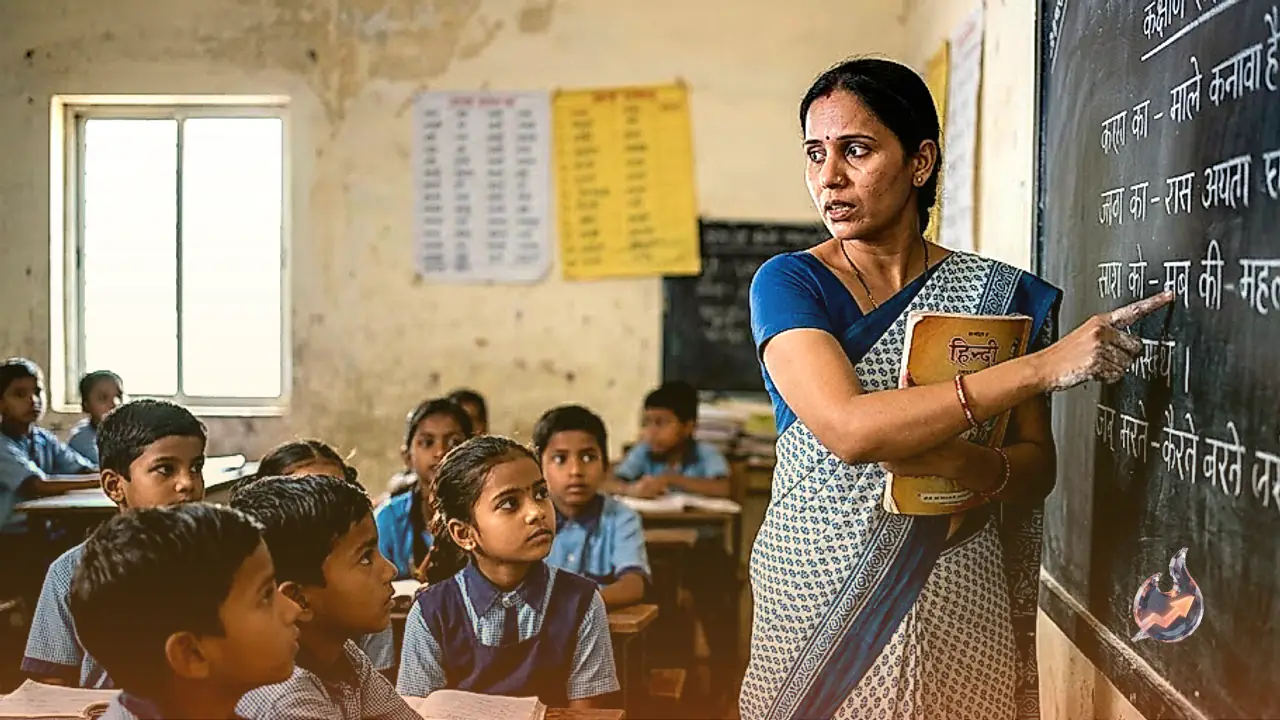

Chhattisgarh's school education department is rolling out a sweeping set of reforms aimed at fixing a language and literacy gap that officials say has built up in government schools over the years. School Education Minister Gajendra Yadav said the long-standing practice of promoting students from class 1 to class 8 without holding them back had directly hurt their reading and writing abilities, and the department will now focus squarely on strengthening foundational learning.
Hindi for younger grades, English from class 6
Under the new policy, students in classes 1 to 5 will be required to speak and write in Hindi. From class 6 to class 8, the focus shifts to making students capable of speaking and writing in English. The idea is to have children comfortable in both languages by the time they finish class 8, so the transition to higher grades does not leave them struggling.
Teachers get trained first, then held accountable
To make this work, teachers across the state will first receive special training in English so they are equipped to teach the language themselves. Only after this training will they begin teaching English to students in the classroom. Yadav said that if students' language skills fail to reach the fixed benchmark within the set timeframe, the teachers at that school will be held responsible, and action could follow.
5,000 new hires planned for Atmanand schools
The minister said 5,000 contract teachers will be recruited to strengthen Atmanand schools, with selection carried out through an online examination. An advertisement for another 5,000 regular teacher positions has already been released. The online attendance system introduced for teachers has also shown results, with 10,600 teachers who were earlier attached to various government offices now sent back to their schools. Around 85 percent of teachers are currently marking their attendance online.
Shuttered Ignite schools set to reopen
Ignite schools that had reached the verge of shutting down are being prepared for a relaunch under the Vivekananda Yojana. These schools will run on a PPP, or public-private partnership, model and will continue to teach through English medium. The department is targeting smart classroom facilities in these schools by December, and schools that lack teachers will run classes online instead.
Answer sheets to be checked by teachers from other schools
In another move aimed at improving education quality, answer sheets for all classes except board exam classes will now be evaluated by teachers from other schools rather than the same school, a step expected to bring more transparency to the evaluation process. Yadav said the impact of these new experiments in schools is gradually becoming visible in rural areas as well.