


















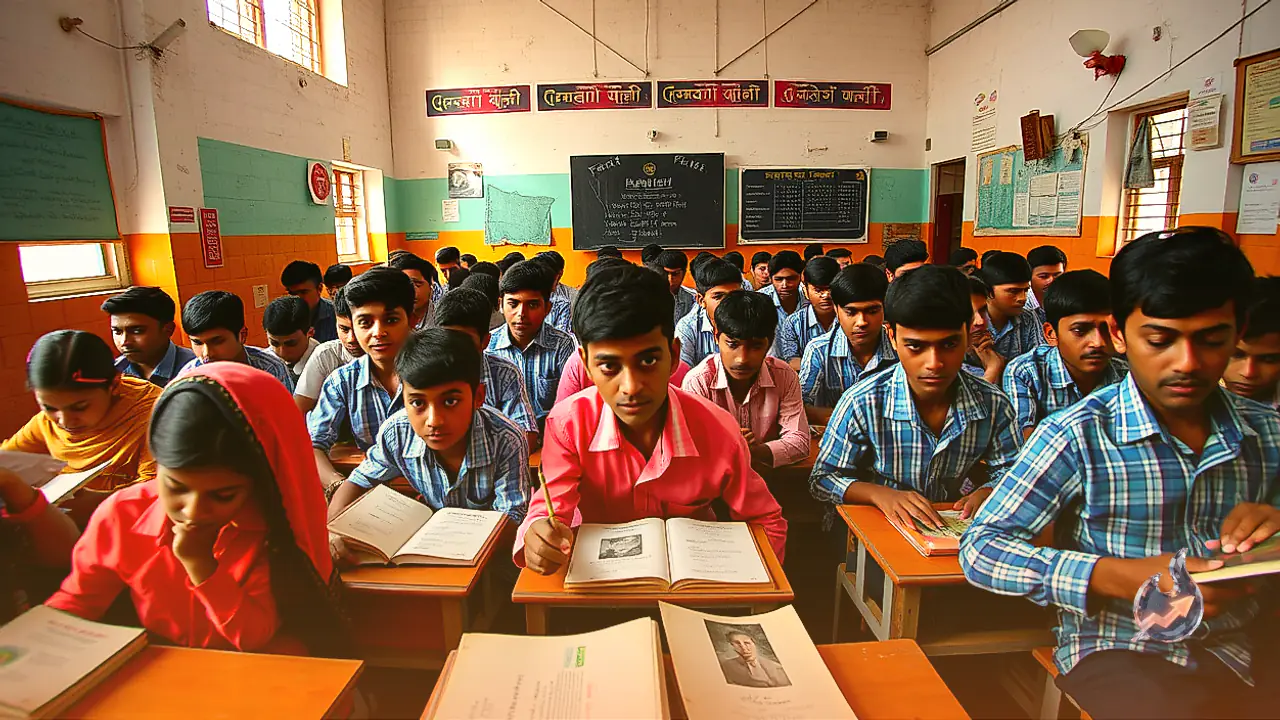

Growing screen addiction and excessive dependence on digital devices among children have become widespread concerns for parents and educators alike. In response to this modern challenge, a private educational institution in Gujarat has introduced an unconventional experiment aimed at drawing young minds back to the printed page. RB School, located in Vardhman Nagar in Rajkot, has rolled out a cash incentive framework designed to replace mobile phones and television sets with literary and informative books. Under this program, pupils receive a direct financial reward proportionate to the duration they spend reading.
Hourly Cash Rewards for Reading Time
The operational framework of the project guarantees that a student who spends one focused hour reading a book receives 5 rupees. Should the child extend that session to two hours, the incentive doubles to 10 rupees, with the payout rising linearly according to the total time devoted to books. This system has been opened to roughly 150 boys and girls studying across classes 3 to 10. The primary motivation driving the initiative is to reduce the excessive hours children spend on smartphones and television screens by giving them an immediate, tangible reason to choose books instead.
Freedom to Choose Preferred Books and Flexible Hours
A key aspect of this incentive model is the total absence of rigid curriculum constraints. Students are not compelled to complete assigned syllabi or mandatory academic titles; rather, they enjoy full liberty to select books aligned with their personal curiosities, ranging from general knowledge to creative fiction. Furthermore, the school imposes no strict schedule regarding when the reading must occur. Learners are free to immerse themselves in their chosen volumes whenever convenient during the day, fostering an organic and pressure-free relationship with reading.
Verification System to Prevent False Claims
To prevent students from merely claiming reading hours without genuine engagement, the school administration instituted a rigorous monitoring protocol. Simply asserting that two hours were spent with a book does not qualify a child for the 10-rupee reward. Every participant must maintain a structured reading chart documenting the specific book title, the total duration read, and the exact count of pages covered. To ensure domestic authenticity, parents must inspect the reading session and append their signatures to the daily log before it is brought to the classroom.
Teacher Assessments and Comprehension Checks
The verification process extends beyond signed paperwork. When pupils submit their completed logs to their class teachers, they are required to produce the actual books they read. Teachers conduct on-the-spot oral tests, posing targeted questions based on the content of those specific chapters. Only after the student demonstrates an authentic comprehension of the material does the teacher endorse the reading record. At the close of each month, the verified hours are calculated, and the corresponding financial incentives are disbursed to the learners.
Evolving Student Attitudes Toward Literature
Feedback from participating children indicates a noticeable transition in mindset. Several students admitted that engaging with books initially felt monotonous compared to interactive screens, but the financial reward served as a catalyst to pick up reading material. As days passed and story arcs unfolded, their interest transitioned into genuine curiosity. Multiple students now reflect that reading holds far more entertainment and intellectual value than idle time spent scrolling on a mobile phone.
Long-Term Objective of Sustained Self-Study
School administrators emphasize that monetary stipends are merely an initial nudge rather than a permanent feature. The underlying ambition is to cultivate a deep-rooted personal habit so that students eventually read for the pure joy of discovery without needing any external reward. Management believes that once the friction of picking up a book is eliminated, regular reading will integrate naturally into the children's daily routines, ultimately reflecting in stronger overall academic competence and enhanced cognitive discipline.
Projected Operational Expenditure
Evaluating the program's potential budget demonstrates the scale of the commitment. If all 150 enrolled students consistently read for 2 hours daily, the cumulative monthly payout would reach approximately 45,000 rupees. Should their daily commitment expand to 3 hours, the aggregate expenditure would climb to around 67,000 rupees per month. For the school, however, this financial commitment represents a strategic educational investment designed to wean children away from digital distractions and rebuild foundational learning habits.