



















The popular on-screen pairing of Vijay Deverakonda and Rashmika Mandanna is gearing up for a high-profile return to the silver screen in director Rahul Sankrityan's ambitious period action drama, 'Ranabali'. Following the recent launch of the film's promotional teaser, audience curiosity has surged regarding whether this intense freedom-era narrative chronicles a genuine historical personality or an invented story. While the film is not a literal biographical account of an individual freedom fighter recorded in history archives, its narrative framework is firmly anchored in one of the darkest and most catastrophic events of colonial British India.
A Fictional Rebellion Rooted in the Struggles of Rayalaseema
Rather than chronicling a documented figure, 'Ranabali' constructs a dramatic fictional tale drawn from real historical developments in the Rayalaseema region. Vijay Deverakonda portrays the central protagonist, Ranabali, an uncompromising and courageous Telugu youth who resolves to take up arms against colonial exploitation. Although the name Ranabali does not appear in formal administrative records of the Raj as a distinct freedom fighter, the character serves as an artistic composite of the ordinary people who defied systemic oppression during the colonial era.
Rashmika Mandanna plays Jayamma, Ranabali's wife, who steps into the battlefield as an equal partner rather than a passive observer, standing firmly beside him throughout the perilous confrontation. To give the colonial oppressor a formidable face, Hollywood actor Arnold Vosloo plays the chief antagonist, Sir Theodore Hector. Vosloo's character embodies the unyielding administrative indifference and armed brutality that defined colonial bureaucracy during times of severe civil distress.
The Great Madras Famine of 1876 to 1878 and Imperial Policy
The harrowing historical anchor for 'Ranabali' is 'The Great Madras Famine', which devastated vast areas between 1876 and 1878 across southern and western India. While consecutive monsoons failed and triggered an acute drought, the sheer scale of the resulting catastrophe was vastly magnified by British economic measures. Under the administration of Viceroy Lord Lytton, the imperial government dogmatically followed laissez-faire and free-market doctrines, resisting large-scale famine relief and price controls.
Even as rural populations suffered widespread starvation and disease, massive quantities of homegrown Indian wheat and agricultural produce were systematically shipped out to Britain. Rather than prioritizing community survival, colonial authorities strictly controlled emergency granaries and curtailed public aid distribution. Historical documentation records that approximately 1 crore (10 million) people perished across the Madras Presidency and its neighboring territories during this cataclysmic two-year crisis.
Teaser Visuals and Scheduled Theatrical Arrival
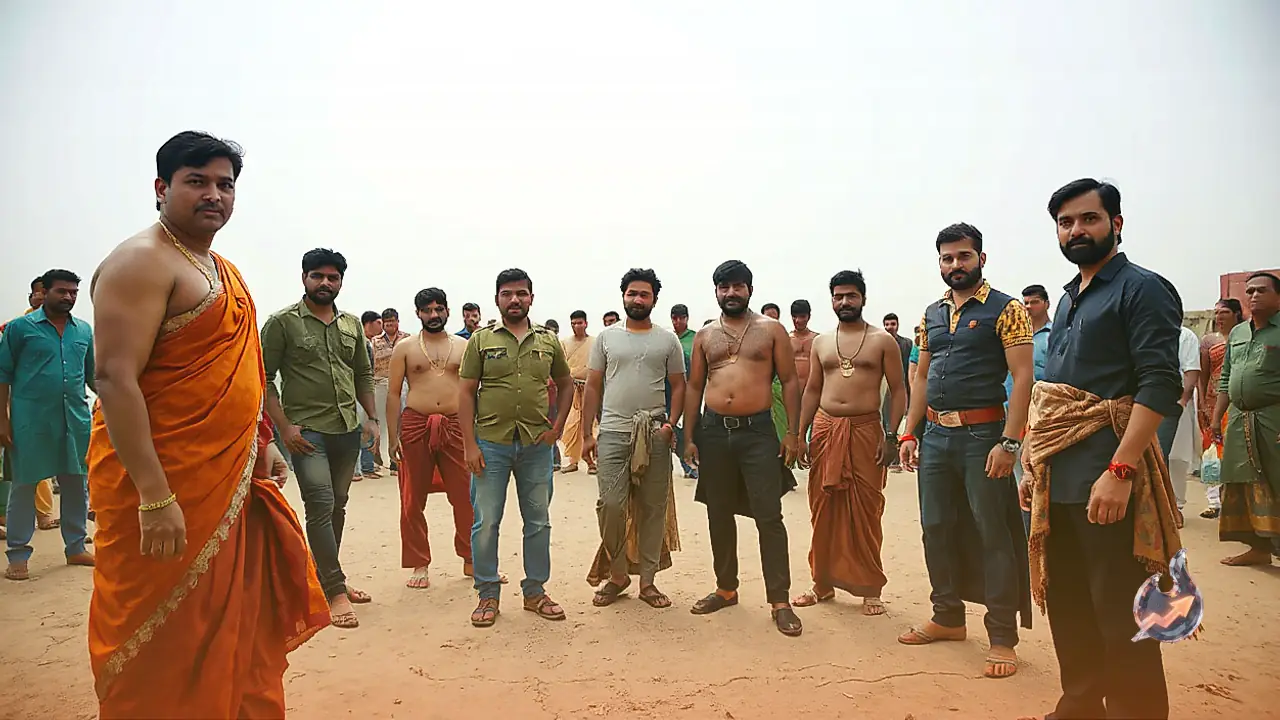
The visual tone set in the film's teaser highlights this profound social disparity with stark imagery. Scenes depict impoverished citizens grappling with catastrophic hunger, contrasted sharply against guarded colonial storehouses packed with harvested grain. This intolerable cruelty becomes the catalyst for the protagonist's uprising, transforming a regional crisis into an armed rebellion against imperial authority. Viewers will experience this high-stakes intersection of historical disaster and cinematic storytelling when 'Ranabali' arrives in theaters on 16 October 2026.