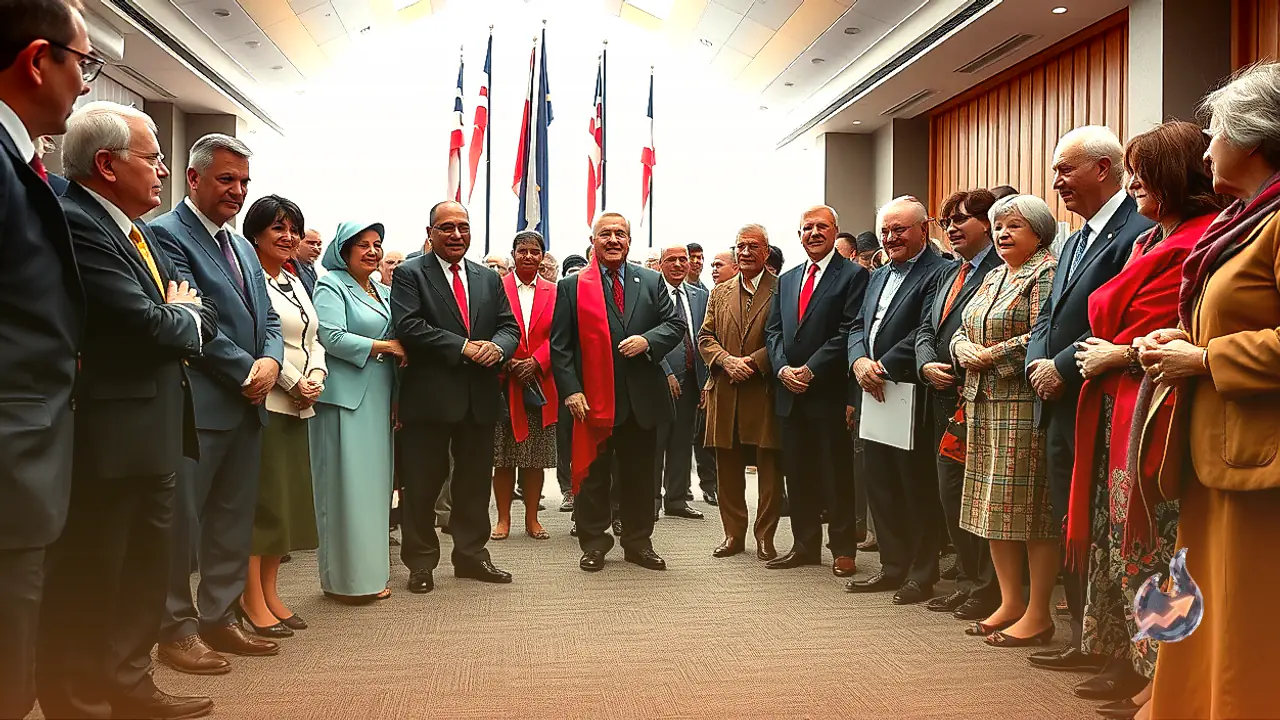























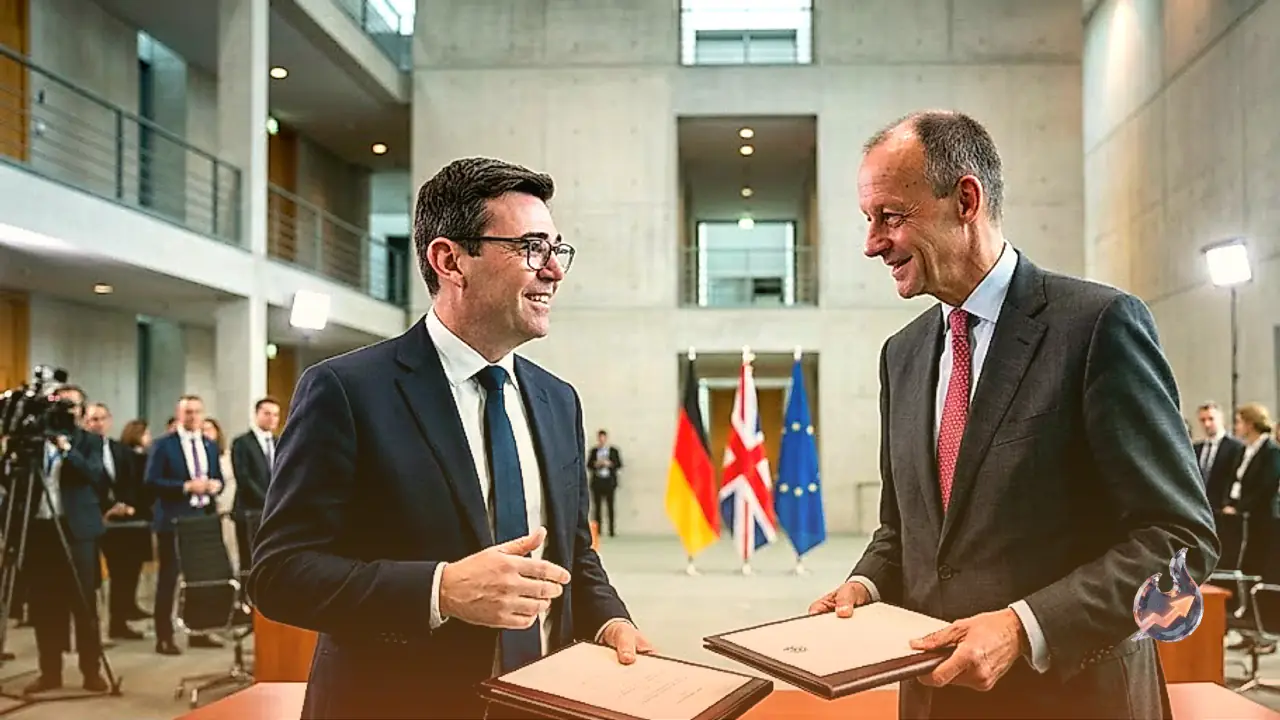

British and German leaders gathered at the Federal Chancellery in Berlin on Thursday to establish a unified front against escalating security challenges across the European continent. Marking his first official diplomatic engagement in Europe outside of Ukraine, British Prime Minister Andy Burnham was received in the German capital with formal military honours before entering bilateral discussions with German Chancellor Friedrich Merz. The summit resulted in the formalization of extensive defence agreements designed to reinforce continental security.
Addressing reporters outside the chancellery, Burnham emphasised that both nations find themselves confronted by hybrid hostile actions on a regular basis. In the face of these ongoing pressures, the prime minister noted that establishing joint operational responses and shared countermeasures represents the most sensible path forward for European stability.
Ratification of the Kensington Treaty and Economic Ambitions
Central to the talks was the formal ratification of the 2025 Kensington Treaty, a bilateral defence and security framework obligating both governments to jointly confront and neutralise hostile interventions. The treaty provides a structured mechanism for cross-border intelligence and security cooperation against non-traditional security threats.
Commenting on the broader purpose of the accord, Burnham observed that the treaty is designed to improve overall security across Europe while simultaneously generating positive economic spillover. According to the prime minister, closer institutional alignment on security matters will help support economic growth and improve everyday living standards within both nations.
Next-Generation Fighter Jets and Advanced Technological Alliances
Looking to expand joint military capabilities, Burnham announced that the British administration would now seek to progress Germany joining Gcap, the Global Combat Air Programme. The multilateral initiative, currently spearheaded by Italy, Japan, and the UK, is focused on engineering a next-generation fighter aircraft system. Bringing Germany into the consortium would mark a major consolidation of European and allied aerial defence manufacturing.
The bilateral commitments extended beyond conventional aerospace projects into modern technological frontiers. New cooperative initiatives were established across quantum technology and the space sector. To solidify these arrangements across government departments, Burnham stated his objective to convene a joint gathering of British and German cabinet ministers in the coming year.
Diplomatic Realignment and Relations with the European Union
The Berlin visit comes ahead of a crucial UK-EU summit scheduled for next month. Burnham articulated a firm dedication to securing deeper cooperation with continental institutions, stating his intention to explore ways to bring Britain closer to Europe. He explained to the press that closer integration serves mutual interests in accelerating economic growth and curbing irregular migration.
In previous weeks, Burnham has referenced the eventual prospect of Britain returning to the European bloc. Responding to these discussions, a German government spokesperson stated that any potential future in-out referendum remains strictly a matter for the British public to decide, though Berlin continues to welcome closer diplomatic and economic bonds between London and Brussels. Preceding his arrival in Germany, Burnham described the partnership as a collaborative endeavour to find, expose, and disrupt emerging threats.
Understanding Gray Zone Conflicts and Undersea Infrastructure Concerns
The diplomatic push aligns with warnings from several European heads of government regarding intensified hybrid operations originating from Russia. Non-linear warfare tactics include a range of destabilising efforts, such as distributed cyber incursions, infrastructure sabotage, and wide-reaching disinformation campaigns.
Sir Mark Lyall Grant, former UK national security adviser, outlined the mechanics of these tactics during an appearance on Radio 4's Today programme. He explained that hybrid operations occupy a unique gray zone situated between traditional states of peace and war, noting that Russia has maintained a high level of activity in this domain. Grant observed that while Russia has presented a strategic threat to Britain since Vladimir Putin assumed the presidency in 2001, hostile operations saw an intensification following European material support for Ukraine in the wake of Russia's invasion.
Grant specifically highlighted that Russian maritime units have been actively mapping undersea cables located in the North Sea. He noted that this intelligence-gathering directly affects critical communications and energy infrastructure for both Britain and Germany, making it a primary topic for Burnham and Merz to examine. Highlighting existing tensions, British authorities recently summoned a senior Russian diplomat to protest what was described as an egregious and reckless attack on Leipzig airport, an event that also prompted EU foreign affairs leadership to summon Russia's envoy in Brussels. The airport operates as a vital international logistics hub for transferring aid to Ukraine. Russian officials in Moscow have denied involvement.
Domestic Political Crosswinds for Merz and Burnham
The high-level talks occurred against a backdrop of domestic political complexities for both administrations. Chancellor Friedrich Merz has faced heightened scrutiny regarding his leadership and authority within Berlin. While the chancellor appears to have navigated through an immediate leadership impasse, questions regarding his long-term governance and political standing remain prominent.
In Britain, leadership changes have also shaped the current diplomatic landscape. Burnham assumed the prime ministership in July following the departure of Sir Keir Starmer, who was ousted by members of his own parliamentary party just two years after securing a decisive general election victory. The Berlin discussions represent Burnham's effort to navigate these shifting political environments and re-anchor British foreign policy firmly in European security structures.