






















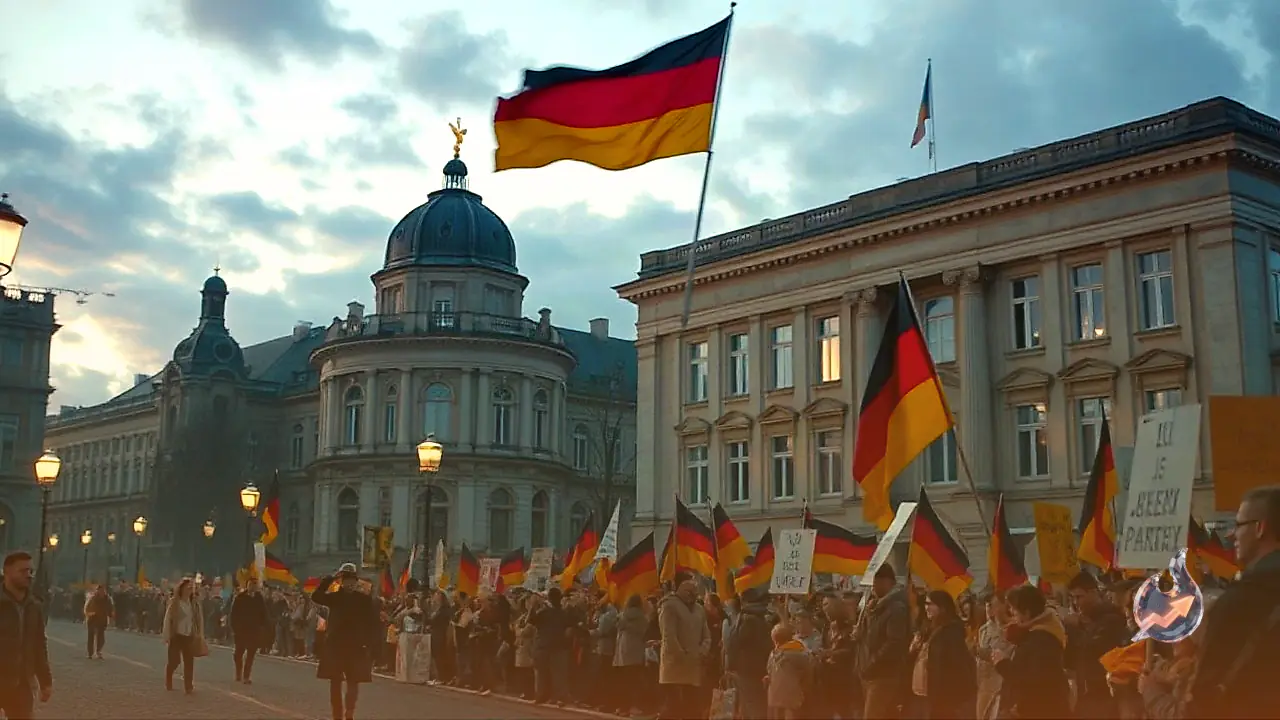

Pupils throughout Germany have vacated their classrooms to stage nationwide walkouts, mounting resistance against administrative efforts that could see the return of mandatory military enlistment. Student groups organizing the actions argue that authorities are methodically laying the groundwork to reintroduce compulsory service for the nation's youth, prompting widespread demonstrations across urban centers.
Youth Walkouts and Demands on the Street
In cities like Hamburg, crowds of young demonstrators waved banners with anti-war messaging, expressing their refusal to participate in conflicts. Bela Breitner, an organizer representing School Strike Against Compulsory Military Service, stated that the federal government is determined to phase mandatory enlistment back into existence. Activists maintain that this gradual approach must be met with persistent civil resistance before full conscription returns to national statutes.
At the Hamburg rally, 16-year-old Elias Bernhard pointed out that feedback submitted by young citizens reveals an overwhelming unwillingness to enter the ranks of the Bundeswehr. He emphasized that pupils intend to prolong their strike actions and remain on the streets until all legislative possibilities of conscription are permanently discarded.
Mandatory Surveys and Enforced Health Screenings
The controversy stems from an administrative framework requiring every 18-year-old in Germany to receive an official questionnaire. The survey evaluates an individual's interest and preparedness to enlist in the armed forces. Answering the questions is legally compulsory for young men, while young women are offered the choice to complete it voluntarily.
Every 18-year-old male is additionally obligated to undergo a formal medical evaluation designed to test physical capability for military duty. Protest leaders indicated that widespread discontent erupted when young men in northern communities such as Kiel and Flensburg began receiving mandatory summonses for physical check-ups, despite explicitly registering on their forms that they held zero inclination to join the military.
Defense Ministry Rules and Mobilization Scale
Student organizers confirmed that over one hundred demonstrations have been scheduled nationwide, targeting key urban hubs such as Frankfurt, Berlin, Hamburg, and Kiel. Responding to the mounting unrest, a Defence Ministry spokesperson clarified the statutory position, explaining that mandatory medical exams apply across the board to every draft-eligible male born after 31 December 2007.
Officials confirmed that disinterest expressed on the paperwork does not grant an exemption from the physical examination. According to the ministry spokesperson, approximately 1,000 young men aged 18 who specifically disclaimed interest in military service have already undergone the mandatory health evaluation since July.
Cold War Historical Shift to Modern Pressures
During the decades of the Cold War, Germany maintained an expansive military force comparable to other continental powers. Following the fall of the Iron Curtain in the 1990s, the nation heavily scaled down its standing forces. Compulsory military service was eventually abolished altogether in 2011 under Germany's former Chancellor, Angela Merkel.
However, heightened security anxieties regarding Russia alongside persistent pressure from Germany's traditional partner, the US, have altered the political consensus. In response, Merz has pledged to develop the Bundeswehr into the most formidable conventional fighting force in Europe. Lawmakers in the Bundestag retain the legal option to consider instituting compulsory enlistment mechanisms if volunteer sign-ups stall or geopolitical tensions escalate further.
Bundeswehr Expansion and Force Goals
The Bundeswehr presently maintains a strength of approximately 186,700 active personnel. To satisfy updated Nato readiness benchmarks and fortify sovereign territory, military planners aim to expand the regular army to 260,000 troops by the early 2030s. This expanded core is slated to be reinforced by an auxiliary body of roughly 200,000 reservists. The scale of these manpower requirements continues to drive the administrative push that has sparked widespread student protests across German cities.