





















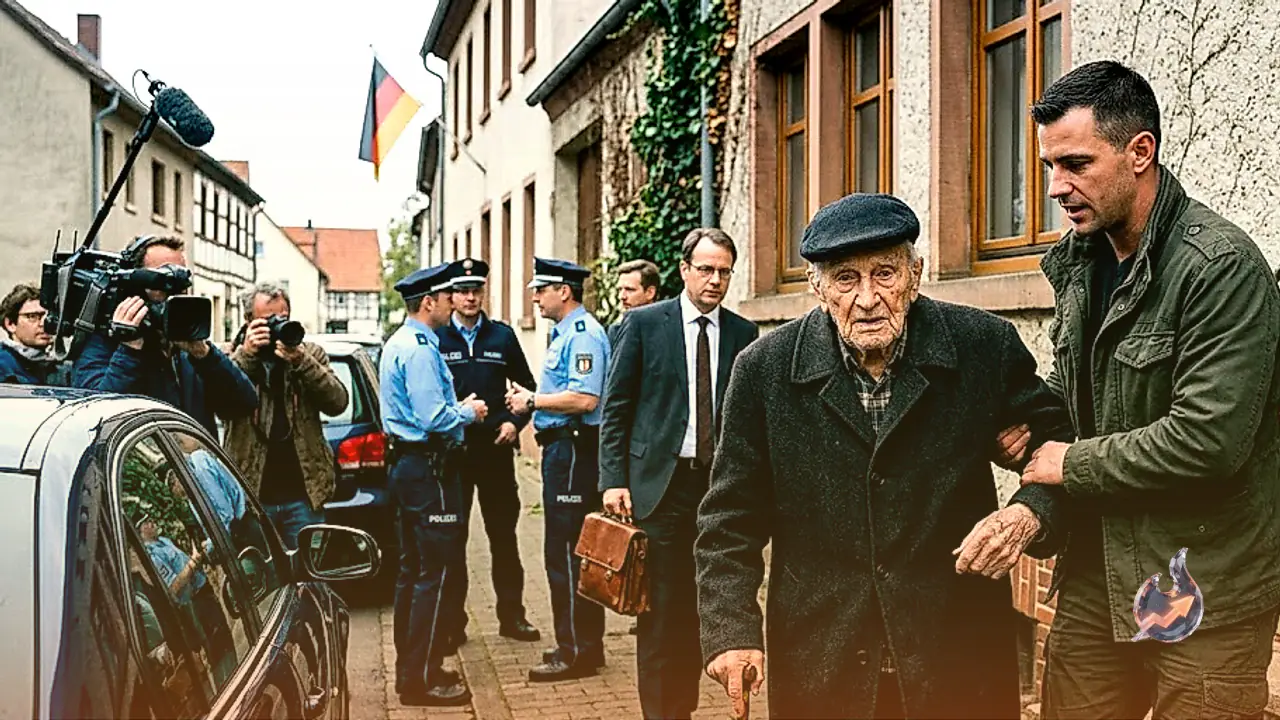

More than eight decades after the end of the Second World War, judicial authorities in Germany are pursuing formal legal proceedings against a 105-year-old man accused of acting as an accessory to multiple murders at a wartime military prison facility. The suspect served as a guard at the Stalag 326 VI K camp located in Senne, northwestern Germany, where tens of thousands of captive soldiers suffered fatal neglect, starvation, and grueling forced labor during the global conflict.
Two Camp Guards Under Scrutiny
Dortmund public prosecutor Sonja Frodermann confirmed the ongoing inquiry in an official statement, noting that the allegations against the 105-year-old center directly on his operational duties at Stalag 326. She also revealed that investigators had pursued a parallel case involving another former guard stationed at the exact same Senne facility. That second individual passed away several months ago at 99 years of age, bringing his specific proceedings to an end before formal indictment. German authorities have not publicly disclosed the identities or personal histories of either former watchman.
Stalag 326 and the Toll on Soviet Captives
According to historical records maintained at the memorial site, one out of every three Soviet prisoners of war transported into Nazi Germany between 1941 and 1945 was processed through the Senne installation. Across the broader conflict, German forces captured more than 5.3 million soldiers from the Soviet Red Army. An estimated half of those captives perished while in custody, succumbing to widespread disease, intentional starvation, and punitive treatment. Survivors who eventually returned to their homeland frequently endured deep suspicion and were branded as traitors by the Soviet regime.
Senne functioned as one of the largest prisoner-of-war camps in the entire military network. Between 180,000 and 200,000 Soviet personnel were formally logged into the compound, where living conditions were exceptionally grim. Beyond pervasive malnutrition and systemic abuse, detainees were regularly assigned to hazardous forced labor across the surrounding industrial and agricultural districts. Approximately 30,000 Russian soldiers who died inside the compound remain buried at the site. The camp also held prisoners of war from Belgium, Poland, Serbia, and France. When Allied forces liberated Stalag 326 in 1945, only somewhat more than 9,000 Russian prisoners were found alive inside the wire.
Legal Precedents and Challenges in Prosecuting Centenarians
Under German legal doctrine established in 1979, all statutes of limitations were formally eliminated for charges of murder and accessory to murder, ensuring that historical wartime atrocities could remain open to criminal prosecution indefinitely. The investigative pipeline typically begins at the central federal office dedicated to the investigation of National Socialist crimes, situated in the southwestern city of Ludwigsburg, before being transferred to regional prosecutors in Dortmund for trial preparation. Prosecutors are additionally examining another centenarian who served as a guard at the Hemer Stalag VI A installation.
Securing justice more than 80 years post-conflict presents profound practical barriers, largely because the vast majority of perpetrators, functionaries, and eyewitnesses have already died. Nonetheless, German courts have established landmark convictions in recent years. Four years ago, 101-year-old former Sachsenhausen guard Josef Schütz received a five-year prison sentence for complicity in murder, marking the oldest individual ever convicted of Nazi crimes. In 2022, a former concentration camp stenographer was convicted of aiding and abetting murder, receiving a suspended sentence prior to her death last year at age 99. The current case involving the 105-year-old at Senne underscores how legal authorities continue to pursue accountability regardless of an individual's advanced age.