
Air raid sirens warning of incoming ballistic missiles pierced the night sky across Kyiv just before 23:30 on Monday, immediately followed by the concussive roar of heavy detonations. Russian forces directed their missile salvos at the strategic river crossings spanning the wide Dnipro River, which separates the eastern and western halves of the Ukrainian capital. Unlike previous attempts, this assault succeeded in directly striking the transit artery, leaving transport networks paralysed and forcing ordinary citizens to confront severe structural damage right on their doorsteps.
Devastating Blast Leaves Eight Metre Gap on Northern Bridge
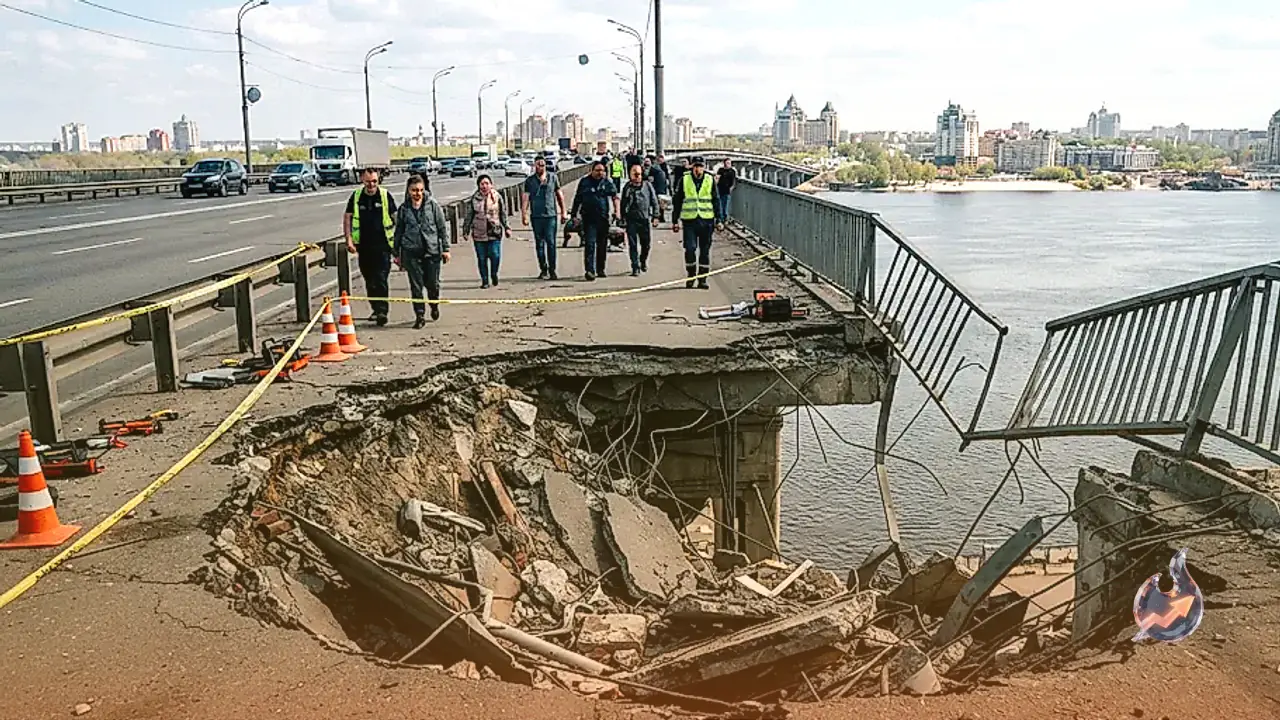
The Pivnichnyi bridge, commonly referred to as the Northern bridge, took a severe beating during the late-night bombardment. Near one end of the massive structure, a massive crater now yawns open where asphalt and concrete once carried heavy metropolitan traffic. Heavy rainfall poured relentlessly into the eight-metre-wide opening, sending cascading torrents of water through the jagged hole down into the flowing waters of the Dnipro River below. Slabs of torn tarmac and twisted metal fragments lay scattered across the roadway, illustrating the sheer explosive force unleashed during the strike.
Damage patterns across the crossing suggest that three missiles struck the exact same section in rapid succession, a deliberate tactical choice aimed at taking the bridge out of commission for an extended period. Authorities immediately cordoned off the route to normal civilian traffic, leaving the span eerily empty except for emergency response units, ambulances, and police cars racing through at high speed. Consequently, detour roads across neighboring sectors quickly choked with massive lines of cars and transport trucks struggling to find alternative routes around the damaged zone.
Residents Relocate Only to Face Terror Next Door
For the residents living in high-rise apartments flanking the riverbanks, the strikes brought sheer panic. A mother named Masha had recently moved into a flat adjacent to the bridge with her young family. They had made the move in an attempt to escape recurring Russian missile strikes on an electrical power station situated beside their former home. Instead of finding tranquility, she found herself caught at the epicenter of another military strike on Monday night.
Masha was in her kitchen when the explosions violently shook the entire residential block, rattling windows so violently that she feared the glass would blow completely out of the frames. Acting on instinct, she seized her child and raced into the interior corridor, relying on the structural protection of load-bearing walls. Reflecting on the traumatic night, she described the harrowing experience and noted that they had no anticipation this crossing would be targeted so severely, feeling as though misfortune followed them. Even so, she maintained an extraordinarily resilient perspective, explaining that while living under such conditions remains difficult, survival itself provides a daily reason to remain hopeful.
Southern Crossing Struck as Recovery Teams Race Against Time
Further south along the Dnipro, the Pivdennyi bridge, or Southern bridge, was subjected to a coordinated strike involving four missiles on that same night. This secondary attack threatened to completely sever cross-river communication lines across the capital. Train traffic on the metro line running directly over the southern structure was promptly halted, stranding passengers and disrupting the daily transit routines of thousands of commuters throughout the morning hours.
Emergency engineers and fire crews wearing high-visibility fluorescent overalls launched immediate inspection operations to determine the structural integrity of both bridges. By mid-afternoon, municipal authorities succeeded in restoring metro services across the southern span. Kyiv Mayor Vitali Klitschko confirmed that vehicular traffic heading in one direction was also being selectively reintroduced. Nonetheless, with engineers facing extensive structural repair work, transit officials acknowledged that comprehensive repairs and full reopening would require significant time.
Retaliatory Crossfire and the Fight for Strategic Spans
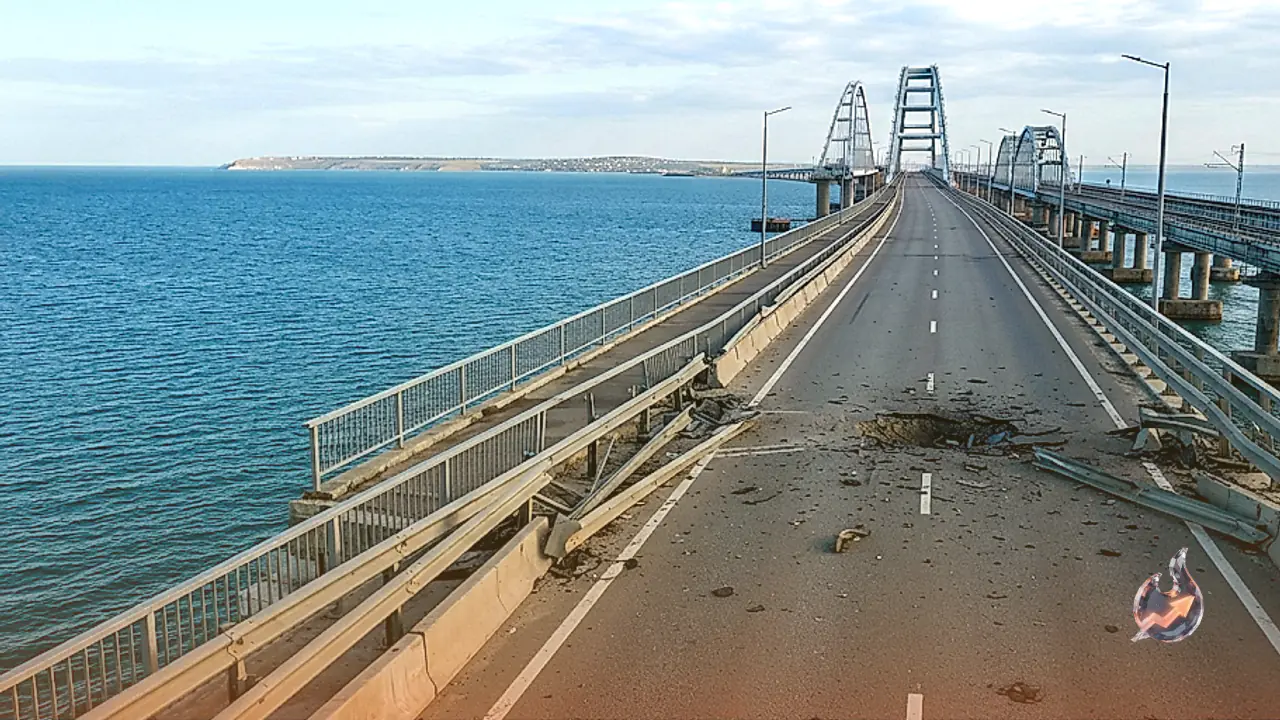
The targeted barrage against Kyiv's key river crossings came amid what local observers described as an overnight battle of the bridges. Shortly before the strikes on the capital, Ukrainian forces launched missiles against the massive bridge linking the Russian mainland to occupied Crimea. That structure holds immense symbolic value for Russian President Vladimir Putin, who personally championed its construction following the 2014 annexation of the Crimean peninsula.
Ukrainian strikes caused extensive destruction to the Crimean crossing, causing an entire section to collapse directly into the sea alongside its prominent archway. The loss of that infrastructure was celebrated by many across Ukraine, where the bridge remains an abhorred symbol of foreign territorial control. Furthermore, analysts pointed out that the timing of the strike struck a direct blow to the geopolitical authority of the Russian leadership ahead of a pivotal high-level diplomatic summit involving both the United States and China.
Civilians Walk Through Rainy Debris as Fares Surge
With public transit restricted and normal vehicular passage halted over the Northern crossing, Kyiv residents were left with no choice but to cross the Dnipro on foot or on bicycles. In the pouring rain, pedestrians carefully stepped around shattered glass, fractured asphalt, and puddles to reach their jobs and family members. Anatolii, carrying a sports bag filled with tennis rackets, paused to inspect the gaping void in the roadway on his walking journey to the city's left bank. He admitted the visual devastation was profoundly disheartening, though learning about the successful strike on the Crimean structure offered some degree of emotional solace.
Further along the damaged pathway, 67-year-old Antonina made her way forward while pulling a laden grocery trolley behind her. She was en route to visit her son on the right bank of the river, but skyrocketing taxi fares caused by lengthy detour routes forced her to make the crossing entirely on foot. Shrugging off the inconvenience, she remarked that ordinary people had few alternatives available to them under wartime conditions. Recalling the terrifying volume of the overnight blasts, she expressed certainty that the community would endure the ordeal, while voicing a heartfelt hope that the protracted hostilities would finally draw to a close.