























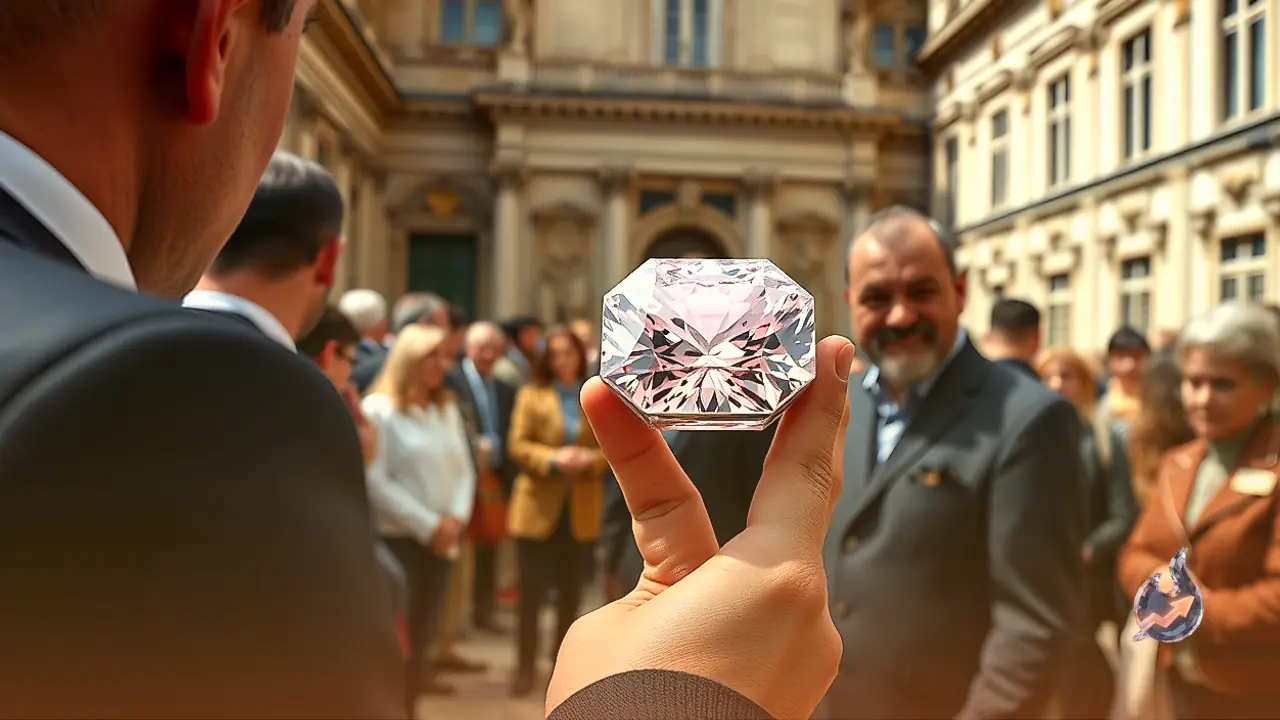

A rare nine-carat, pear-shaped gemstone known as the Grand Conde has gone on public display in France for the first time in nearly 100 years. The historical diamond, which is one of the few royal jewels to successfully survive the tumultuous French Revolution, is being exhibited at the Conde Museum inside the Chateau de Chantilly until January 3.
The 1926 Heist and the Apple Hiding Spot
The precious gemstone was originally pilfered during an overnight raid on the Chateau de Chantilly in October 1926, marking the last time it was ever shown to the general public prior to the current exhibition. In a bizarre twist that sounds stranger than fiction, the thieves concealed the high-value diamond inside a hollowed-out apple to evade detection. Museum director Mathieu Deldicque noted that while the apple story may sound remarkably far-fetched, it was widely covered by newspapers at the time, establishing it as an authentic part of the artifact's colourful history.
Recovery by a Hungry Hotel Maid
The diamond's dramatic recovery occurred just a few weeks after the theft in an entirely unexpected manner. A hungry maid working at the hotel where the thieves were staying happened to pick up the apple and took a bite out of it, inadvertently exposing the concealed royal treasure. Following this remarkable stroke of luck, the stolen asset was safely recovered and returned. Museum officials have now brought the legendary gem back into the spotlight, allowing visitors to view it once again ahead of the January deadline.
Mysterious Origins and Royal Provenance
Despite extensive historical records, the exact origins of the Grand Conde remain shrouded in mystery. The Château de Chantilly notes that the diamond was first officially mentioned in 1740 within an inventory drawn up following the death of Louis Henri de Bourbon, Prince of Conde. Over the subsequent decades, the gemstone became part of the esteemed collection belonging to Queen Marie-Amelie of Bourbon-Sicily, the wife of French King Louis Philippe I. It was later passed down to their son, Prince Henri of Orleans, the Duke of Aumale, who ultimately bequeathed it to the Institut de France along with thousands of other priceless artworks and manuscripts that now form the Conde Museum collection located 50km north of Paris.
Security Measures and Modern Scientific Analysis
The decision to exhibit the high-profile diamond has inevitably raised questions regarding security, especially given a recent string of brazen heists targeting European cultural institutions over the past 12 months, including a daring daylight robbery of jewelry from the Louvre museum in Paris. When asked by CNN about the specific insurance valuation of the diamond, museum director Mathieu Deldicque declined to disclose the figures. However, he emphasized that extensive academic study into the unique physical properties of the gem has been conducted to make it distinctively identifiable. The findings of this detailed analysis, alongside previously unseen archive materials detailing the gem's history and its century-old theft, form a core part of the current museum exhibition.
Market Value and Rare Pink Diamond Rarity
Naturally occurring pink diamonds are exceptionally rare in the natural world and frequently command staggering prices running into tens of millions of dollars on the global market. According to Sotheby's, the highest price ever fetched for a pink diamond at auction reached an astonishing $71.2m, equivalent to £53.6m, back in 2017. The exhibition of the Grand Conde not only commemorates a century since its audacious amateur heist but also highlights the enduring fascination surrounding these extraordinarily scarce natural treasures.