





















A night of Russian missile and drone strikes has overwhelmed Kyiv, killing at least 21 people and exposing just how thin Ukraine's air defenses have worn. Officials say every single ballistic missile Russia fired found its mark, a grim sign that Kyiv's supply of Patriot interceptors, the one system capable of stopping such missiles, is running dangerously low. The accuracy of the strikes suggests Ukraine simply did not have enough interceptors in the air to challenge the incoming missiles, leaving its cities largely exposed for the duration of the assault.
Kyiv bears the brunt of the strikes
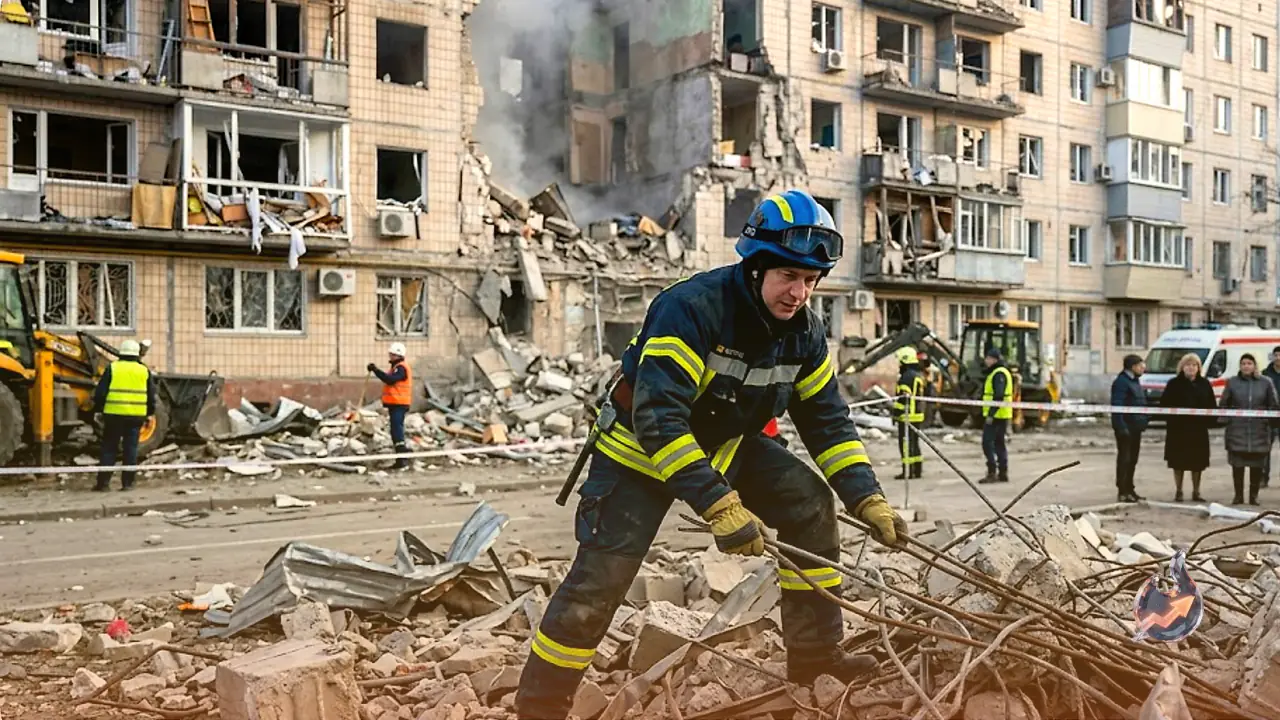
Local authorities said the capital took the heaviest hit, with 15 people killed and 56 others wounded within city limits. Mykola Kalashnyk, head of the regional administration, along with other officials, said six more people died and 21 were injured in areas surrounding Kyiv, pushing the combined toll for the wider Kyiv region well beyond the city's own count. Rescue crews are still combing through the rubble of two residential buildings that took direct missile hits, searching for survivors trapped under collapsed floors and walls. The attack comes just a week after a Thursday strike that killed 31 people in Kyiv, the deadliest single assault on the capital this year, meaning the city has now suffered two of its bloodiest nights within a matter of days.
Russia's defense ministry described the latest barrage as retaliation for Ukraine's recent long range military operations, which it said triggered a severe fuel shortage inside Russia and piled pressure on President Vladimir Putin. More than four years after Russia launched its full scale invasion, advances in drone technology had given Ukraine a battlefield edge in recent months, an edge that now looks increasingly fragile as Moscow adapts its own tactics and targets the weak points in Kyiv's defenses.
Why the Patriot shortage matters so much
Analysts and Western officials say Ukraine's strikes on supply routes behind Russian front lines have slowed Moscow's advance and driven up its military costs, forcing Russia to spend more to sustain its offensive. But the tables appear to be turning, with Russia now exploiting the cracks in Ukraine's air defense network rather than absorbing losses on the ground. Ukraine relies chiefly on the American made Patriot system to intercept ballistic missiles, and without it, stopping such missiles, which travel at extremely high speed on a steep trajectory, becomes nearly impossible for any other air defense system currently in Ukraine's arsenal.
Compounding the problem, the conflict in the Middle East has placed additional strain on the global supply of Patriot interceptor missiles, since the same limited stock of interceptors is now being sought by more than one theatre of war. Production of these interceptors was already limited, and Ukraine is currently bearing the brunt of that scarcity, receiving fewer replacement missiles even as Russia increases the tempo of its ballistic strikes. That is why President Volodymyr Zelensky is expected to push the issue hard at the NATO summit taking place this week in Ankara, Turkiye, using the gathering to press allied nations for a faster and larger supply of interceptors.
351 drones and 68 missiles in a single night
Ukraine's air force said Russia launched 351 drones and 68 missiles overnight, with Kyiv as the primary target. All 29 ballistic missiles fired hit their intended targets, underlining how little resistance Ukraine's defenses could offer against that particular category of weapon. Air force spokesman Yurii Ihnat said on national television that Ukraine needs sufficient means to intercept ballistic missiles, adding that Russia is capitalizing on a severe shortage of interceptor missiles both in Ukraine and around the world, a shortage he suggested is now shaping Moscow's choice of weapons.
Zelensky says stockpiled Patriots are emboldening Russia
Just ahead of the NATO summit, President Volodymyr Zelensky wrote on X that Ukrainian forces performed well against drones and cruise missiles but fell short against ballistic missiles because of an inadequate supply of interceptors. He wrote that as long as Patriot missiles sit unused in the stockpiles of allied nations, Russia will keep drawing the confidence to keep striking residential buildings, adding that the United States and Europe have more than enough capacity to stop this terror if they choose to release those stockpiles faster.
Ukraine's defense minister, Mykhailo Fedorov, echoed that warning, saying Russia is now carrying out ballistic missile attacks on a far larger scale than before, and is directly exploiting the severe shortage of Patriot interceptors to press its advantage in the skies over Kyiv.
Russia claims weapons factories were the target
Russia's defense ministry claimed the strikes targeted weapons manufacturing plants in Kyiv. It also claimed to have hit facilities involved in repairing air defense systems, along with fuel and energy infrastructure, though none of these claims could be independently verified by outside parties. In practice, regardless of the stated targets, Russian air strikes have repeatedly damaged civilian residential areas far from any declared military or industrial site.
Over 16,000 civilians killed so far
According to the United Nations, more than 16,000 Ukrainian civilians have been killed in the war so far, a toll that keeps climbing with every large scale strike of this kind. Tymur Tkachenko, head of Kyiv's military administration, wrote on Telegram that the buildings hit were homes where people were sleeping and going about ordinary life, not military installations. He said part of a residential building collapsed in the Podilskyi district, while multiple multi storey buildings were badly damaged in the Darnytsia district, with fears that people remain trapped under the rubble as search teams continue their work.
Around 600 people were evacuated from the Kyiv suburb of Vyshneve after the discovery of unexploded ordnance posed a danger to residents living nearby. Russia's defense ministry, for its part, claimed its air defense system destroyed 519 Ukrainian drones overnight, a figure that, like its other claims about the strikes, has not been verified independently.