






















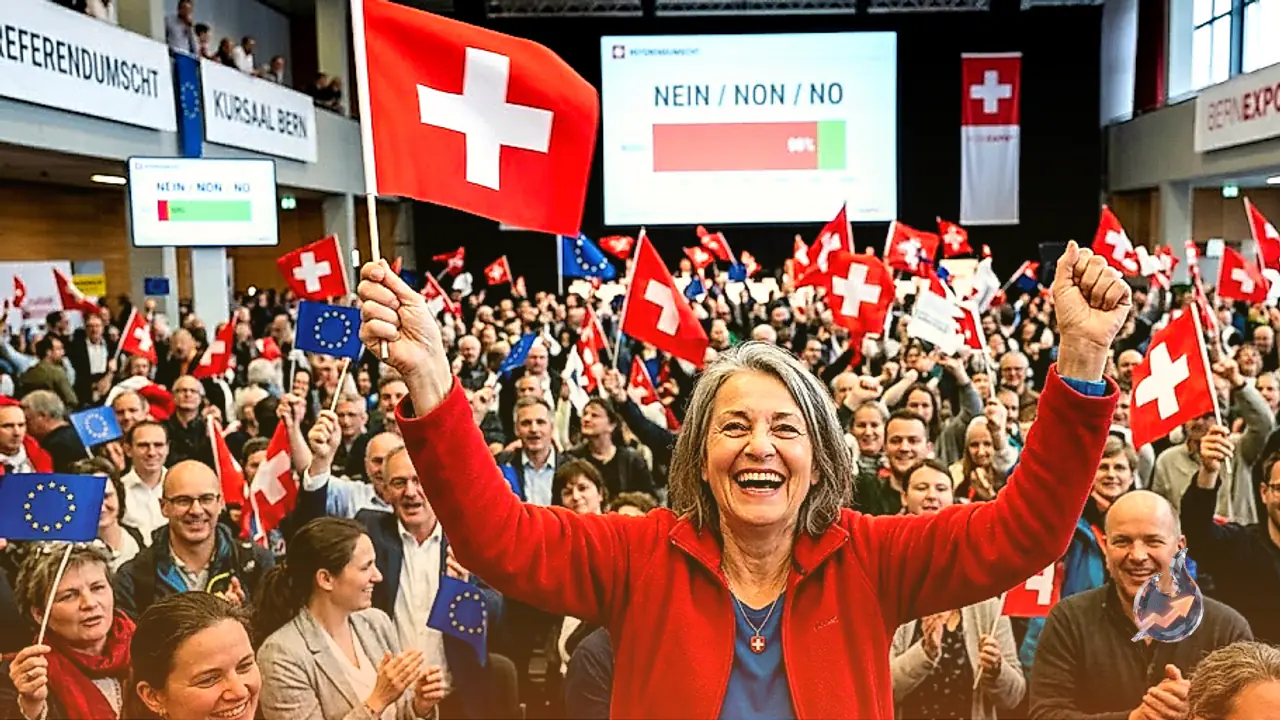

Voters in Switzerland have decisively rejected proposals to implement a much stricter interpretation of the country's longstanding tradition of diplomatic neutrality. Official results indicate that more than 70% of Swiss voters voted against the measures, which would have legally prevented the European nation from imposing international sanctions without explicit approval from the United Nations. Furthermore, the rejected initiative would have blocked Switzerland from seeking closer diplomatic and military ties with the NATO alliance.
Moscow Backed the Initiative
The intense debate surrounding Switzerland's centuries-old non-alignment policy was reignited following Russia's full-scale invasion of Ukraine. Moscow openly threw its weight behind the initiative, which was championed domestically by the right-wing Swiss People's Party. In contrast, the proposal faced fierce opposition from the federal government and all other major political parties across the country, setting the stage for the resounding defeat at the ballot box.
Flexibility and Sanctions
Lukas Golder, co-director of the research institute Gfs.bern, told Swiss public broadcaster SRF that the electorate had not rejected the concept of neutrality itself, but rather signaled strong support for maintaining sanctions against Russia. He noted that the public holds a distinct vision of what the nation's neutrality is designed to achieve. Meanwhile, Swiss Foreign Minister Ignazio Cassis emphasized during a recent televised debate that neutrality has historically been applied with a degree of flexibility. While confirming there are no active plans to lift the longstanding ban on selling weaponry to conflict zones, including Ukraine, he stressed that neutrality does not equate to indifference and that the country will not look away from violations of international rules.
Historical Context and Direct Democracy
Switzerland's status of eternal neutrality was internationally recognized in 1815 at the Congress of Vienna amidst a period of widespread European upheaval. This stance was formally codified by the Hague Convention of 1907, which bars the supply of weapons to warring nations—a principle recently invoked when Bern rejected a German request for ammunition destined for Kyiv. Although Switzerland maintained neutrality through World War Two, its wartime record includes controversial actions such as banking Nazi-looted gold and turning away Jewish refugees to deter an invasion, policies for which the government formally apologized in the 1990s. Due to Switzerland's unique system of direct democracy, major political shifts and constitutional questions are routinely decided directly by the electorate through public referenda.