




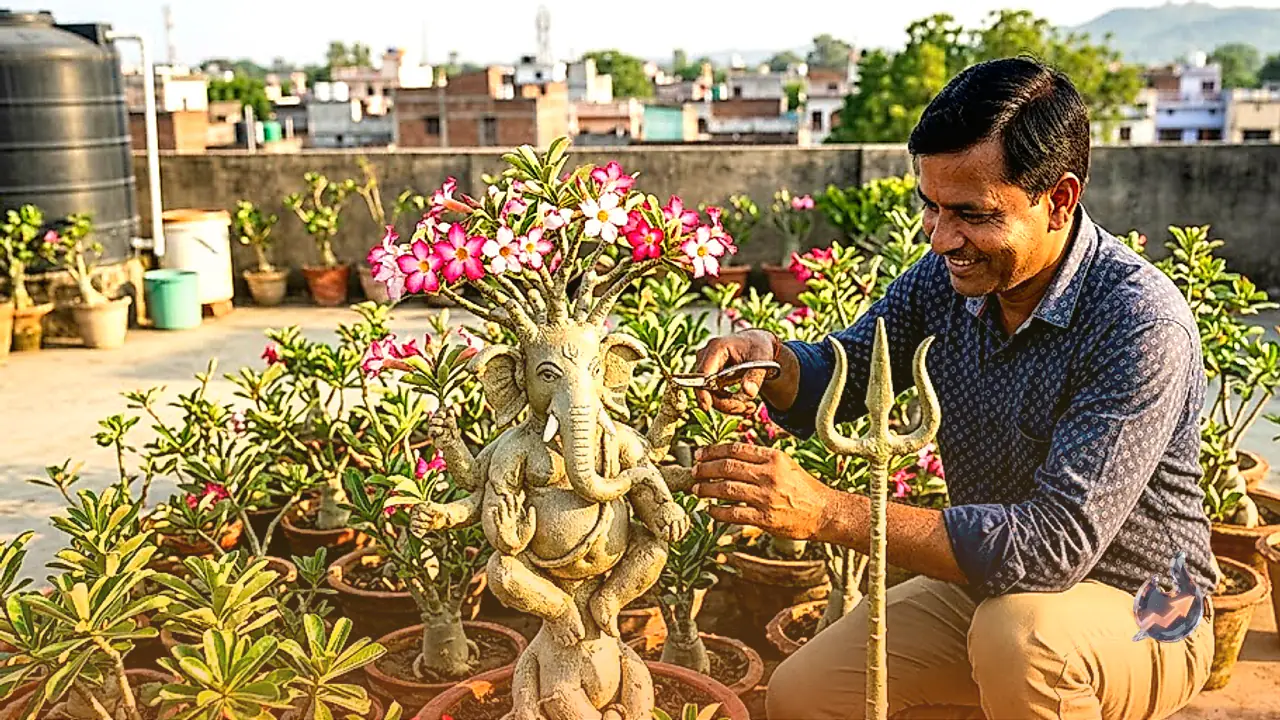

















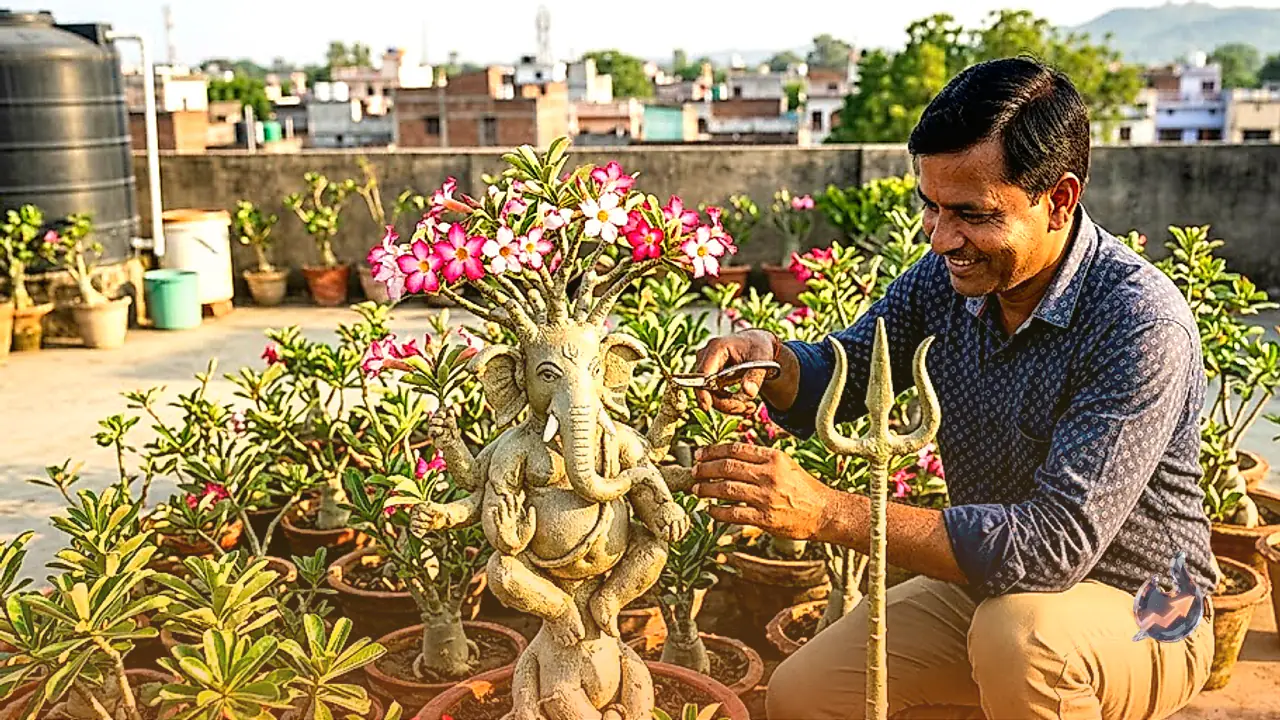

People often encounter architects who design buildings or artists who sketch on paper, but witnessing someone sculpt living plants is a rare sight. Rakesh Kumar, a resident of Jehanabad district in Bihar, is engaged in this exact unique craft. Associated with gardening for the past 15 years, Rakesh has given living plant life an artistic dimension through his dedication. At present, around 200 Adenium plants sit on the rooftop of his house. Popularly known as desert roses, Rakesh shapes these plants into various striking forms using his artistic skills. Some of these plants clearly resemble the figure of Lord Ganesha, while others have been carefully trimmed into square structures. In addition, several other plants feature distinct and unique formations that catch the eye of every observer.
Balancing professional duty with plant care
A resident of Muther village in Jehanabad, Rakesh Kumar also works at the civil court in Jehanabad. Returning home after completing his official duties, he dedicates about 4 hours combined in the morning and evening to his plants. His deep attachment to greenery is what continuously refines his mastery in this form of art. Rakesh shapes the plants according to his preferences and understands the natural growth of their roots and stems to mold them into new forms. This intricate work demands constant care and immense patience, which Rakesh has mastered through years of dedicated practice.
The journey of shaping plant roots
Reflecting on how his journey began, Rakesh shares that he knew the soil around plant roots needed changing around February. During this routine process, he first noticed various natural formations within the root systems. One plant root displayed a shape resembling a divine idol, while another resembled an elephant foot. Seeing these intriguing formations sparked Rakesh's curiosity, prompting him to start experimenting on his own. In the beginning, several plants suffered damage, but he persevered and continued his efforts. By observing the plants closely, he learned how to give them new structures. Rakesh explains that changing the soil of plant roots is essential, and this exact routine gives him the opportunity to understand the roots and mold them into different shapes. Gradually, his experience grew, teaching him the art of plant sculpting.
Living sculptures featuring divine and geometric forms
Rakesh notes that he has successfully given new forms to more than 30 plants so far. The most remarkable aspect is that nearly all of these sculpted plants remain fully alive and healthy. He has crafted some plants into the shape of Lord Ganesha, while shaping others into square figures and tridents. Furthermore, some of these plants produce five different types of flowers blooming simultaneously, while others display three varieties of flowers. This achievement relies entirely on understanding plant care and their natural growth patterns.
Valuable advice for plant enthusiasts
Alongside his gardening journey, Rakesh offers a special piece of advice for people who love plants. He states that regardless of the type of plant brought home, a genuine emotional connection is necessary for its proper maintenance. If plants are cared for wholeheartedly, they remain secure and keep the surrounding environment lush and green. He believes that working with plants with patience and affection delivers the true joy of gardening.