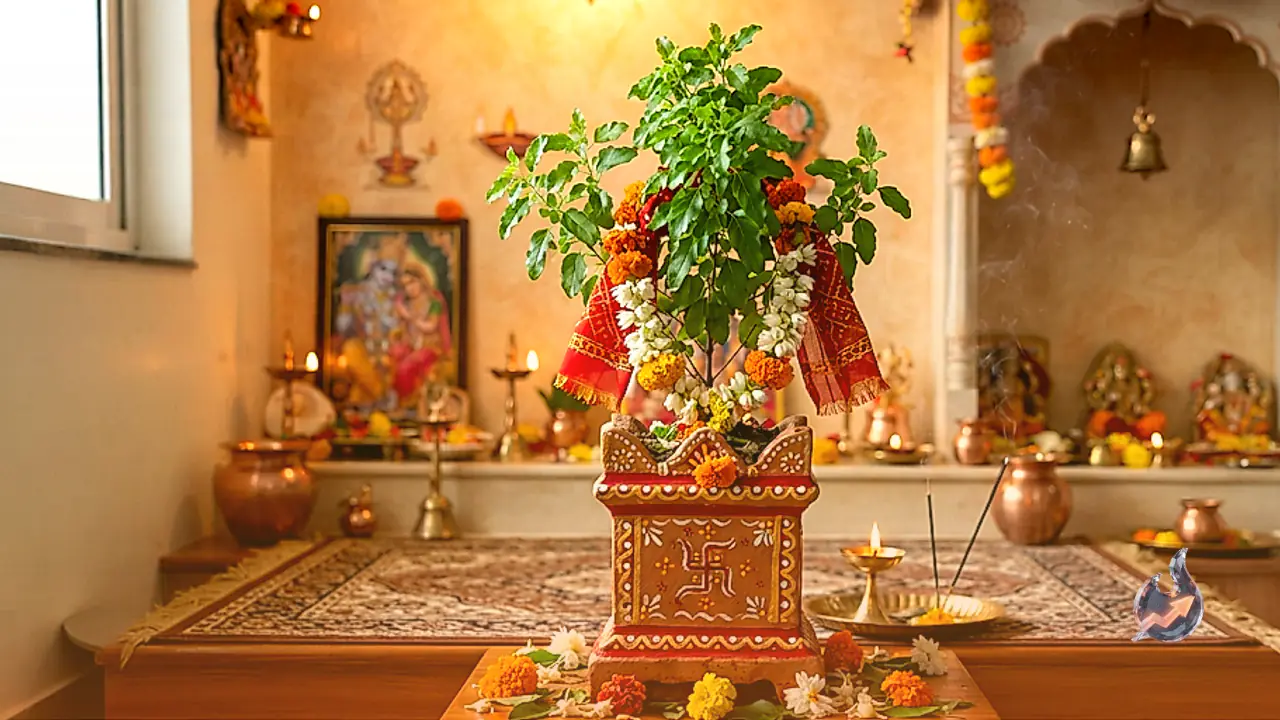

In Sanatan tradition, the festival of Devuthni Ekadashi is considered extremely special for worshipping Lord Vishnu. On this auspicious occasion, the tradition of Tulsi Vivah is observed in many parts of the country, where Goddess Tulsi is ceremonially married to Lord Shaligram. In most places, this sacred ritual is performed on the Dwadashi date of the Shukla Paksha in the month of Kartik. Lord Shaligram is considered a divine manifestation of Lord Vishnu himself.
Significance of Tulsi Vivah and Shaligram Chalisa
According to religious beliefs and scriptures, reciting the hymns and chalisa dedicated to Lord Shaligram during the special occasion of Tulsi-Shaligram Vivah is considered highly auspicious. Doing so invokes the grace of Lord Vishnu, and it is traditionally believed that devotees' wishes are fulfilled. This sacred observance brings positive energy and lasting peace into the household.
Glory of Shaligram Shila
Religious traditions highlight the immense importance of sacred stones originating from the banks of the Gandaki River and the Dwarka region. Worshipping the Shaligram stone destroys sins accumulated over lifetimes and grants liberation to devotees. Consuming the holy water that has washed the Shaligram stone helps eradicate various ailments and wards off the fear of untimely demise, promoting overall health and mental tranquility.
Guidelines for Worship and Rituals
According to the scriptures, the worship of the Shaligram stone does not require complex mantras, rigid rituals, or elaborate procedures. Offering devotion with a pure heart is enough to please Lord Vishnu. Merely beholding the sacred chakras and symbols inscribed on the Shaligram stone liberates a person from sins. Applying the holy water infused with Tulsi leaves to one's forehead brings boundless spiritual merit and eternal peace.