




















Azamgarh district in Uttar Pradesh holds a prominent place on the culinary map of northern India, largely driven by the enduring reputation of its signature Kalika mutton. Food lovers throughout the Purvanchal belt and travelers from neighboring states regularly visit the district to experience this distinct non-vegetarian delicacy. Rather than relying on modern commercial short-cuts, the dish retains its timeless appeal through rustic culinary methods. For those wishing to recreate the identical profile in a home setting, mastering the original sequence and cooking principles makes all the difference.
The Core Technique Behind the Distinctive Texture
What sets Kalika mutton apart from standard restaurant preparations is the refusal to use pre-made restaurant bases or separately cooked gravies. Hotel operator Lakshmi Chauhan explains that meat and gravy ingredients are simmered together right from the very beginning. By letting the meat cook alongside raw aromatics, the juices blend seamlessly without artificial thickeners. The preparation strictly avoids commercial, factory-packaged spice blends, opting instead for pure mustard oil, generous portions of fresh onion, chopped ginger, and whole spices lightly toasted at home.
Essential Ingredients for Authentic Taste
Executing this regional classic requires fresh, unadulterated kitchen staples rather than complicated ingredients. The required components consist of
- Fresh Meat: Tender mutton pieces cleaned and prepared for slow cooking.
- Pure Mustard Oil: Unrefined mustard oil is essential to provide the quintessential pungent undertone and aroma.
- Fresh Onions: A generous volume of sliced onions, which forms the dense, sweet, and savory body of the gravy.
- Finely Chopped Ginger: Fresh ginger root chopped fine to lend subtle warmth and depth.
- Home-Roasted Whole Spices: Whole spices gently roasted in a dry pan and freshly crushed, avoiding store-bought ground powders.
Detailed Cooking Process and Step-by-Step Method
The cooking procedure requires patience, as high heat is avoided in favor of sustained simmering. To begin, fresh mutton cuts and sliced onions are placed directly together into the cooking pot. According to Lakshmi Chauhan, the meat and onions must cook over a very low flame for hours. This prolonged heat breaks down the onions completely until they dissolve around the meat, creating a rich, thick, and cohesive gravy naturally.
Once the onions have fully melted into the stew, finely chopped ginger and the freshly ground roasted spices are introduced into the pot. The mutton is then left to simmer over gentle heat, allowing the essential oils of the spices to infuse every cut of meat. The dish must remain cooking patiently until the meat turns perfectly tender and the rendered oil completely separates and surfaces.
The Role of Wood-Fired Simmering
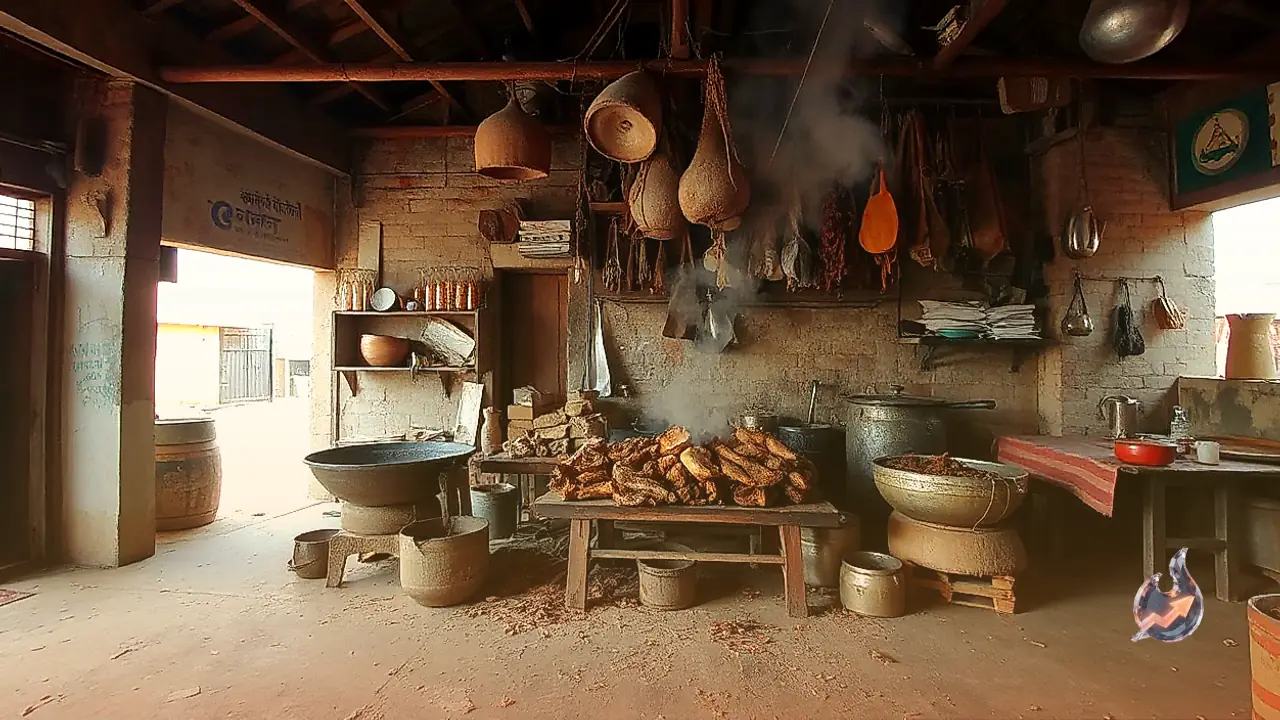
The unmistakable rural signature of Kalika mutton is largely attributed to its traditional heat source. While modern commercial kitchens rely extensively on gas burners, the original preparation in Azamgarh continues to rely on wood stoves. Lakshmi Chauhan notes that the ambient smoke and steady, penetrating heat of burning wood impart an irreplaceable rustic flavor to the meat. Recreating this method on an outdoor clay stove or charcoal brazier at home produces the closest match to the original restaurant experience. Once the oil has cleanly surfaced, the mutton is fully done and ready to be served hot with traditional breads or steamed rice.