






















Green peas are a familiar presence in Indian kitchens, most often destined for pulao, parathas, curries, or snacks. But celebrity chef Bhupi has revealed a recipe that takes this everyday ingredient in a completely different direction. His green peas pickle delivers a vivid combination of sourness, heat, and layered spice, and when prepared the right way, it stays fresh and safe to eat for months. The recipe brings together carefully selected whole spices, a mustard oil tempering, a natural preservative secret, and a smoky technique that no other pickle quite replicates.
Preparing the Peas: The Foundation of a Good Pickle
The overall quality of any pickle begins with how its main ingredient is handled before anything else. Start by bringing a pot of water to a rolling boil, then add a little salt along with one teaspoon of sugar. The sugar serves a precise purpose here beyond sweetness: it locks in the peas' bright green color during cooking. Add the green peas and let them cook for one to two minutes, then immediately transfer them into a bowl of ice-cold water. This blanching technique preserves both the vivid color and the firm texture of the peas. Finally, spread them out on a clean cloth and let them dry out completely. Even a trace of moisture remaining on the peas can cause the pickle to spoil quickly, so this step cannot be skipped or rushed.
The Whole Spices That Give This Pickle Its Character
Chef Bhupi's spice selection is deliberate and precise. The recipe calls for fennel seeds, cumin, black pepper, fenugreek seeds, and mustard seeds as its aromatic base. Each of these is lightly dry-roasted to intensify and deepen their flavors and fragrance. Once cooled, they are ground coarsely. The instruction is specific: do not reduce them to a fine powder. A rough, coarse grind gives the pickle a satisfying texture and a pleasant bite that smooth powder simply cannot deliver.
The Mustard Oil Tempering That Pulls It All Together
Mustard oil is considered the best fat for this kind of pickle. Heat it thoroughly in a pan, then add nigella seeds (kalonji), carom seeds (ajwain), asafoetida (heeng), and curry leaves. As soon as their fragrance rises in the hot oil, stir in the coarsely ground spice mixture prepared earlier. This tempering step is what allows all those layered spice flavors to infuse deeply into the oil.
Next, turmeric powder, Kashmiri red chili powder, regular salt, and black salt all go into the mixture. Kashmiri red chili lends the pickle a rich, visually attractive deep color, while black salt adds a distinctive earthy depth to the overall taste. Finely chopped green chilies are added last, and everything is stirred well together. This combination of elements is precisely what gives the pickle its signature sharp, fiery, and tangy character.
Chef Bhupi's Big Secret: Vinegar
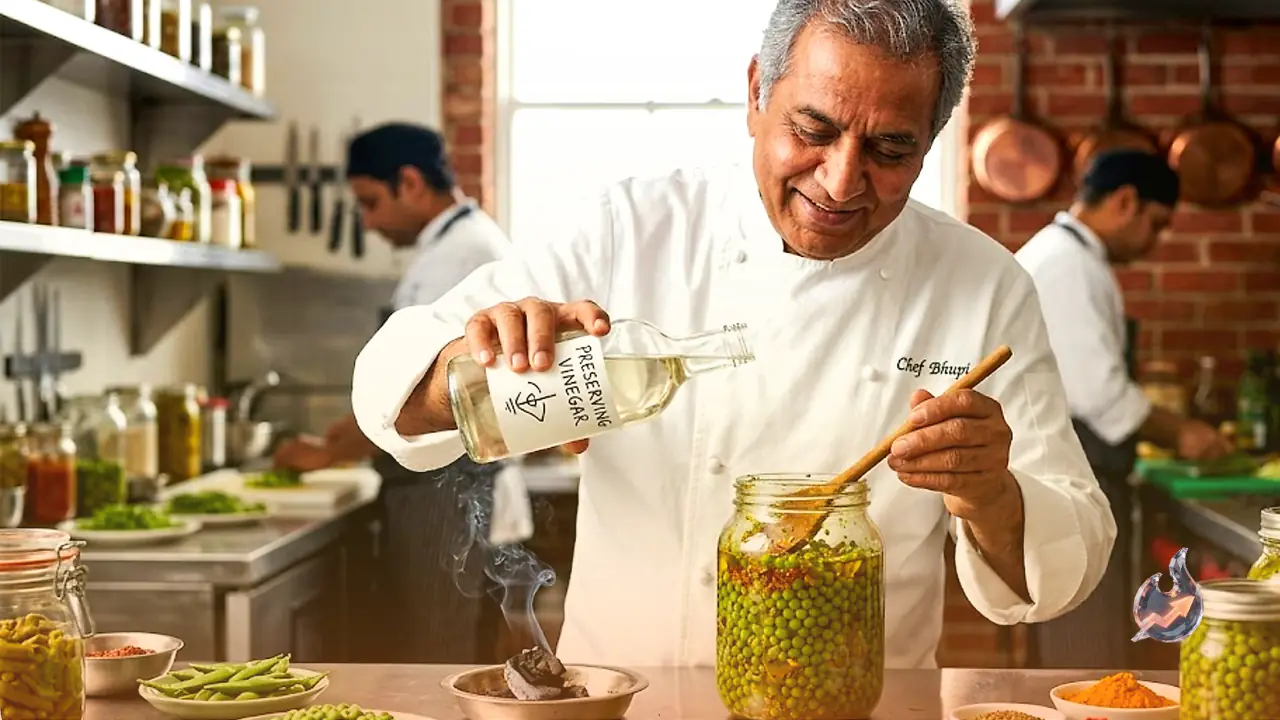
According to Chef Bhupi, the single most important secret to making this pickle last a long time is vinegar. Adding two to three teaspoons of vinegar to the spice mixture does two things at once. First, it introduces a mild, pleasant sourness that complements the other flavors beautifully. Second, it acts as a natural preservative, extending the pickle's shelf life significantly by preventing spoilage. Once the vinegar is well incorporated, the completely dried peas are added to the spiced mixture and tossed until every pea is evenly coated.
The Smoky Flavoring Technique That Makes This Pickle Unique
The most distinctive and unusual step in this entire recipe is the one that gives the pickle its smoky depth. Light a small piece of coal and place a clove on top of it, then drizzle a few drops of oil over the clove. As smoke begins to rise, hold a clean glass jar upside down over the coal so the smoke gets trapped inside the jar. After a short while, the interior of the jar fills with a fragrant, smoky aroma. Packing the pickle into this smoke-seasoned jar infuses it with a subtle smokiness that no spice or flavoring agent can replicate.
How to Store the Pickle for Best Results
Before filling the jar, make absolutely certain it is completely dry and clean inside. Even a small amount of moisture can cause rapid spoilage. Pack the finished pickle into the smoke-infused jar and seal the lid tightly. After a few days of resting, the spices and the peas meld together fully and the pickle reaches its best, most rounded flavor.
What to Eat This Pickle With
This green peas pickle pairs wonderfully with parathas, pooris, dal and rice, khichdi, and plain rotis alike. Its sharp, tangy heat elevates every bite it accompanies, turning a simple meal into something memorable. During the winter months especially, this pickle can transform even the most modest spread into a genuinely satisfying dining experience.