























In this Alley Cats review, British comedian Ricky Gervais shifts into animated storytelling with his six-episode Netflix project, though the final product falls well short of his celebrated history. As his landmark series The Office celebrated its 25th anniversary this year, it remains the standard by which his work is judged. In contrast, Alley Cats clearly belongs to late-era Gervais, sharing similarities with After Life and Derek. The show incorporates many of his recent creative habits, combining cynical observations about existence with crude humor and sudden transitions into sentimentality.
Animation Approach and Episode Structure
Gervais has established a comfortable position in television, supported by a dedicated fanbase and reliable backing from Netflix. For this show, he selected an animation format reminiscent of Family Guy, avoiding complex visual techniques in favor of a straightforward look. The series consists of six episodes, each running approximately 16 to 17 minutes. Despite this concise running time, the episodes frequently drag due to a narrative structure that lacks direction and momentum.
Plot Premise and Script Direction
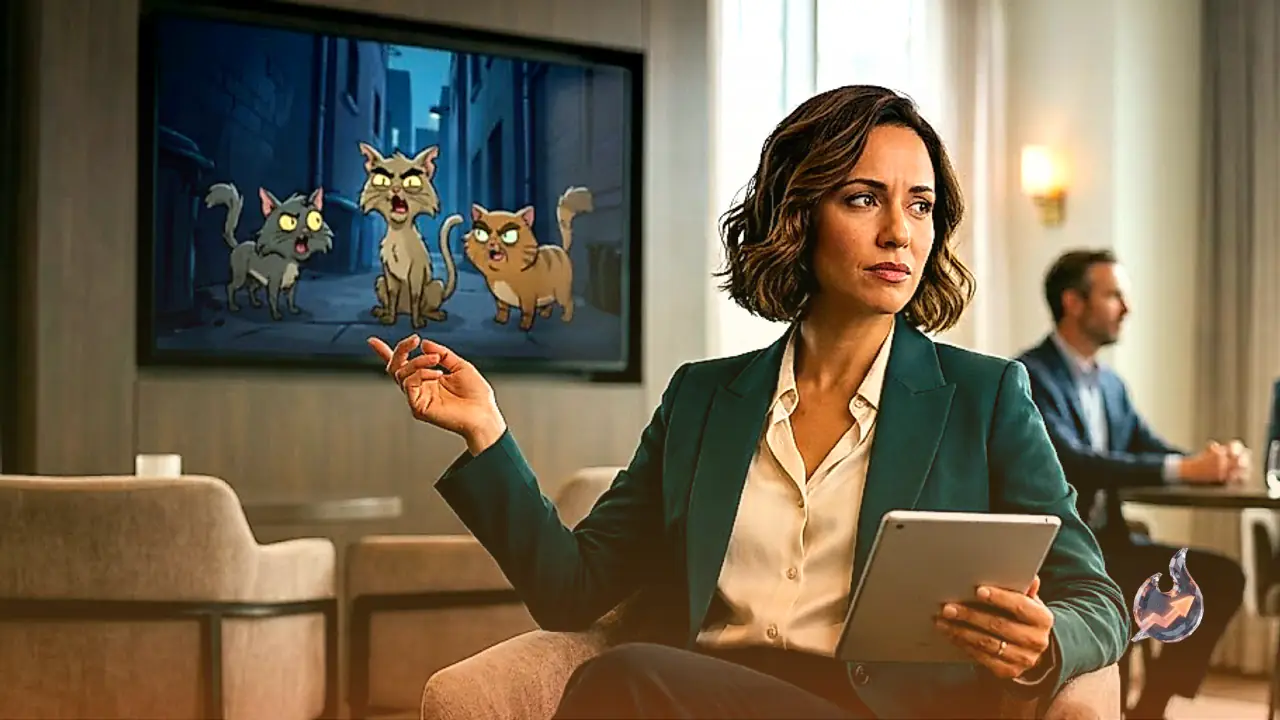
The primary storyline focuses on a young feline named Kitten, voiced by Jo Hartley, who is attempting to reunite with her family. Along her journey, a group of street cats led by Gus, voiced by Gervais himself, offers lessons about surviving in the world. However, this simple plot framework is often set aside in favor of lengthy, profanity-laden discussions that move without a clear destination. The resulting setup resembles a crude variation of Aardman's Creature Comforts.
Linguistic Choices and Tonal Shifts
Gervais handled both writing and directing duties for every episode of the series. The dialogue heavily relies on explicit language as a source of humor, reflecting a writing style that feels surprisingly immature. This reliance on basic shock value echoes adult animated films like Seth Rogen's Sausage Party. Additionally, the script serves as a platform for Gervais to revisit long-standing grievances, including criticisms of charitable initiatives such as Comic Relief and Live Aid. During one scene, Gus mocks charity singles that ask Western nations for money to fund building materials in Africa. The show also includes impressions mocking individuals with learning difficulties. Each episode concludes with an abrupt emotional resolution accompanied by songs from James Taylor, Cat Stevens, and Coldplay, creating a tonal shift that feels disconnected from the preceding content.
Voice Performances and Overall Assessment
The primary strength of the show lies in its vocal performances, featuring experienced actors from Gervais' recurring cast. Tom Basden provides the voice for an arrogant house cat named Ponce, while David Earl plays an elderly cat named Puke. Their contributions stand out as the few engaging elements of the production. Throughout his career, Gervais has responded to negative feedback by positioning himself as an unyielding provocateur who rejects sensitivity. However, the core flaw of Alley Cats is not its potential to offend, but rather its lack of energy, original ideas, and comic precision.