



















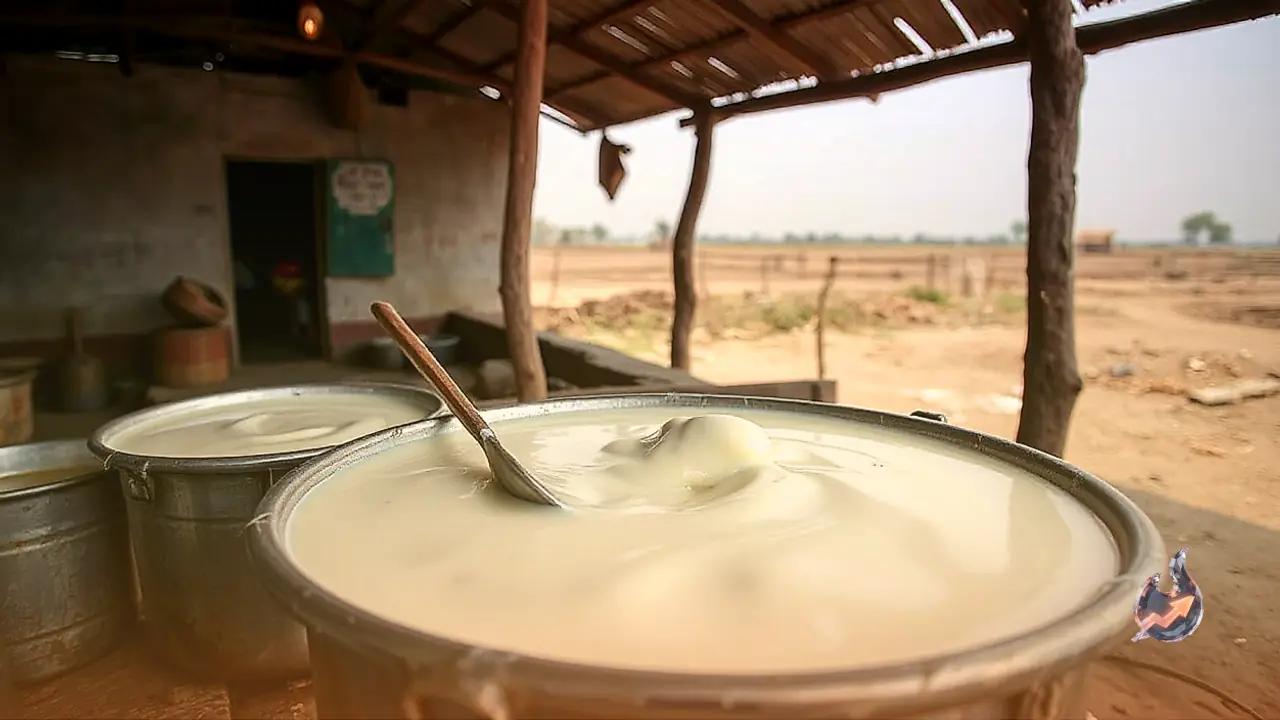

In the rural pockets of Lakhimpur Kheri district in Uttar Pradesh, the traditional method of preparing pure desi ghee from milk cream and butter remains alive and practiced to this day. Amidst changing lifestyles, people are becoming increasingly conscious about their diet and nutrition, which keeps the demand for pure homemade ghee steady alongside packaged market alternatives. Several families across rural regions still rely on milk and curd to produce their own cooking fat at home, employing time-tested traditional techniques.
The journey of making desi ghee begins right from the milk itself. Fresh milk is first boiled and allowed to cool down completely, after which the cream that accumulates on top is collected in a separate container. After gathering this cream over several days, a small amount of curd is added to it to set. This mixture is then churned using a traditional churner, which effectively separates the butter from the buttermilk.
Wooden churners continue to be the preferred tool in rural households for extracting butter. When the cream is churned thoroughly, small globules of butter begin to form on the surface. These are separated from the buttermilk and washed cleanly with fresh water. Following this washing process, the collected butter is placed inside a heavy-bottomed vessel and heated over a low flame. As it heats up, the moisture trapped within the butter evaporates as steam, and the process of transforming it into clear ghee gradually unfolds.
After some time, the frothy layer forming on top of the boiling ghee starts to subside, and solid milk particles settle down at the bottom of the vessel. Once all the water content has evaporated and a rich, pleasant aroma begins to emanate, the vessel is removed from the heat source. After cooling down adequately, the ghee is carefully transferred into a clean storage container.
The authenticity of traditionally prepared desi ghee is primarily identified through its distinct aroma, natural color, and smooth texture. As it cools, the ghee naturally solidifies. However, the exact color and texture can vary depending on factors such as the quality of the milk, the diet of the dairy animal, and the precise method used during preparation. For instance, ghee produced strictly from cow milk can exhibit a light or deep yellow hue under different conditions.
Muskan, a resident of a rural area in the region, shares that her household still relies on a traditional wooden churner to craft desi ghee. To achieve this, milk cream is collected over multiple days and stored securely in a refrigerator to prevent spoilage. Once an adequate quantity of cream accumulates, it is churned vigorously to separate the buttermilk from the butter. The extracted butter is then heated to yield the final product. According to Muskan, the entire heating process takes approximately 20 to 30 minutes to transform the butter into finished ghee. She highlights that ghee prepared at home through these traditional methods is completely free from any form of adulteration.