






















In rural households, the age-old custom of crafting fresh clarified butter directly from milk, curd, and rich cream remains widely celebrated. Many consumers deliberately prefer homemade desi ghee over commercially packaged store alternatives, primarily because making it at home guarantees complete control over the purity of ingredients and the hygiene of the preparation process. If fresh milk is delivered to your household every day and yields a layer of cream, that everyday cream can easily be repurposed into aromatic, pure ghee. The entire process requires neither expensive kitchen gadgets nor specialized industrial equipment, relying instead on straightforward kitchen techniques.
Proper Collection and Storage of Daily Cream
According to Savita Srivastava, the preparation begins by thoroughly boiling the daily milk supply and allowing it to cool down completely. Once cooled, use a clean spoon to carefully skim off the rich layer of cream that forms on top, transferring it into a clean container fitted with a tight lid. This container should strictly be kept inside the refrigerator to prevent the accumulated cream from spoiling, souring, or growing stale prematurely. Cream can be steadily gathered over multiple days until a substantial quantity has accumulated. Only when a sufficient volume is ready should the ghee-making process proceed. It remains critical throughout this stage that every spoon and storage vessel used is entirely clean and moisture-free.
Churning the Cream to Separate Fresh Butter
Once enough cream has gathered, transfer the entire batch into a wide mixing bowl or large pan. Pour in a small quantity of cold water, then churn the mixture thoroughly using either a traditional handheld wooden churner or an electric mixer. After a brief period of steady churning, the butter will begin separating from the liquid, clumping together at the top while leaving a thin, buttermilk-like fluid at the bottom. Carefully collect this buoyant layer of butter by hand or with a spoon and place it into a separate bowl. Rinse the extracted butter gently once or twice using clean, chilled water to wash away any lingering traces of buttermilk. This washing step minimizes the risk of scorching during cooking and significantly extends the shelf life of the finished product.
Slow Simmering and Straining Technique
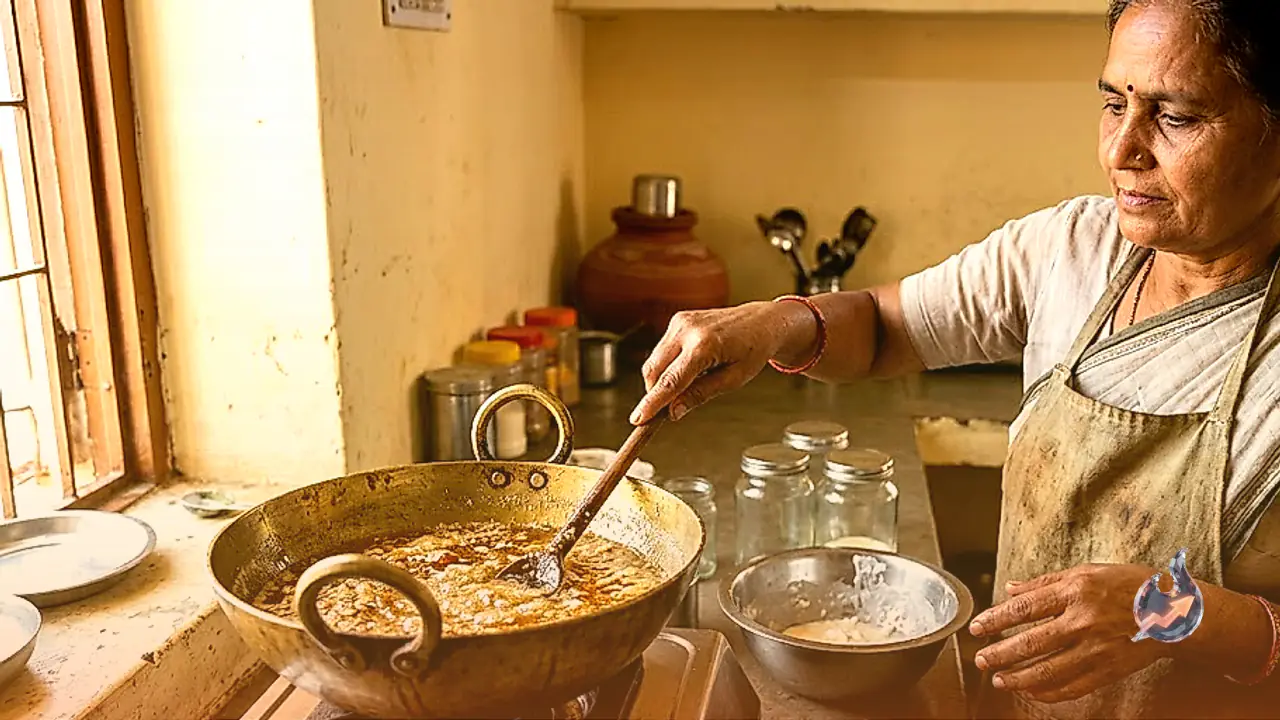
Place the rinsed butter into a heavy-bottomed pan or deep skillet and set it over low heat. The butter will gradually melt into liquid form, accompanied by gentle bubbling across the surface. Stir the contents occasionally with a spatula to prevent settling at the base, taking care never to raise the flame to high. As the simmering continues, any residual moisture will evaporate as steam, leaving behind clear, translucent golden ghee. When fine, light brown sediment settles quietly at the bottom and a rich aroma fills the kitchen, switch off the heat immediately. Allow the liquid ghee to cool slightly, then strain it through a clean cotton muslin cloth or a fine metal sieve into a completely dry glass jar. This freshly rendered homemade ghee is ready for everyday culinary use.