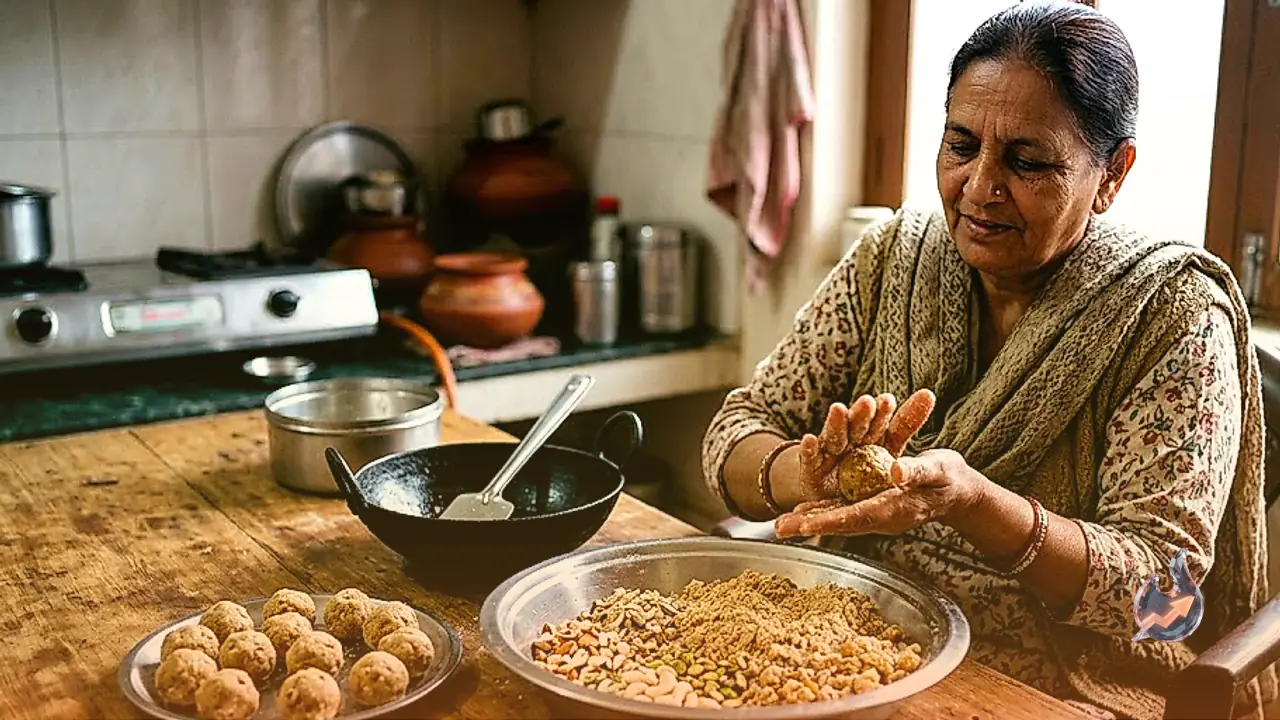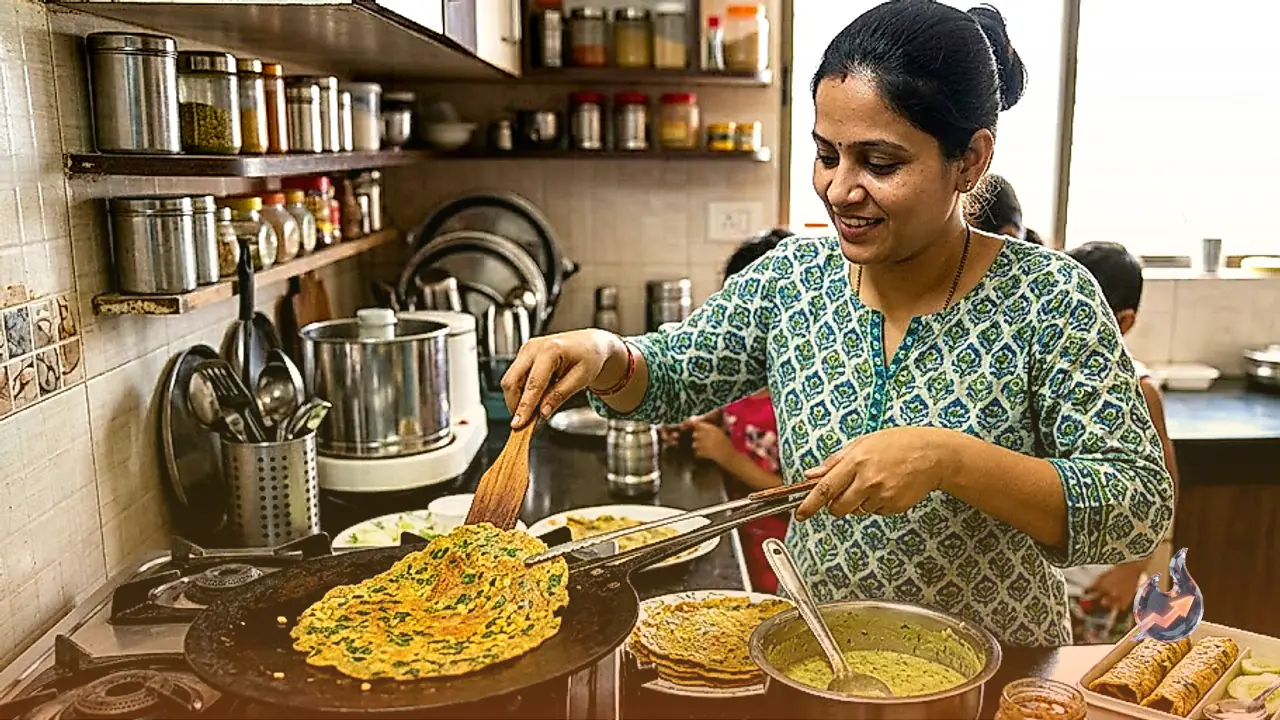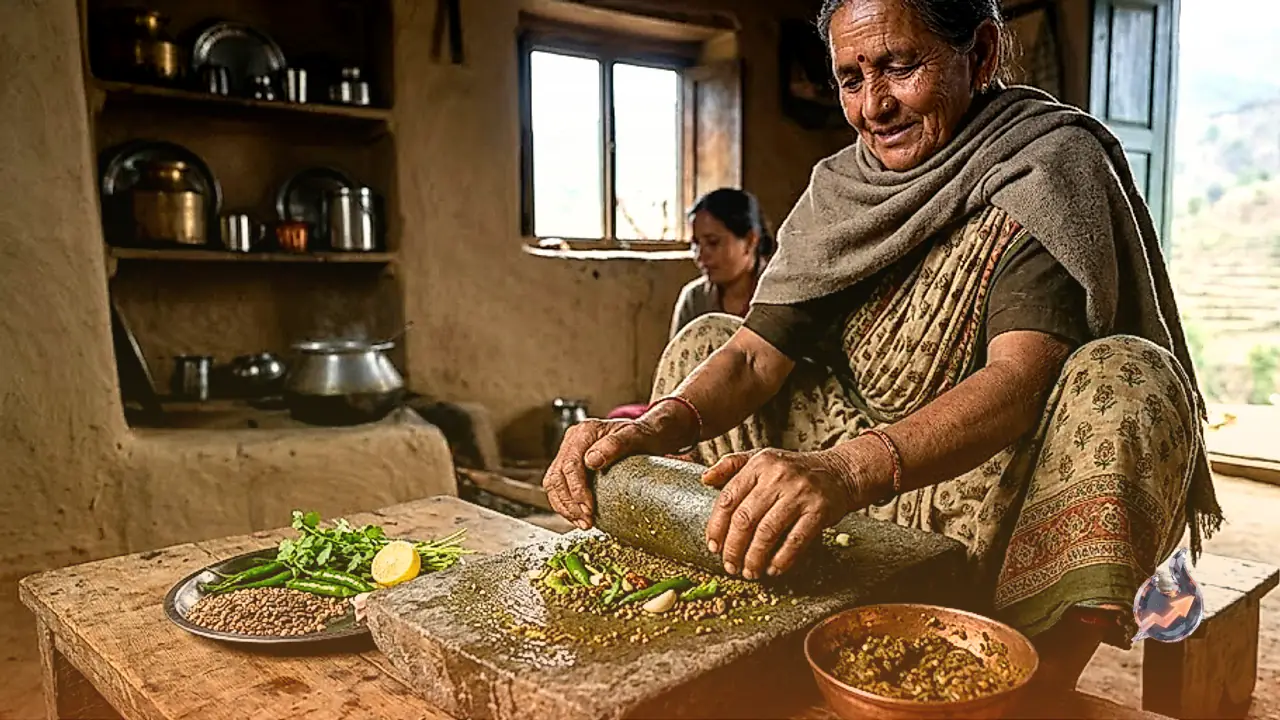

























When sudden cravings for a sweet dish strike and stepping out to a market is inconvenient, common pantry essentials can easily come to the rescue. While traditional jalebis purchased from sweet shops are universally recognized for their crisp spiral coils soaked in heavy sugar syrup, substituting refined sugar with jaggery creates a unique and appealing alternative. Jaggery jalebi delivers a distinct earthy flavor profile and can be prepared effortlessly in any home kitchen.
The recipe does not demand an elaborate list of specialized ingredients. Plain refined flour, a spoonful of clarified butter, a dash of rice flour, and raw jaggery are all that is required to set the process in motion. Achieving the ideal batter consistency and managing the exact consistency of the warm syrup guarantees a confection that stays remarkably crisp on the exterior while remaining succulent inside.
Measuring and Blending the Batter Base
The foundation of the dish begins with placing one bowl of all purpose flour into a mixing container. Add approximately one and a half spoons of pure desi ghee along with one spoon of rice flour. Clarified butter imparts a tender interior crumb, whereas rice flour is essential for helping the fried spirals retain their firm, crunchy shell over time. Blend these dry components briefly before introducing any liquid.
Gradually pour water into the flour mixture in small increments. Dumping water in one go should be avoided, as it inevitably creates stubborn lumps that ruin the smoothness of the mixture. Whisk continuously until an even, lump-free batter emerges. The batter should strike a balance between extremes, avoiding being excessively watery or overly thick. Beat the batter energetically for one to two minutes to introduce lightness, then cover the bowl and allow it to rest briefly so the flour hydrates evenly.
Brewing and Straining the Jaggery Syrup
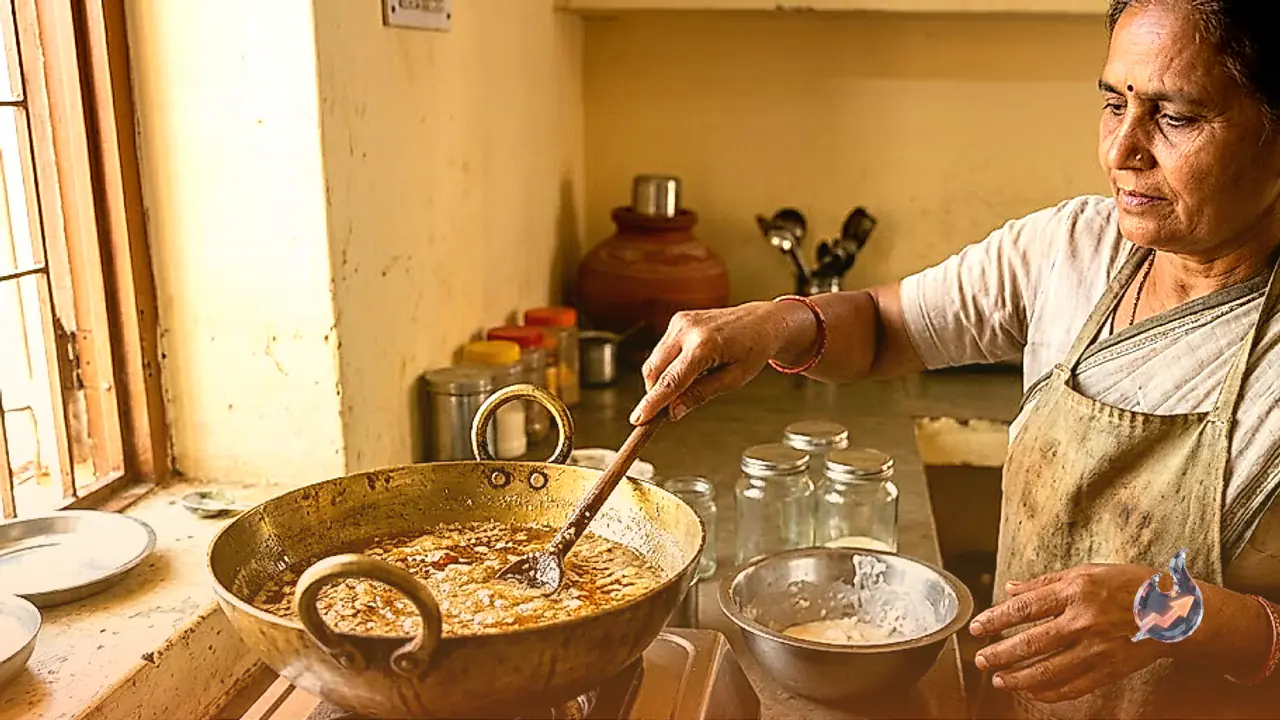
To prepare the syrup, break the solid jaggery block into small, uniform pieces to facilitate quick and uniform melting. Place these pieces into a pan along with roughly one bowl of clean water. Turn the flame to a low-medium setting and let the jaggery dissolve slowly without scorching.
Once the jaggery has completely melted into the water, resist the urge to boil the syrup for an extended period. This preparation does not require reaching a multi-string stage; a lightly sticky texture to the touch is the exact consistency required. An excessively concentrated syrup will fail to penetrate deep into the fried coils. Once the syrup feels slightly tacky between the fingers, take the vessel off the heat and pass the liquid through a fine sieve into another bowl. Straining eliminates any residual sand particles or impurities natural to raw jaggery, resulting in a clean and smooth syrup.
Final Aeration and Bottle Preparation
Right before proceeding to fry, stir the rested batter thoroughly one more time. Introduce approximately half a packet of fruit salt, commonly known as Eno, into the mixture and fold it gently through the batter. For a single bowl of flour, half a packet provides sufficient aeration without imparting an unpleasant aftertaste. The batter will immediately respond by turning airy, foamy, and visibly lighter.
Once the fruit salt is incorporated, work promptly and do not leave the batter idle on the counter. Transfer the mixture into a clean squeeze sauce dispenser bottle. In the absence of a plastic sauce bottle, a clean, sturdy food-grade pouch snipped at the corner works equally well as a piping bag. Ensure the nozzle opening remains small so that the batter streams out smoothly in controlled, neat threads.
Shaping and Frying in Hot Oil
Heat a sufficient quantity of cooking oil in a wide, flat-bottomed pan and adjust the burner to a steady medium flame. Holding the dispenser over the warm oil, squeeze gently while moving in concentric circles to form the iconic spiral jalebi shape. Avoid overcrowding the pan; pipe only as many spirals as can float freely without colliding. Leaving ample space allows each piece to fry evenly and makes turning them over manageable.
Fry the spirals until they develop a light golden brown hue and a crisp, rigid structure. Because jaggery naturally introduces a slightly darker coloration into the overall confection, take care not to fry the spirals to an overly dark shade. Artificial food coloring is entirely unnecessary here, as the natural tone of the jaggery provides an appealing rustic tint.
Soaking Time and Temperature Balance
As soon as the jalebis are lifted out of the hot oil, drain excess oil momentarily and transfer them straight into the lukewarm jaggery syrup. The thermal balance of the syrup is crucial; it should neither be scalding hot nor completely cold. A cold syrup prevents deep absorption into the spirals, whereas boiling syrup will instantly soften the crisp outer shell into a soggy mess.
Submerge the fried jalebis in the syrup for a brief duration of approximately five to six seconds before lifting them out. Extended steeping causes the fried batter to lose its signature crunch. Keeping an attentive eye on both duration and warmth ensures every jalebi stays remarkably crispy on the outside while bursting with warm jaggery syrup on every bite.