






















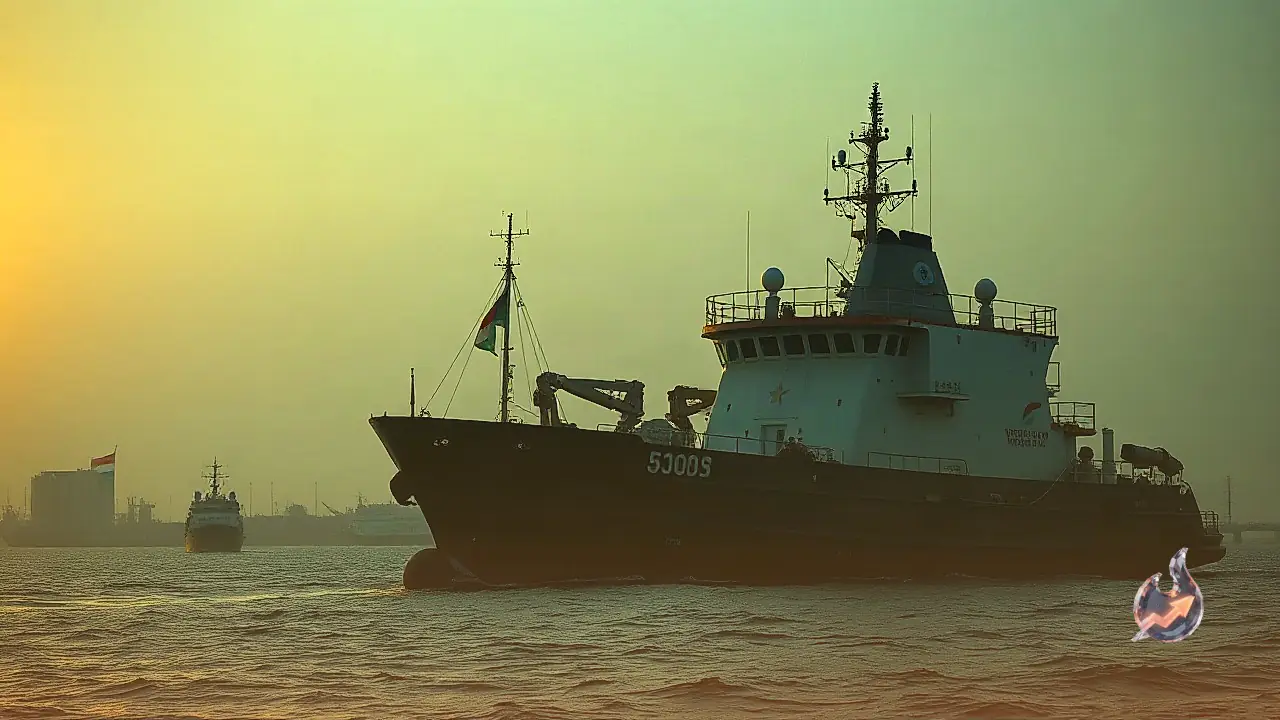

Maritime perils facing international shipping lanes in the Gulf region escalated sharply on Wednesday following a deadly offensive against a merchant vessel navigating off the eastern shoreline of Oman. The targeted commercial vessel, MV Cape Dao, was voyaging toward India when the incident occurred. Carrying a 20-member Indian crew complement, the ship suffered significant damage that resulted in the demise of one crew member, while 19 other Indian seamen on board were successfully brought to safety. Diplomatic officials stationed at the Indian Embassy in Muscat verified the development and immediately initiated contact with Omani authorities to coordinate emergency procedures.
Ministry of External Affairs Condemns Aggression and Urges Diplomacy
Expressing deep distress, the Ministry of External Affairs issued an official condemnation against the continuous targeting of commercial freighters in regional shipping channels. The ministry underscored that hostilities directed at merchant fleets, non-combatant maritime crews, and civilian transport infrastructure must cease immediately. Reaffirming India's stance on regional stability, New Delhi appealed for de-escalation through purposeful diplomatic engagement and bilateral dialogue, urging all concerned parties to restore unhindered navigation and safe commercial transit through international sea corridors without delay.
Embassy Coordinates Crew Repatriation and Family Outreach
The Indian diplomatic mission in Muscat is supervising the post-rescue measures in direct collaboration with Omani rescue teams. Consular representatives noted that efforts are underway to facilitate the prompt repatriation of the 19 rescued sailors to India. Alongside administrative clearance for the surviving personnel, diplomatic authorities extended condolences to the bereaved family of the deceased seafarer and established direct communication to provide continuous consular assistance and manage all legal repatriations.
Identity of Deceased Sailor and Mechanics of the Strike
Further specifics regarding the casualties were shared by the Forward Seamen's Union of India (FSUI), which verified that the deceased crewman was wiper Suraj Yadav, hailing from the Deoria district of Uttar Pradesh. Documenting the development via a communication posted on X, the union highlighted the recurring human toll on mercantile personnel, observing that another Indian mariner had lost his life while the carrier was making passage to India.
According to technical assessments documented by the union, MV Cape Dao was struck by two torpedoes. One projectile detonated on the port side of the C-deck accommodation section, whereas the second torpedo impacted the port side hull in close proximity to the ship's engine room. The dual structural breaches inflicted catastrophic disruption within critical service compartments, causing the fatality before the crew could mount an emergency egress.
Mounting Hazards Near the Strait of Hormuz
Highlighting the escalating vulnerability of trade crews, the maritime union voiced severe alarm over the safety of ordinary civilian sailors operating around the Strait of Hormuz and its adjoining seaways. Expressing indignation over worsening protections, the union declared that guarantees of safety hold no validity when innocent commercial crew members continue to face deadly perils along critical trade routes.
The offensive marks another chapter in a string of assaults across the perimeter of the Arabian Sea. Merely days prior, on September 13, the commercial tanker MT El Gaia encountered an attack off the coast of Oman while operating with an all-Indian crew of 14 personnel. In that incident, 13 crew members were saved while search efforts commenced for one sailor who remained unaccounted for, drawing formal condemnation from Indian diplomatic channels. These recurring strikes spotlight an increasingly hazardous security landscape for maritime freight transiting between the Gulf and the Indian subcontinent.