







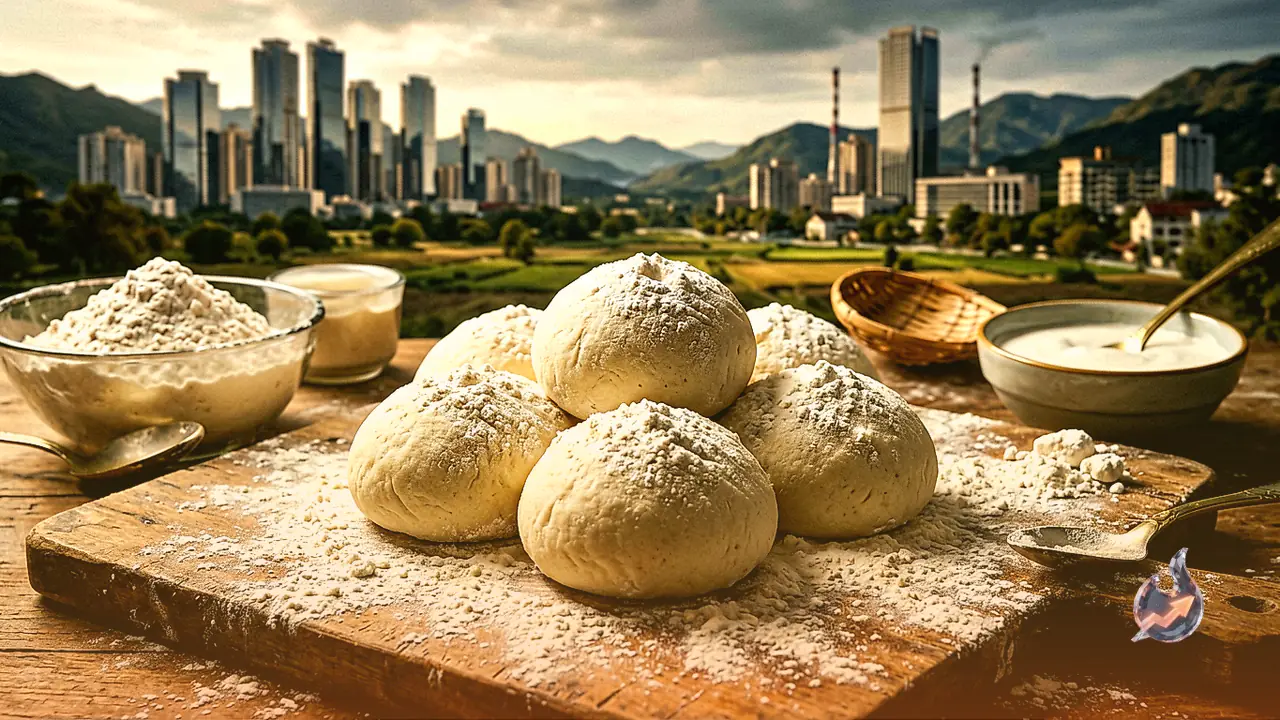

Garmagaram and puffy bhaturas served alongside spicy chole are a beloved North Indian delicacy. However, making them at home often presents a common challenge, as they either fail to puff properly or turn tough and chewy after cooling down. The secret behind achieving restaurant-quality bhaturas lies entirely in kneading the dough with the right proportions and giving it sufficient time to rest.
Essential Ingredients for Soft Bhaturas
Getting the exact ratio of ingredients is crucial for creating the perfect dough texture. Here is the complete list of ingredients required
- Refined Flour (Maida): 2 cups
- Semolina (Sooji): 2 cups
- Curd (Yogurt): 1/2 cup
- Oil: 1 tablespoon for the dough, plus extra for deep frying
- Salt: To taste
- Sugar: To taste
- Baking Powder: As required
- Water: Lukewarm water for kneading
Step-by-Step Dough Preparation Method
The texture of bhatura dough must be balanced perfectly, remaining soft without becoming too sticky to roll. Begin by taking a large mixing bowl or traditional parat and combining 2 cups of maida with 2 cups of sooji. Add salt to taste, sugar, and baking powder into the bowl, mixing all the dry ingredients evenly.
Next, pour 1/2 cup of curd and 1 tablespoon of oil into the flour mix. Use your hands to rub the curd and oil thoroughly into the flour mixture so that it distributes uniformly. Incorporating curd and semolina enhances the structural texture of the dough, giving bhaturas a tender crumb inside and a light crispness outside.
Gradually pour lukewarm water into the mixture in small increments while kneading. Avoid adding a large quantity of water all at once to prevent the dough from getting overly wet. Continue mixing gently with lukewarm water until a soft, smooth, and pliable dough is formed.
Resting the Dough and Shaping Portions
Once the dough is fully kneaded, apply a thin coat of oil over its surface to prevent a hard crust from forming. Cover the bowl securely and place it in a warm spot for about 2 to 3 hours. Allowing the dough to rest for 2 to 3 hours is vital, as the combination of curd and baking powder ferments the dough slightly, relaxing the gluten and making it easy to roll.
After 2 to 3 hours have passed, inspect the dough and knead it very lightly with your hands once more. Divide the rested dough into equal small portion balls (loiyan).
Rolling and Frying Techniques for Perfect Expansion
Take one dough portion at a time and roll it out gently using a rolling pin into a round or oval bhatura shape. Apply gentle, even pressure while rolling to maintain a uniform thickness.
Heat a generous amount of oil in a kadai or deep frying pan until it becomes thoroughly hot. Frying in piping hot oil is an absolute essential rule for achieving fluffy bhaturas. Carefully slide the rolled bhatura into the hot oil.
Immediately press the top surface of the bhatura very gently with a slotted spoon. This gentle pressing encourages steam expansion inside, causing the bhatura to swell up like a balloon instantly. Once the bottom side turns light golden, flip it over and fry until both sides are evenly golden brown before removing it from the oil.
If the oil is insufficiently hot or lukewarm, the bhaturas will fail to puff up properly and will absorb an excessive amount of oil. Maintaining the correct oil temperature ensures grease-free, perfectly puffed bhaturas to enjoy hot with chole.