






















Festive celebrations across India remain incomplete without the sharing of traditional sweets. During major celebrations such as Diwali and Bhai Dooj, serving a platter of soan papdi brings an unmistakable festive cheer to every household. Known for its delicate flaky texture, rich aroma, and melt-in-the-mouth quality, it stands among the country's most cherished confections. Many home cooks assume that recreating the signature layered texture of professional sweet makers is an impossible culinary task. However, achieving crisp, flaky, and authentic soan papdi at home requires only the right proportions of ingredients, precise heat control, and proper syrup handling.
Key Ingredients and Exact Measurements
Replicating commercial-quality flakiness in a home kitchen requires strict adherence to ingredient ratios. The foundational components for preparing this classic sweet include
- Gram Flour (Besan): 1 cup, properly sieved to eliminate lumps.
- Pure Desi Ghee: 1 cup, allocated across roasting, shortening, and greasing surfaces.
- Milk: 2 to 3 teaspoons, used specifically for clarifying the sugar syrup.
- Cardamom Powder: 1 teaspoon, for authentic festive fragrance and flavor.
- Glucose Syrup or Corn Syrup: 1 tablespoon (optional), which prevents crystallization in the sugar base.
- Garnish: Finely slivered almonds and pistachios.
- All-Purpose Flour and Sugar: Required quantities of flour for structural elasticity, along with sugar and water for the reduction base.
Roasting the Flour Base to a Golden Fragrance
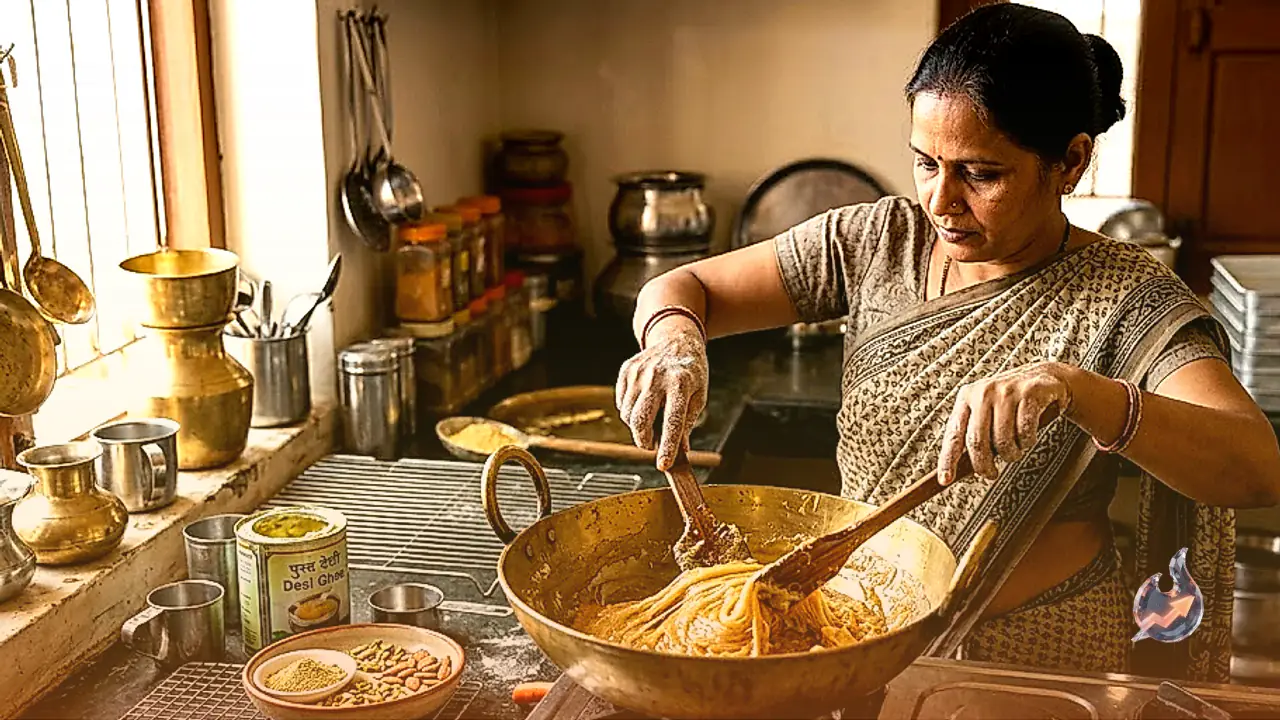
The foundation of premium soan papdi lies in how carefully the flour base is cooked. Begin by placing a heavy-bottomed pan or kadhai over a low flame and melting half a cup of pure desi ghee. Once the ghee warms up, incorporate the sieved gram flour alongside the all-purpose flour. Keep the stove on a gentle low flame and stir the mixture continuously with a spatula.
Roasting slowly over low heat removes any raw flour flavor while unlocking a rich, nutty aroma across the kitchen. It is vital to avoid high heat, which can quickly scorch the flours or cause excessive browning. As soon as the flour turns aromatic and lightly toasted without becoming overly dark, remove the vessel from the stove. Allow the mixture to cool down slightly, then pass it through a fine mesh sieve once more to guarantee an entirely lump-free, silky consistency.
Preparing and Clarifying the Hard-Crack Sugar Syrup
The flakiness and elasticity of the threads rely entirely on the density of the cooking syrup. In a separate heavy pot, combine the sugar and water over medium heat until the sugar dissolves. Stir in a tablespoon of glucose syrup or corn syrup to stop premature crystallization, then add two to three teaspoons of milk as the liquid comes to a simmer.
The milk causes residual impurities within the boiling sugar to rise to the surface as foam. Skim off this murky scum using a ladle to ensure a clean, clear cooking syrup. Continue simmering the liquid until it reaches a thick 2 to 2.5 string consistency, commonly designated as the hard-crack confectionery stage. When the reduction becomes sufficiently thick and syrupy, take it off the flame immediately.
Cooling and Pulling the Sugar Threads
Lightly grease a wide metal platter or shallow tray with ghee to prevent sticking. Pour the hot syrup onto this prepared surface and allow it to cool down gradually. As soon as the syrup drops to a temperature that can be safely touched by hand while still remaining pliably warm, coat your palms with a thin layer of ghee and begin working the mixture.
Stretch the warm syrup outward between both hands, fold it back over itself into a loop, and pull it again. Repeat this steady pulling and folding cycle continually. As air incorporates into the syrup, its amber translucence will transform into an opaque, glossy white color. Continued stretching forces the dense sugar mass to divide into thousands of micro-fine, delicate filament threads.
Incorporating the Flour, Layering, and Slicing
Once the fine sugar threads develop, lay them directly over the previously roasted, sieved gram flour blend. Using your hands, gently roll and coat the sugar filaments in the flour mixture while continuing to stretch and fold with light pressure. As the dry flour coats the sticky threads, the confection naturally separates into airy, paper-thin laminations that give soan papdi its iconic flaky profile.
To complete the sweet, scatter slivers of pistachios and almonds evenly across the base of a wide rectangular tray or pan. Transfer the threaded mixture into the tray, pressing it down gently and evenly with flat hands to level the surface without crushing the internal air pockets. Allow the confection to cool completely and firm up at room temperature. Once set, cut the slab into neat square portions using a sharp chef's knife. Stored inside an airtight container, this homemade sweet made with pure desi ghee will preserve its crisp texture and rich taste for several weeks.