




















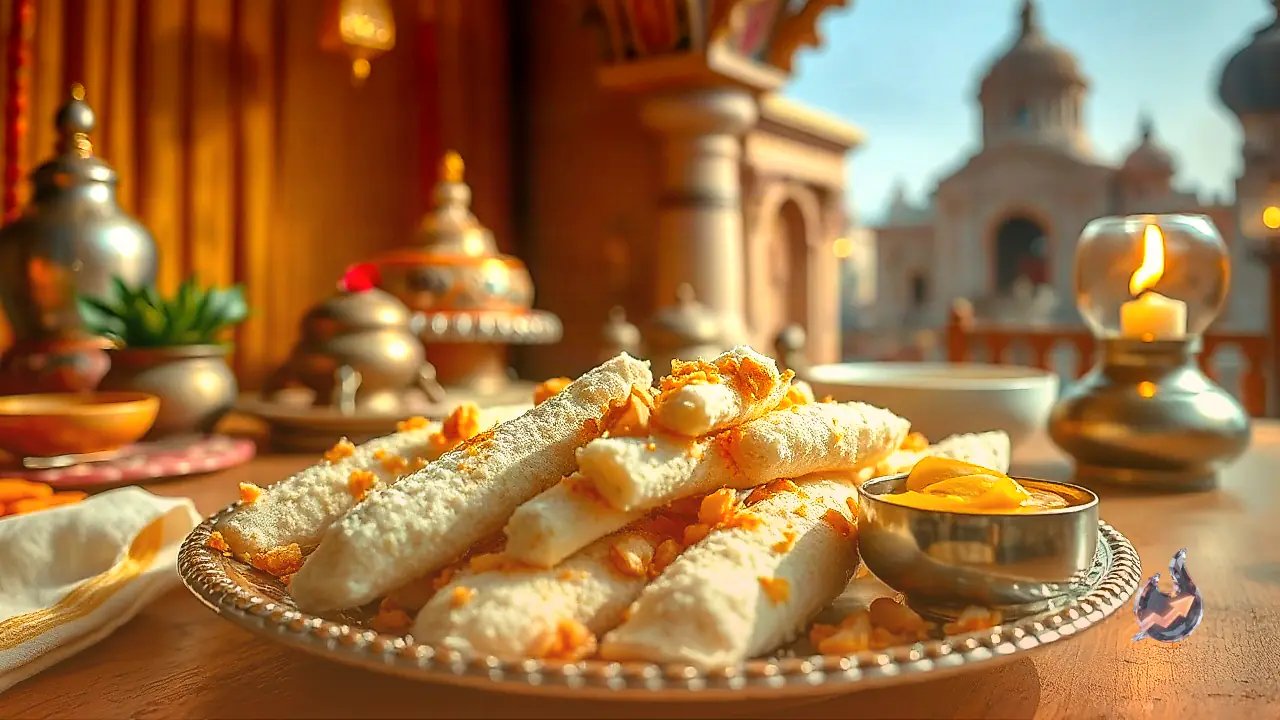

With the auspicious arrival of Shri Krishna Janmashtami, homes across the country resonate with festive enthusiasm and elaborate culinary preparations. Offering homemade traditional sweets to Lord Kanha during his birth celebrations holds immense religious and cultural significance. When it comes to royal Indian sweets, Mohanthal a celebrated delicacy from the culinary traditions of Gujarat and Rajasthan occupies a place of pride. Crafted from gram flour, pure clarified butter (ghee), and sugar syrup, this rich sweet is renowned for its aromatic fragrance and melt-in-the-mouth granular texture. While many believe that recreating halwai-quality Mohanthal at home is a daunting culinary task, following precise measurements and traditional techniques makes the process straightforward and highly rewarding. Preparing fresh, unadulterated Mohanthal at home for Bal Gopal enhances the joy of the festival while keeping health and purity at the forefront.
Essential Ingredients and Precise Ratios
Achieving the quintessential texture and authentic flavor of Mohanthal relies heavily on using exact ingredient proportions. The required components for this recipe include
- Gram Flour (Besan): 2 cups (coarsely ground or danedar besan yields the best results).
- Pure Ghee: ½ cup for roasting the gram flour, 2 tablespoons for shortening (moiyan), plus extra ghee for greasing the setting tray.
- Milk: 4 tablespoons of fresh milk containing cream (malai).
- Sugar: 1 cup for preparing the syrup.
- Water: ¾ cup for the sugar syrup base.
- Cardamom Powder: ¼ teaspoon of freshly crushed green cardamom.
- Nutmeg Powder: A pinch (optional, for added aromatic richness).
- Saffron Strands: A few threads (optional, for natural color and scent).
- Nuts: Finely chopped almonds and pistachios for garnishing.
Step 1: The Art of Moiyan and Preparing the Granular Base
The signature characteristic of Mohanthal is its distinct granular consistency, which is achieved through the traditional step known as 'moiyan' or 'dhabo aapvo'. Begin by taking 2 cups of gram flour in a wide, deep mixing bowl. Add 2 tablespoons of melted pure ghee and 4 tablespoons of fresh cream-rich milk to the flour. Using your fingertips, gently rub the mixture together. Continue rubbing the flour between your palms until the entire batch resembles fine, crumbly breadcrumbs with uniform granulations. Once the ghee and milk are thoroughly incorporated into the besan, cover the bowl with a lid and let it rest undisturbed for 10 minutes. This resting phase allows the gram flour grains to absorb the moisture and swell appropriately.
Step 2: Sifting for a Silky, Granular Texture
After the 10-minute resting period, take the rested mixture and pass it through a coarse sieve (a sifter with larger holes). Gently press the mixture through the sieve using your palm or fingers. Sifting eliminates any large lumps and yields a uniform, beautifully granular texture throughout the batch. This critical step is the secret behind Mohanthal's trademark 'danedar' mouthfeel, ensuring every bite is rich, delicate, and evenly structured.
Step 3: Slow-Roasting the Gram Flour to Perfection
Place a heavy-bottomed pan or kadhai over heat and melt ½ cup of pure ghee. Once the ghee is hot, introduce the sifted granular gram flour mixture into the pan. Lower the heat to low-medium and begin stirring continuously. Roasting the gram flour requires approximately 15 to 20 minutes of attentive stirring. Continue roasting until the flour transitions into a warm golden-brown hue and releases a rich, nutty, and soothing fragrance. Patience during this step is crucial; slow roasting prevents the flour from scorching and unlocks the authentic flavor profile of traditional halwai-style sweets.
Step 4: Crafting the 1.5-String Sugar Syrup
While the gram flour is roasting, prepare the sugar syrup in a separate saucepan. Combine 1 cup of sugar and ¾ cup of water over medium heat. Stir until the sugar dissolves completely and bring the solution to a steady boil. Cook the syrup until it reaches a 1.5-string consistency (dedh taar chashni). To test this, place a drop of syrup between your thumb and index finger after letting it cool slightly; pulling your fingers apart should reveal one solid thread and a second partial thread forming. Once the syrup reaches this stage, turn off the flame and mix in ¼ teaspoon of cardamom powder, along with a pinch of nutmeg powder and saffron strands if desired. Ensure the syrup remains warm when combining it with the roasted flour.
Step 5: Combining, Setting, Garnishing, and Serving
When the gram flour is perfectly roasted and golden, reduce the heat to the lowest setting or turn off the burner. Slowly pour the warm sugar syrup into the hot roasted besan in a thin stream while stirring vigorously with a spatula. Continuous stirring prevents lump formation and ensures seamless integration. Keep mixing until the batter thickens and begins separating cleanly from the sides of the pan.
Grease a shallow plate or tray with a thin layer of ghee. Pour the hot Mohanthal mixture onto the tray and spread it evenly using a spatula or the flat bottom of a bowl. Scatter the finely chopped almonds and pistachios evenly across the surface and press them lightly into the sweet. Allow the tray to cool completely at room temperature until the mixture sets firmly. Once set, use a sharp knife to slice the Mohanthal into classic square or diamond shapes. The homemade, pure, and aromatic sweet is now ready to be served. It can be stored in an airtight container for several days without losing its flavor or texture. Beyond Mohanthal, traditional festive offerings like Dhaniya Panjiri can also be prepared at home for Janmashtami celebrations.