





















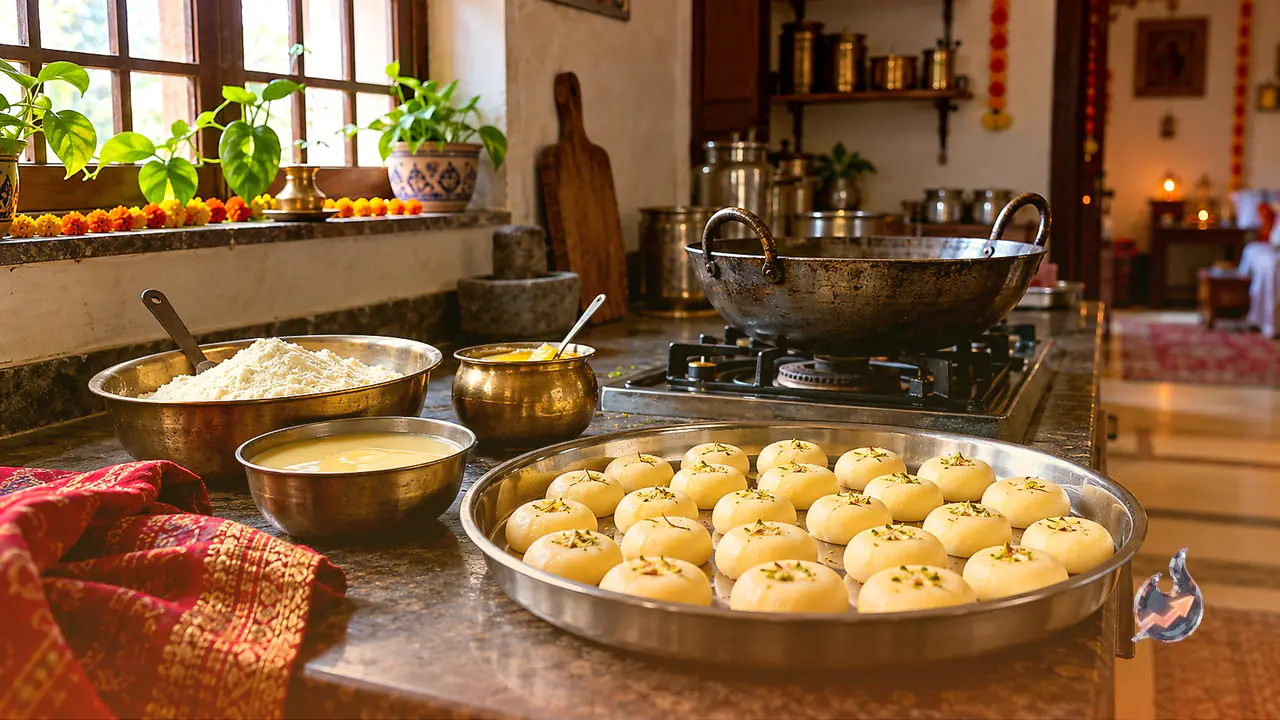

A festive puja plate on Karwa Chauth remains incomplete without a traditional sweet dish. Married women observe a strict waterless fast throughout the day, concluding their prayers only after sighting the moon at night. On such an important occasion, families look for something exceptionally pure, flavorful, and healthy to conclude the fast. However, rampant adulteration in market-bought festive sweets, ranging from synthetic khoya to inferior quality sweeteners, poses a serious risk to digestive health and wellbeing. Preparing a batch of fresh, preservative-free doodh peda at home provides the ultimate festive experience without compromising quality.
Skip Tedious Khoya Roasting With This Quick Kitchen Method
Many home cooks avoid making traditional Indian sweets because the classic process usually demands hours of standing over a hot stove to reduce liquid milk into solid mawa. This simplified technique eliminates the tedious reduction process entirely while achieving the same melt-in-the-mouth richness expected from an experienced confectioner. By combining three basic pantry ingredients in balanced proportions, one can produce fresh batches within minutes. It removes all kitchen complications, allowing anyone to serve a fresh and delicious sweet for the evening rituals.
Exact Measurements for Ingredients Required
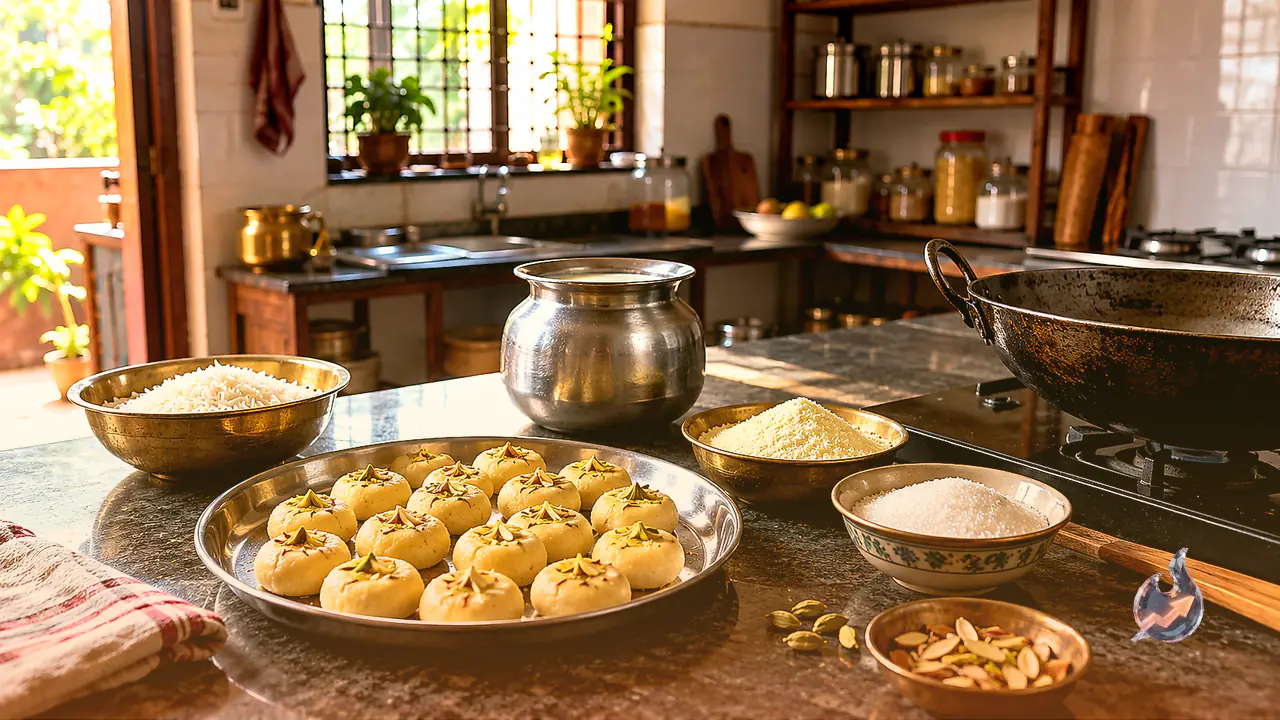
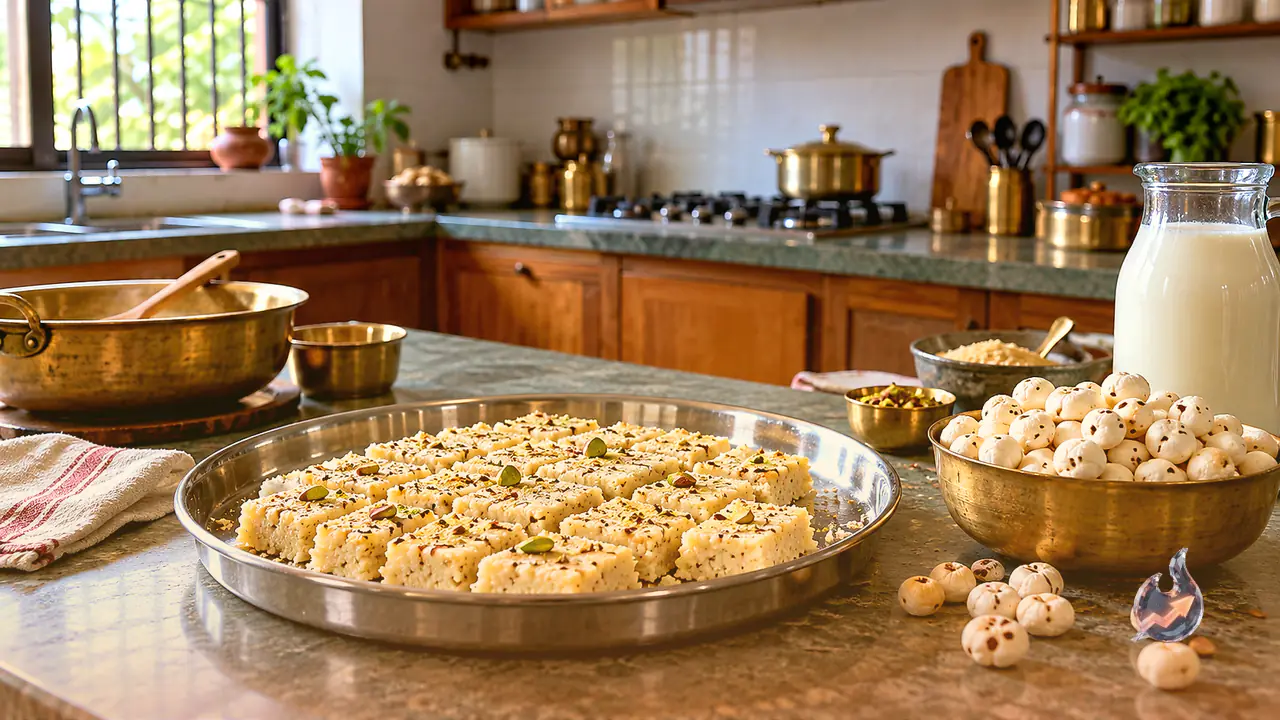
Accurate ingredient measurement ensures that the sweets retain an ideal texture without drying out or turning greasy. The recipe calls for exactly two cups of milk powder, one cup of liquid milk that can be either freshly boiled or kept at room temperature, and two to three spoons of pure desi ghee. Sweetness comes from half a cup of powdered sugar or traditional deshi khand, adjusted strictly according to taste. For aromatic notes and eye-catching presentation, a small pinch of cardamom powder along with slivered pistachios or saffron strands can be included as optional embellishments.
Mixing the Base Smoothly Before Turning On the Heat
The preparation begins inside a clean, heavy-bottomed pan or kadai before placing it over the stove. Leaving the gas stove switched off at this stage is essential for a lump-free outcome. Pour one cup of milk, two cups of milk powder, and two spoons of desi ghee directly into the unheated pan. Using a wooden spatula or spoon, whisk the liquids and powder thoroughly until every lump dissolves completely. The resulting liquid mixture must become uniform and velvety smooth before applying any heat.
Gentle Cooking Process to Achieve Dough Consistency
Once the cold mixture reaches complete smoothness, turn on the stove and set the burner to its lowest possible flame setting. Stir the pan continuously across the base and inner edges to prevent the milky mixture from scorching or sticking. Within four to five minutes of gentle heat exposure, the mixture thickens dramatically and starts behaving like fresh mawa. As soon as it leaves the sides of the pan and gathers together into a cohesive dough-like ball, switch off the heat immediately. Stir in the measured powdered sugar along with the cardamom powder until fully absorbed.
Shaping and Garnishing the Finished Delicacy
Allow the warm mass to cool slightly until it can be handled comfortably by bare fingers. Rub a few drops of desi ghee across your palms to prevent any sticking while rolling. Divide the mixture into equal petite portions, rolling each between your palms into a smooth sphere before pressing down gently to form a flattened disc. Create a slight depression in the center using your thumb to give the sweet its recognizable confectioner contour. Embellish the finished centers with chopped pistachios or saffron strands to complete an authentic, chemical-free festive dessert.