

















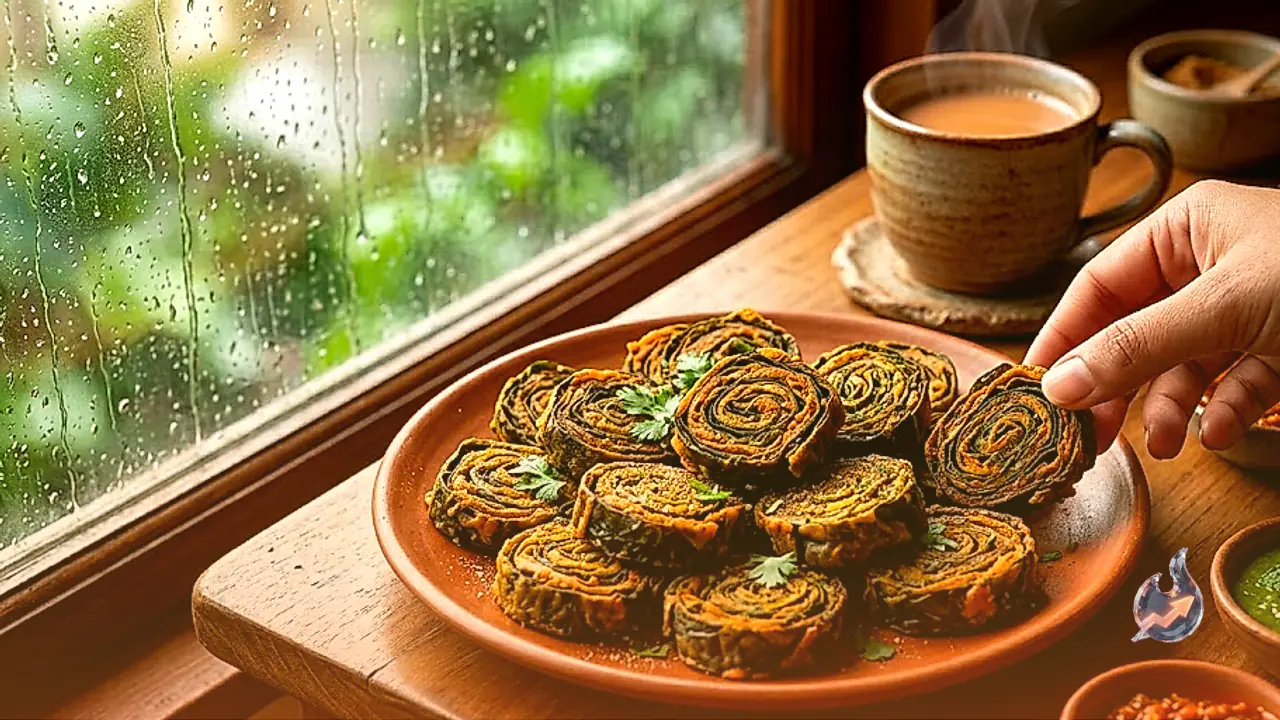

As the monsoon rain sets in, nothing pairs better with a hot cup of tea than something crunchy and spiced, and this season it is worth moving beyond the usual potato, onion or spinach pakoras. Arbi leaf pakoras, made from colocasia leaves, offer a distinct texture and flavour that keeps people coming back for more. Known by different names across various states, this snack is crisp on the outside and packed with spiced layers on the inside, making it a perfect companion for evening tea with family or guests.
Getting the batter right
To start, gram flour (besan), rice flour, turmeric, red chilli powder, coriander powder, carom seeds (ajwain), cumin seeds, asafoetida (hing) and salt are mixed together thoroughly in a bowl. Tamarind pulp or lemon juice is then added to this dry mixture, giving the pakoras their characteristic tangy edge. Water is poured in gradually to form a thick batter. It is important that this batter is neither too thin nor too thick, since a batter that is off in consistency will not stick properly to the arbi leaves and can make rolling the leaves difficult later.
Preparing the colocasia leaves
Once the batter is ready, the arbi leaves need to be washed thoroughly and dried completely so that no moisture remains on them. If any leaf has a thick stem or a prominent central vein, it should be gently flattened with a knife. This step matters because it allows the leaves to fold and roll smoothly without tearing during the rolling process.
Rolling and steaming the leaves
To assemble the rolls, one leaf is laid flat and the prepared besan mixture is spread evenly over it. A second leaf is placed on top and coated with another layer of the mixture, and this process is repeated for three to four leaves in total, building up thickness and multiple layers within the roll. The stacked leaves are then rolled up carefully but tightly, so that the roll does not come apart while being cut or fried later. This roll is steamed for 15 to 20 minutes, allowing the besan filling and the leaves to cook through completely. Once steamed, the roll is left to cool before being sliced into round pieces roughly half an inch to one inch thick.
Frying and serving suggestions
Oil is heated in a pan, and the sliced pieces are fried on medium heat until they turn golden brown and crisp. Those who prefer a lighter version can shallow fry the pieces in a small amount of oil instead, without losing much on flavour. These hot, freshly fried arbi leaf pakoras taste best served with green coriander chutney, sweet tamarind chutney or tomato sauce. Pairing them with a strong cup of ginger tea takes the experience up another notch. This traditional monsoon snack is the kind of dish that both family members and guests tend to enjoy equally.