




















When the vegetable tray in the refrigerator looks uninspiring, gram flour often becomes the most dependable kitchen staple across Indian homes. Yet, relying strictly on standard curry or everyday savoury pancakes can turn repetitive. Exploring regional fusion offers a practical way to reinvent simple ingredients without elaborate shopping trips. Besan gatta patodi rolls combine the delicate appeal of Rajasthani steamed dumplings with the pungent, nutty fillings celebrated in Maharashtra's traditional patodi. By wrapping a seasoned dry blend inside thin sheets of dough and finishing them in a velvety gravy, this preparation turns basic pantry items into an impressive main course.
Pantry Ingredients for the Dough and Filling
Putting together this aromatic entrée requires dividing your pantry supplies across three straightforward stages. For the outer wrapper, measure out two cups of chickpea flour alongside half a teaspoon of turmeric powder, half a teaspoon of red chilli powder, salt suited to your taste, and one to two teaspoons of cooking oil for shortening. Have moderate amounts of lukewarm water ready to bind the flour smoothly.
The dry stuffing draws its punch from two tablespoons of dry grated coconut paired with two tablespoons of raw or toasted peanuts. Complement this with one teaspoon of cumin seeds, one teaspoon of fennel seeds, one teaspoon of whole coriander seeds, two to three fresh green chillies, and five to six peeled cloves of garlic.
For the finishing curry, keep two tablespoons of cooking oil on hand, alongside one teaspoon of cumin seeds, one finely diced onion, and one teaspoon of freshly ground ginger-garlic paste. The rich sauce relies on one cup of whisked whole-milk curd, half a cup of smooth tomato puree, one teaspoon of red chilli powder, one teaspoon of coriander powder, half a teaspoon of aromatic garam masala, salt, cooking water, and finely chopped fresh coriander leaves for the final garnish.
Crafting the Dough and Grinding the Spiced Mixture
Begin by sifting the gram flour into a wide mixing bowl. Incorporate the measured turmeric, red chilli powder, salt, and shortening oil, rubbing the mixture between your palms so the fat distributes evenly throughout the flour. Gradually trickle in small measures of water to bring the ingredients together into a supple, pliable dough. Ensure the texture does not turn excessively firm or excessively sticky, then set the covered dough aside for a brief resting phase.
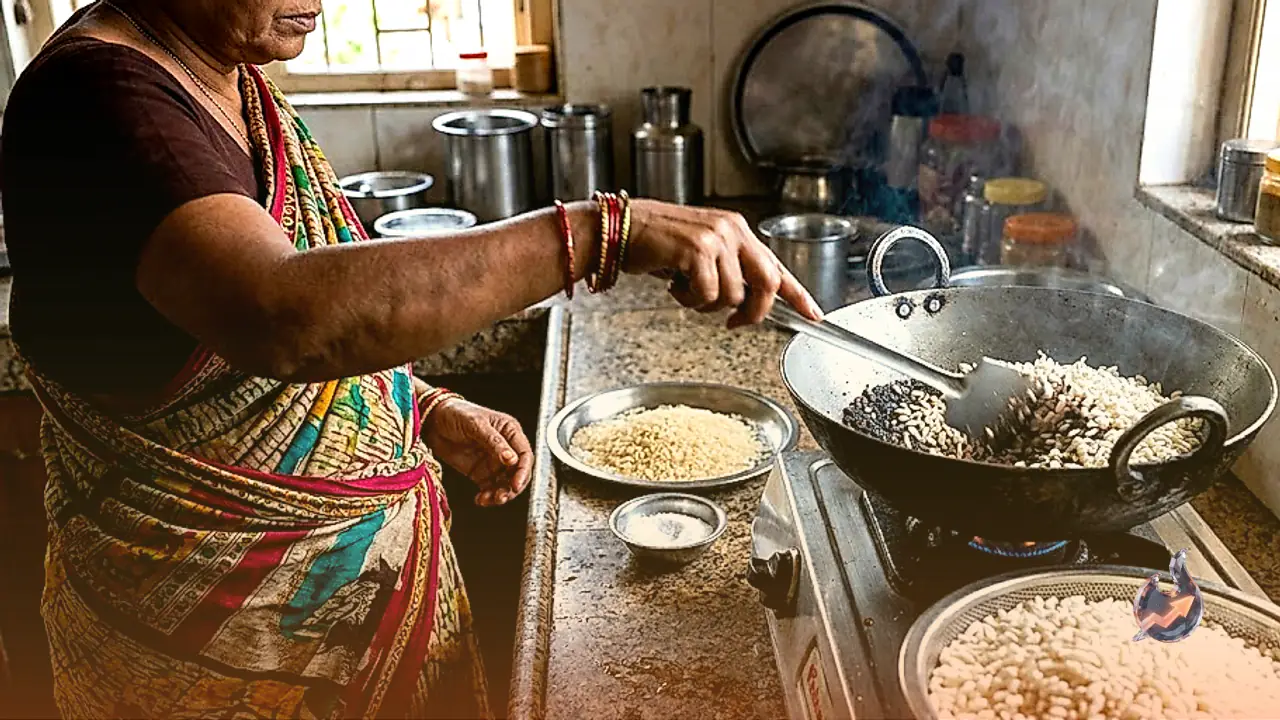
To build the core stuffing, set a skillet over gentle heat and add the grated dry coconut, peanuts, cumin seeds, fennel seeds, and whole coriander seeds. Toast these aromatics steadily until their raw moisture dissipates and a nutty fragrance fills the kitchen. Allow the toasted seeds and nuts to cool completely before transferring them to a spice grinder. Add the green chillies and garlic cloves, pulsing briefly into a coarse crumb. Retaining a rustic, gravelly texture is essential here, as pulverizing the mixture into a fine powder robs the filling of its pleasant crunch.
Rolling, Steaming, and Slicing the Wrappers
Divide the rested chickpea flour dough into uniform, small portions. Lightly oil your work surface and roll out a portion using a rolling pin until it forms a remarkably thin sheet. Trimming the uneven edges with a knife helps create clean rectangular wrappers that are easy to roll. Scatter a delicate, uniform layer of the ground peanut-coconut mixture over the flattened surface, taking care not to overload the sheet.
Starting from one end, lift the dough cautiously and roll it forward into a tight, snug cylinder. If the dough shows any tendency to cling to the rolling board, a faint brush of cooking oil on the surface quickly resolves the issue. Repeat this rolling sequence with the remaining dough portions until all cylinders are shaped. Transfer these prepared cylinders onto the greased rack of a domestic steamer or an idli cooker, steaming them steadily until the outer casing turns firm and opaque. Allow the cooked rolls to cool entirely at room temperature before slicing them into bite-sized rounds; cutting them while still hot risks breaking their neat structural coils.
Building the Curd and Tomato Gravy
Heat two tablespoons of oil in a sturdy saucepan and drop in the cumin seeds until they crackle. Toss in the finely chopped onion and sauté gently until it takes on a translucent, golden hue, then introduce the ginger-garlic paste and stir until its raw edge softens. In a separate bowl, blend the whisked curd with the coriander and red chilli powders. Lower the cooking flame and pour this spiced yogurt into the pan, stirring continuously without pause to safeguard against curdling.
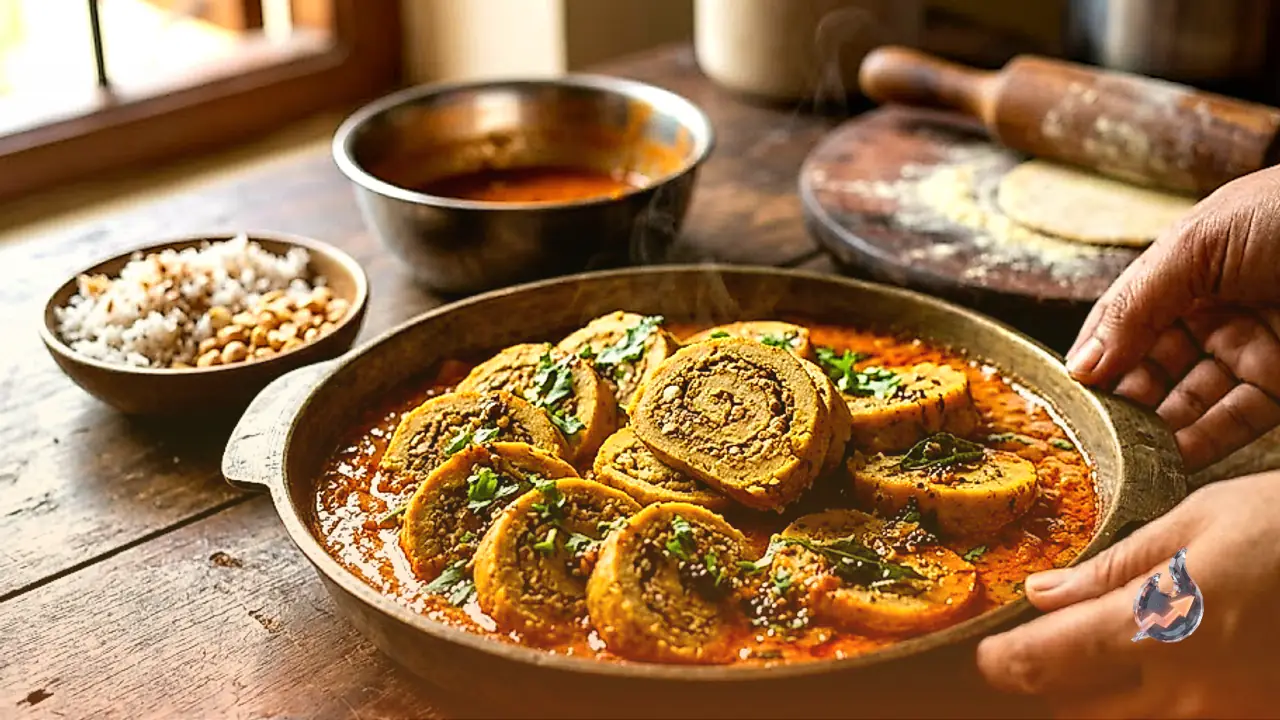
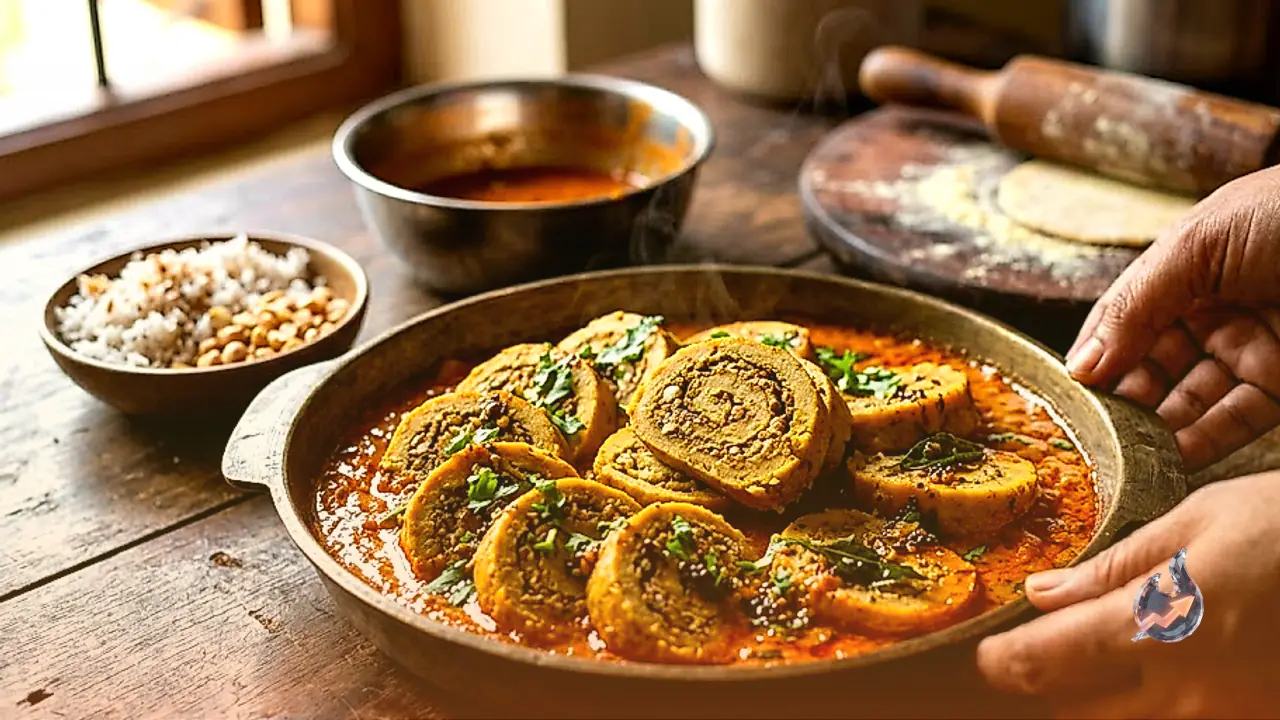
Once the spiced yogurt integrates and tiny droplets of oil appear along the edges, stir in the smooth tomato puree and let the sauce simmer. Stir in the salt, garam masala, and adequate water to achieve a pouring consistency that can coat the back of a spoon. Once the gravy reaches a rolling simmer, gently drop in the sliced, steamed chickpea rounds. Let the mixture simmer over low heat for approximately three to four minutes so the rolls absorb the spiced tang of the curry without losing their distinct texture. Finish with a generous scatter of freshly chopped coriander leaves and serve warm alongside flaky parathas, crisp rotis, or steamed rice.