






















The economic and technological rivalry between the United States and China has expanded directly into the commercial aviation arena. Beijing has positioned its newly developed narrow-body commercial airliner, the C919, as the ultimate symbol of domestic aerospace self-reliance. However, the advanced aircraft remains heavily dependent on foreign propulsion systems, creating a major strategic vulnerability. That reliance has now become a critical point of leverage for the administration of President Donald Trump as it seeks to counter Beijing across multiple strategic industrial supply chains.
Measures have been put in place by the United States to restrict the issuance of export licenses for aircraft components bound for state-owned planemaker Commercial Aircraft Corporation of China, commonly known as COMAC. In recent weeks, American authorities have deliberately decelerated the approval pipeline for maritime and air shipments of critical aviation hardware heading to Chinese facilities. The core objective behind this regulatory slowdown is to prevent COMAC from stockpiling Western parts in large numbers. This friction over aviation parts is deeply tied to a much broader bargaining contest involving rare earth minerals, advanced magnet manufacturing, and vital defense supply chains.
The C919's Hidden Reliance on Western Technology
China developed the C919 as a direct competitor to the established duopoly of the Boeing 737 and Airbus A320 families. Designed to accommodate between 158 and 192 passengers, the narrow-body jet achieved domestic regulatory certification in September 2022 and subsequently initiated regular commercial passenger operations in May 2023. While celebrated across domestic media as a triumph of home-grown manufacturing, the reality underneath the airframe tells a far more complicated story about international aerospace dependency.
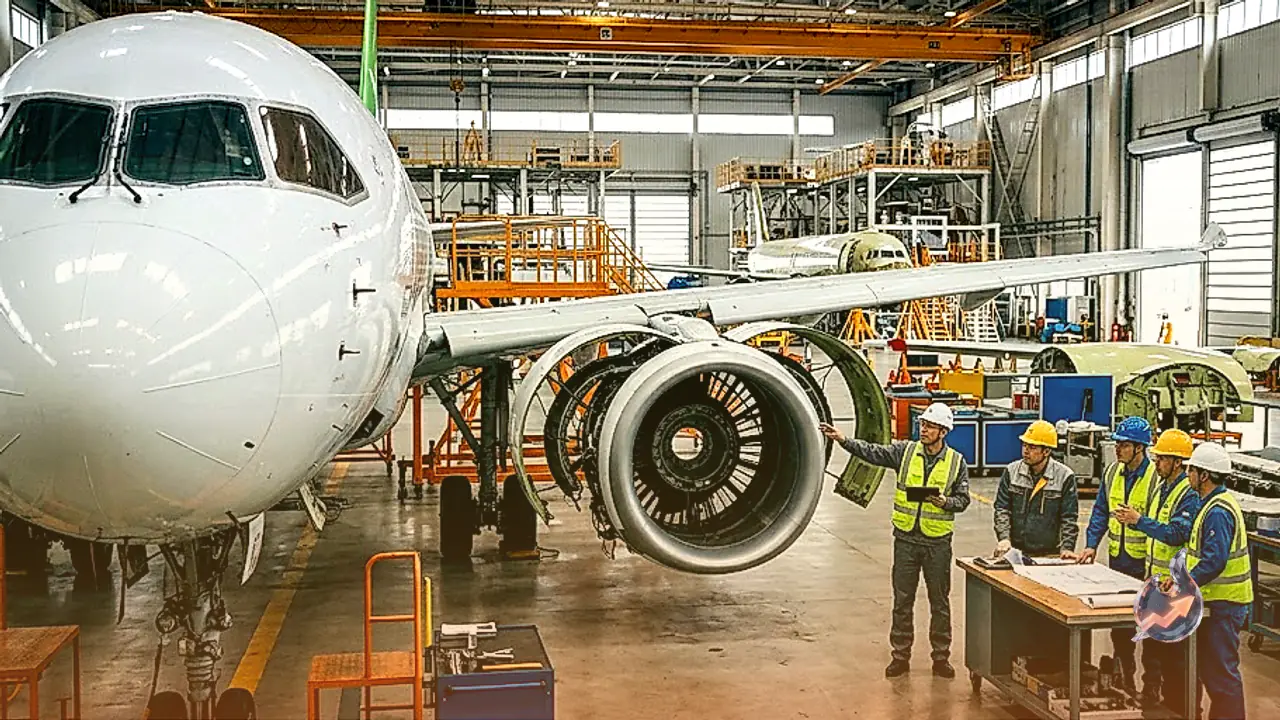
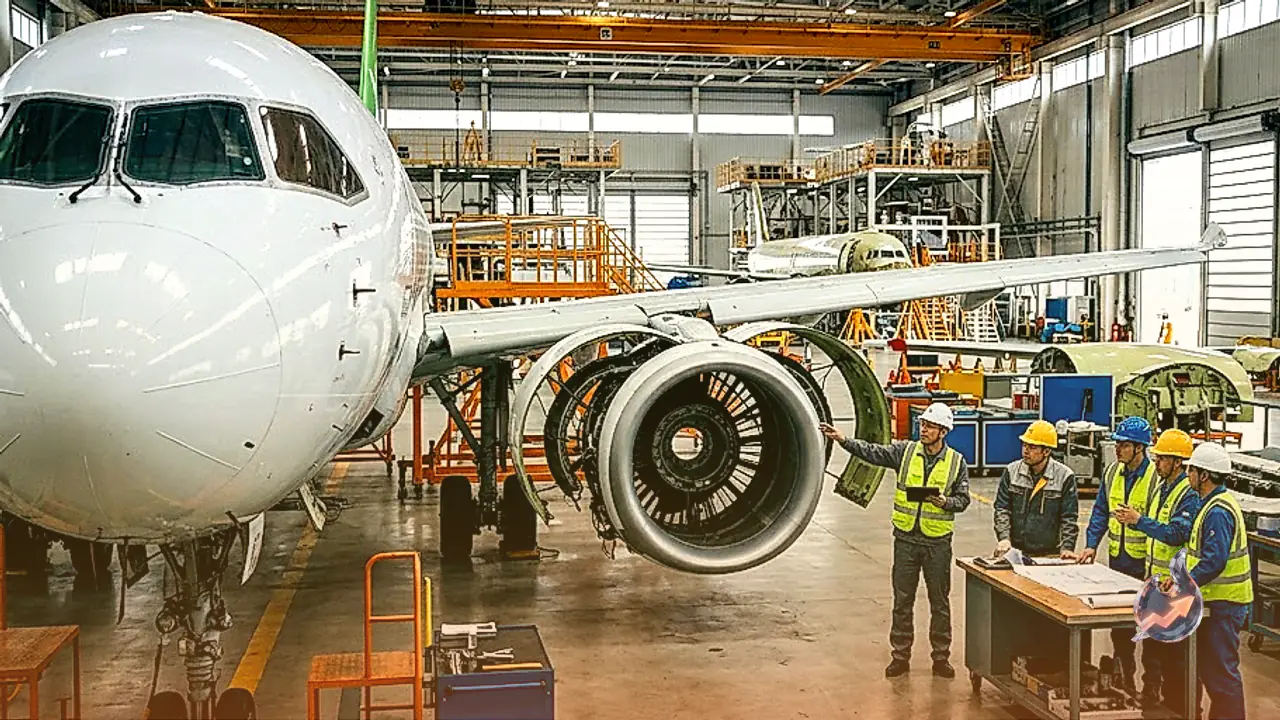
Despite being marketed as a domestic creation, the C919 relies fundamentally on Western engineering for its most indispensable element: propulsion. The airliner operates entirely on the LEAP-1C engine, produced by CFM International, a joint venture between American aerospace heavyweight GE Aerospace and France's Safran. Because China lacks a commercially certified domestic alternative capable of powering narrow-body passenger jets safely, this foreign partnership forms the operational backbone of the C919 fleet, leaving the entire production schedule vulnerable to regulatory decisions made abroad.
Tightening Export Controls on Critical Aviation Systems
The US Commerce Department has systematically slowed the licensing process for aviation components bound for Chinese assembly lines. Furthermore, American regulators are actively drafting and evaluating new rules aimed at streamlining restrictions on essential hardware such as landing gear and related structural systems. These regulatory proposals are designed to make it much easier to curb shipments on short notice whenever bilateral trade frictions intensify.
Among the proposed draft measures is a requirement that would mandate specialized export licenses for aviation-grade hydraulic fluid, a vital consumable in aircraft assembly and ongoing maintenance. Limiting the total volume of component licenses granted to COMAC reflects a calculated response to China's own trade measures. Beijing previously imposed stringent export curbs on rare earth minerals and specialized magnets, both of which are absolutely crucial for the production of American automobiles, semiconductors, aerospace hardware, and advanced defense equipment. In response, Washington is utilizing its technological command over commercial aerospace to establish equivalent bargaining counterweights.
Supply Chain Vulnerabilities and Market Ramifications
Industry analysts have offered varying assessments of the fallout from potential component restrictions. Some observers point out that a blanket restriction on aircraft components could inflict collateral damage on Western corporations, particularly given that China represents one of the largest and most lucrative commercial aviation markets on the planet. Western aerospace companies rely heavily on long-term aircraft deliveries and recurring parts maintenance revenue generated across Chinese airline networks.
When evaluated specifically through the lens of the C919, however, the balance of vulnerability tilts heavily against Beijing. Chinese commercial aviation programs remain deeply reliant on advanced Western componentry. If Washington proceeds to cut off or strictly cap deliveries of LEAP-1C engines, digital engine control modules, or structural spares, the commercial assembly lines for the C919 could grind to a sudden halt. Aviation specialists acknowledge that disrupting these shipments could derail COMAC's mass-production schedules and delivery commitments for several years.
Challenges Surrounding the Domestic CJ-1000A Engine
Recognizing the strategic hazard of relying entirely on foreign aerospace suppliers, China has poured enormous financial resources into developing its own alternative, the CJ-1000A turbofan engine. The primary mission of this project is to eliminate dependence on Western powerplants over the long run. Some industry analysts estimate that the CJ-1000A might attain domestic regulatory certification around 2027, which would allow manufacturing plants to slowly begin scaling production. Achieving that milestone would represent a major step toward shielding the airliner from external export bans.
Nevertheless, bridging the gap between an experimental testing bench and sustained commercial passenger service involves monumental technological hurdles. Before carrying paying passengers, the CJ-1000A must successfully demonstrate rigorous safety, endurance, and fuel-efficiency metrics under exhausting regulatory reviews. Beyond building the engine at industrial scale, engineers must adapt the C919 airframe, redesign wing integration points, update avionics software, and secure recertification for the modified aircraft, a bureaucratic and technical process that historically takes multiple years to complete.
Self-Reliance Milestones Face Realistic Deadlines Beyond 2030
Rigorous evaluations within the aviation sector suggest that transitioning the C919 entirely to domestic propulsion systems will not happen quickly. The CJ-1000A must still complete an extensive battery of flight trials, extreme environmental testing, and reliability validations. Consequently, any operational shift away from the LEAP-1C to a home-grown powerplant will require an extended, unpredictable transition window. Numerous aviation analysts assess that deploying the C919 exclusively with domestic engines remains highly unlikely before 2030.
Simultaneously, tightening restrictions from Washington could provide the very catalyst Beijing needs to accelerate its industrial investments. Facing reliable evidence that foreign supply chains can be severed by geopolitical friction, the Chinese state is likely to double down on research grants, engineering talent, and domestic infrastructure for jet engines, avionics, and specialized aerospace alloys. As the confrontation between rare earth mineral exports and jet engine supply chains escalates, the global aviation industry faces a fundamentally fractured technological future.