






















As winter settles in, freezing winds, thick fog, and persistent frost take a heavy toll not just on people, but also on household foliage. Dropping mercury levels significantly slow down the growth rate of both indoor and outdoor plants, often causing their lush leaves to dry up and shed prematurely. When the chill intensifies, plants can wither and turn frail. Addressing these seasonal challenges, Abhishek, an expert from Thakur Nursery in Bokaro, highlighted practical techniques to keep potted plants healthy through cold spells. He noted that certain varieties struggle considerably under sharp temperature drops and biting winds, making specialized care essential during this vulnerable stretch.
Cold-Sensitive Varieties and the Challenges of Winter Dormancy
According to Abhishek, varieties such as croton, rubber plant, aglaonema, figma plant, and table madhukamini react sharply to severe cold. Prolonged exposure to brisk winter drafts dries out the edges of their foliage, eventually triggering heavy leaf fall. Furthermore, during December and January, when severe cold and relentless fog dominate the days, several species naturally slip into dormancy, a dormant resting phase. During this interval, the production of fresh shoots and leaves grinds nearly to a halt. To an untrained eye, a dormant plant might look withered, stunted, or lifeless, even though it is simply conserving energy to endure the frosty season.
Topsoil Aeration and the Application of Organic Nutrients
To sustain plant vigor through the low-temperature phase, careful soil maintenance is paramount. Gardeners can gently scrape off roughly one centimeter of the topmost soil layer from the pot using light hand movements. Once this top crust is cleared, a balanced feeding of fully decomposed cow dung manure paired with mustard cake can be added according to the plant's requirements. This organic blend delivers essential nutrients deep into the root zone, reinforcing the plant's internal resilience against the winter chill.
Shielding Pots from Icy Drafts and Maximizing Gentle Morning Sun
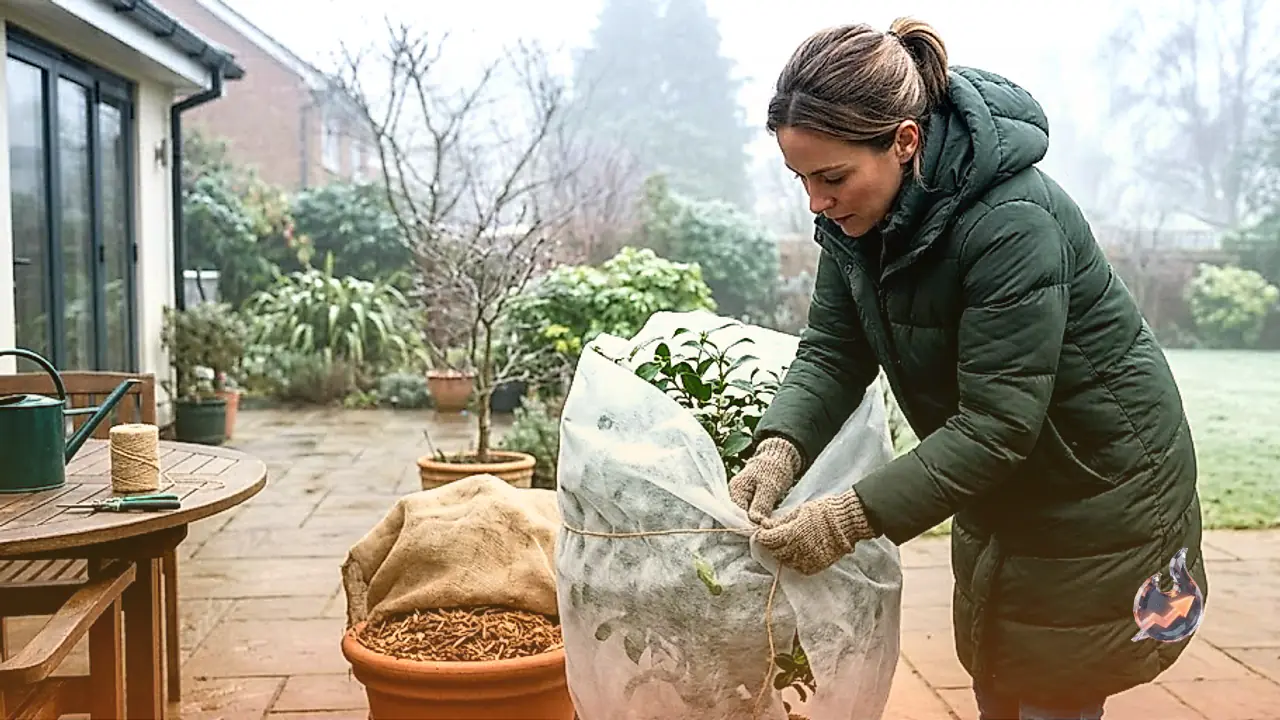
Keeping foliage away from direct freezing winds is an indispensable protective measure. Especially during the night, when outdoor temperatures plunge to their lowest, pots should be moved to sheltered spots, such as right beside an exterior wall or under covered verandas where cold drafts cannot reach them directly. Alongside wind protection, exposing plants to mild morning sunlight is equally valuable. Soft morning light supplies the illumination plants require for essential metabolic processes. Nevertheless, shade-loving varieties that cannot tolerate direct sunlight should only receive filtered light matched to their individual requirements.
Regulated Watering Habits to Prevent Catastrophic Root Rot
Irrigation practices demand heightened caution throughout the colder months. Water should be applied only after the potting soil has adequately dried out. Adding moisture repeatedly to soil that is already wet leads to excessive moisture accumulation at the bottom of the container. This waterlogged condition quickly suffocates the roots and breeds fungal root rot, a silent ailment that can permanently destroy an otherwise healthy plant from underneath.
Why Pruning and Repotting Must Be Postponed Until Spring
Abhishek strongly advises against pruning branches or repotting flowering specimens into fresh containers during intense cold spells. Because natural growth is already subdued by lower temperatures, any aggressive disturbance to the root ball or stems places severe stress on the plant. Repotted or heavily cut plants struggle to settle into a new medium under chilly conditions and often wither away entirely. Therefore, navigating through December and January successfully requires shielding pots from freezing drafts, moderating soil moisture, ensuring adequate sunlight, and holding off on repotting until milder weather returns.