























Radish sitting unused in the fridge usually ends up as salad or stuffing for parathas, but in Andhra Pradesh it takes on a completely different identity, as a spicy, coconut-based chutney called mulangi chutney. Instead of masking the vegetable's sharp raw flavour, the recipe lightly roasts it first, which mellows the bite just enough for every spoonful to taste balanced rather than overpowering.
Coconut, roasted spices, tamarind and a fragrant tempering come together to give this chutney a flavour that works equally well with idli, dosa, upma or plain hot rice. It uses minimal oil, follows a simple method, and relies on ingredients most Indian kitchens already stock, which makes it a good option even for people who normally avoid radish. Because it needs no elaborate shopping list, it also suits anyone who wants a quick change from routine breakfast sides without extra effort.
Why radish makes such an unusual chutney
Not everyone enjoys radish. Its raw smell and mild pungency put many people off. But a few minutes of roasting on high heat takes away most of that raw edge. Once it is combined with coconut, coriander, cumin and tamarind, the flavour of the vegetable changes almost entirely. That is why mulangi chutney tastes spicy without feeling heavy, and why each ingredient, the radish, the coconut and the spices, remains distinctly noticeable rather than blending into a single flat taste. This gentle transformation is really the heart of the recipe, since it lets the chutney carry real heat without ever feeling one-dimensional.
What makes the Andhra method different
In many Andhra Pradesh households, radish is never cooked for long. It is only lightly roasted so that its natural sweetness stays intact. The recipe also skips deep frying entirely and does not lean on a long list of spices. A handful of simple steps is enough to keep its traditional flavour intact.
What goes into the chutney
The base of the chutney is finely chopped radish, onion, half a cup of freshly grated coconut, curry leaves, tamarind, turmeric and salt. The tempering needs oil, mustard seeds, cumin, dry red chillies and asafoetida, while a separate spice powder is made by dry roasting coriander seeds, cumin and dry red chillies.
How to make mulangi chutney
Start by heating oil in a pan and adding the finely chopped radish, roasting it on high heat for a few minutes until it softens slightly. Keeping the heat high at this stage is what helps cook off the vegetable's rawness quickly, without turning it mushy. Add the chopped onion next and cook until it turns translucent. Stir in the coconut, curry leaves, tamarind, turmeric and salt, and cook the mixture for about two minutes before turning off the heat and letting it cool completely.
Meanwhile, dry roast the coriander seeds, cumin and dry red chillies in a separate pan without any oil. Once they turn fragrant, let them cool and grind them into a fine powder. Add the cooled radish mixture and this spice powder to a mixer and grind everything to a slightly coarse consistency, it should not be turned into a completely smooth paste.
Finally, heat oil in a small pan and prepare the tempering with mustard seeds, cumin, dry red chillies, asafoetida and curry leaves. Pour this hot tempering over the chutney and mix well.
Why the coarse texture matters
This chutney tastes best when it retains a slightly coarse, uneven texture. Grinding it too smooth blurs the individual flavours of radish, coconut and spices into one another. That is exactly why many South Indian households deliberately keep it a little chunky instead of pureeing it fine.
What to serve it with
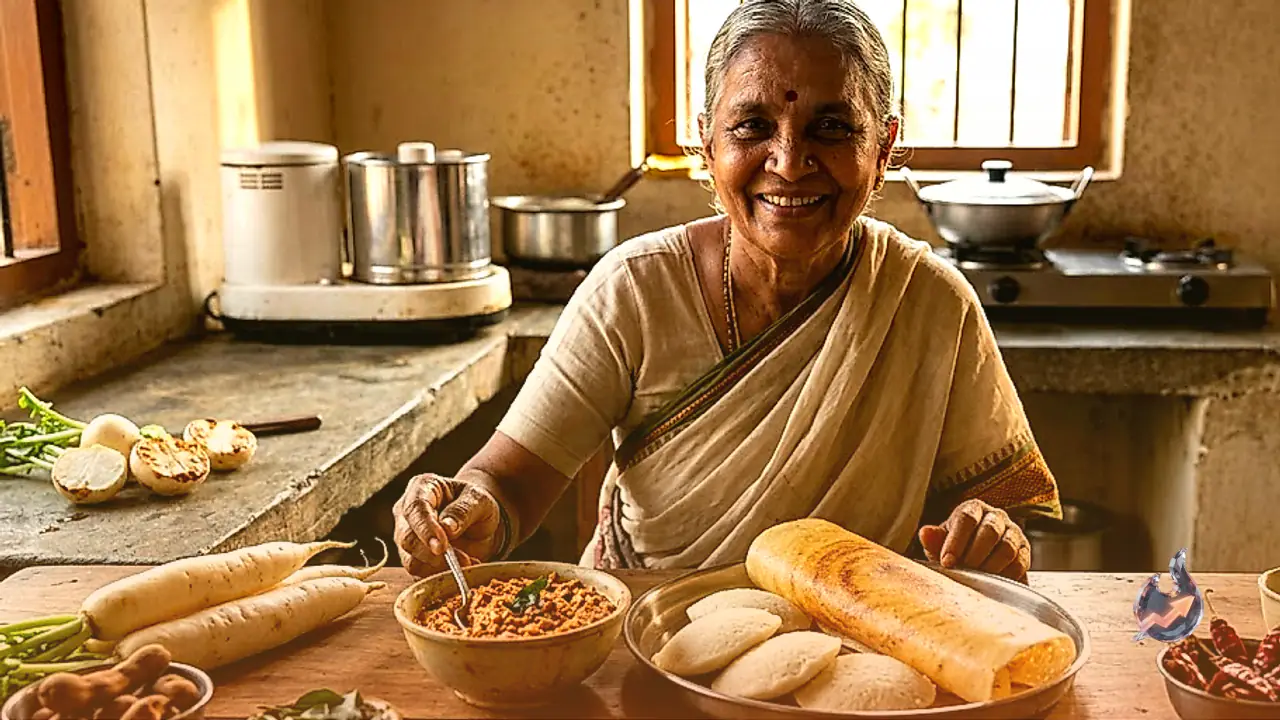
The chutney pairs well with idli, dosa, upma and hot rice. On mornings when breakfast has to come together quickly, idli served with just this chutney is enough to feel like a complete meal. The chutney also holds its own alongside upma, adding a tangy contrast to an otherwise mild dish.
How to store leftovers
Mulangi chutney tastes best fresh, but any leftovers can be stored in an airtight container in the fridge for up to 24 hours. Since coconut-based chutneys tend to thicken in the fridge, let it sit at room temperature for a while and give it a good stir before serving.
Mistakes to avoid
- Do not grind the mixture while it is still hot.
- Do not cook the radish on low heat for too long.
- Avoid adding more tamarind than the recipe calls for.
- Do not make the chutney too thin or too smooth.
Each of these missteps can throw off the balance of flavour and texture that makes the chutney work in the first place. Keeping these small details in mind noticeably improves how the finished chutney tastes.
For anyone bored of the usual coconut or tomato chutney, Andhra-style mulangi chutney is worth trying. It comes together quickly and turns an everyday vegetable like radish into a genuinely flavourful dish. Once tasted, it could easily earn a permanent spot on the list of favourite chutneys.