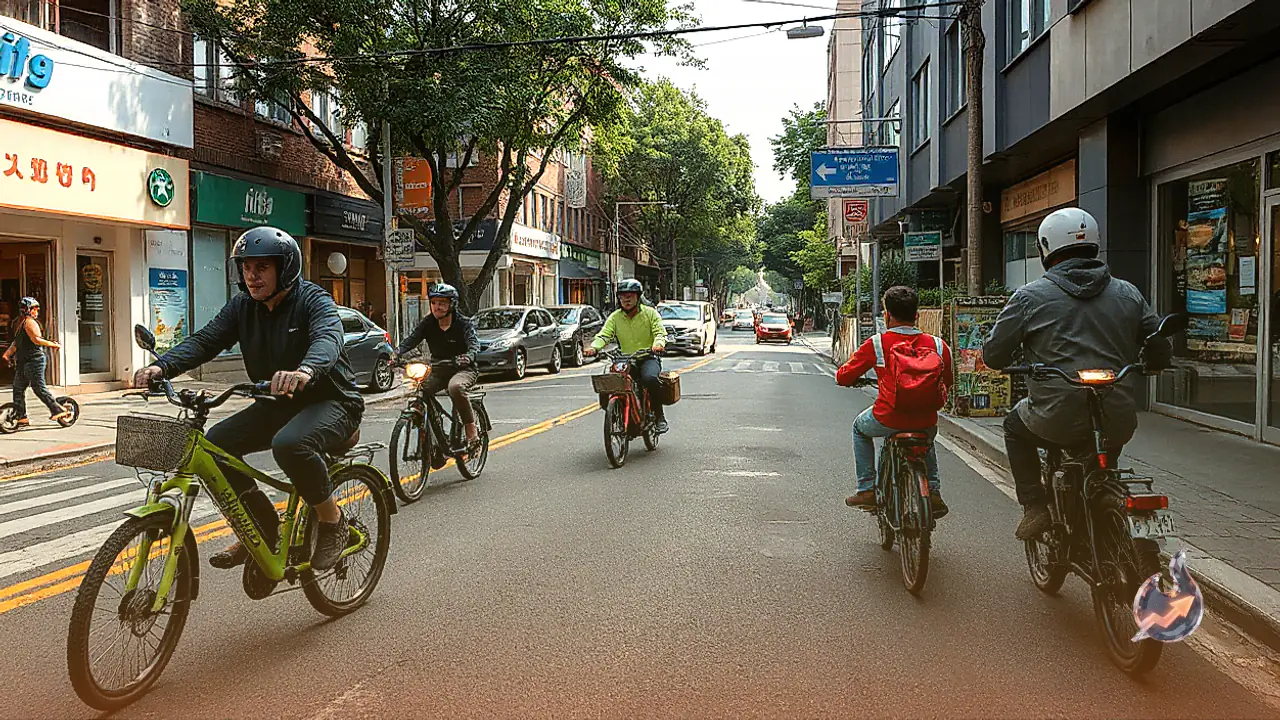

























Personal urban transportation has experienced a monumental transformation over recent years. In the United States, purchase volumes for battery-assisted two-wheelers saw dramatic gains compared to the start of the decade, spurred initially by pandemic lockdowns that prompted commuters to search for affordable, personal modes of travel that could cover long distances with significantly reduced physical exertion. As traditional passenger automobiles grew increasingly expensive, countless riders adopted electric cycles as an economical everyday alternative. However, retail momentum has cooled noticeably compared to the high-water marks seen two years prior, putting measurable financial pressure on distributors and manufacturers alike. Concurrently, medical facilities have recorded a concerning jump in rider injuries, predominantly involving younger children and teenagers, which in turn has pushed legislative bodies into exploring stricter regulatory guardrails.
Categorical Blurring and Regulatory Confusion
A primary driver behind rising municipal and legal disputes is the sheer confusion prospective buyers experience when trying to differentiate standard ebikes from their drastically more capable counterparts, known as e-motos. The public is rarely entirely at fault for this misconception. Imprecise statutes coupled with aggressive retail marketing have deliberately smudged category boundaries, obscuring the reality that operating the most powerful two-wheelers requires formal vehicle registration, specific operator licensing, and minimum age compliance. Today, minors frequently encounter digital campaigns marketing electric dirt machinery capable of surpassing 40 mph and persuade parents to place online orders. In truth, operating an unlicensed machine of that magnitude on public rights-of-way is outright illegal for anyone, let alone an underage rider. Thoroughly verifying municipal and regional statutes prior to committing funds remains paramount for safety and legal compliance.
The Standard Three-Class System and Usage Statutes
To establish orderly standards across the micromobility landscape, the bicycle manufacturing sector relies upon a unified three-tier classification architecture. Class 1 ebikes are equipped with an electric drive unit that functions strictly during active pedaling, cutting motor power completely once the vehicle attains 20 mph. Class 2 variations feature that exact same pedal-assist mechanism but introduce an integrated throttle, giving riders the capability to cruise up to 20 mph purely under electrical power without turning the pedals. Class 3 machinery provides an upgraded, more muscular pedal-assist experience that remains active up to 28 mph, though selective municipal codes cap this ceiling at 25 mph.
As of now, 39 US states have systematically embedded this three-class operational framework within their transportation statutes. As a baseline legal standard, individuals commanding Class 3 vehicles must don protective helmets and satisfy a minimum age requirement of 16 years. Specific jurisdictions expand age restrictions further, establishing a mandatory threshold of 14 or 15 years to ride any style of ebike whatsoever. In most remaining contexts, legitimate ebikes are regulated under ordinary bicycle rules, requiring riders to respect the identical roadway protocols and traffic signs observed by human-powered commuters.
Registration Nuances and State Exceptions
Throughout the majority of American jurisdictions, riding an ebike does not trigger statutory registration mandates or operator licensing requirements. Moving into 2026, New Jersey and Alaska stand apart as notable exceptions to this widespread policy. New Jersey mandates full vehicle registration and operational licensing across every single ebike tier, while adding compulsory insurance policies for Class 3 configurations. Alaska, on the other hand, lacks an all-inclusive statewide statute, allowing municipal entities like Anchorage to enforce localized measures that require licenses for any ebike featuring a continuous motor output exceeding 750 watts, hardware normally capable of sustaining velocities between 20 and 28 mph.
Motor Ratings, Power Thresholds, and E-Moto Reality
Prospective purchasers must carefully examine motor output figures when assessing vehicles. Entry-tier commuter cycles typically feature 250-watt power plants, perfectly tuned for flat urban journeys and recreational fitness. Stepping up to a 500-watt baseline provides adequate torque to achieve roughly 20 mph through throttle operation while conquering gentle roadway inclines. The 750-watt output level generally represents the maximum legal limit for road-approved ebikes across American highways, delivering the performance necessary for carrying substantial cargo and tackling steeper terrain. Anything operating at 1,000 watts or above falls outside standard ebike classifications and is marketed specifically for private property tracks or rugged off-road territory.
Despite whatever misleading descriptions manufacturers may utilize in promotional literature, 1,000-watt units are legally classified as mopeds or e-motos rather than bicycles. True e-motos do not require functioning pedals to operate, and certain builders or riders even attach non-functional cosmetic pedals to deceive law enforcement and simulate cycle aesthetics. These heavier machines run purely on throttle actuation instead of pedal assistance. Utilizing motors outputting anywhere from 1,000 to 6,000 watts, they can accelerate past 60 mph on open asphalt.
Visual Identification Markers and Motor Vehicle Licensing
Because their potential momentum rivals that of small engine motorbikes, governing bodies typically obligate owners of e-motos to register the vehicle, hold insurance, and maintain an active motorcycle license. In nearly every municipality, passing the evaluation for an e-moto permit closely matches the diligence required for a standard passenger vehicle credential. Younger individuals can secure instructional permits or intermediate licenses at 16 or 17 years old, but full unrestricted operation generally demands reaching legal adulthood.
Aside from technical specification sheets, structural design features provide clear visual markers to distinguish the two vehicle types. Traditional ebikes feature slender architectural frames that mimic classic bicycles, allowing observers to see unobstructed daylight directly through the midsection. They run narrower rubber tires and carry contoured rear fenders closely wrapped around the tire circumference. In contrast, e-motos are physically dense and wide, filled with massive battery packs that obscure all daylight through the core frame. To withstand severe roadway shocks, they incorporate heavy coil-spring suspension assemblies. Furthermore, they ride on wide, deeply treaded tires with raised rear mudguards perched high above the chassis. E-motos replace standard revolving pedals with rigid footrests identical to motorcycle pegs.
Software Tweaks, Alterations, and Industry Warnings
The micromobility landscape is further complicated by widespread post-sale alterations. Numerous street-compliant ebikes ship with digital firmware limiters that riders bypass utilizing accessible software modifications. Other individuals manipulate the machine mechanically, repositioning speed sensors or severing factory wiring loops. Making these unapproved revisions immediately strips an ebike of its legal classification on municipal roads. Doing so invalidates manufacturer warranty guarantees and imposes extreme stress on internal structural components, drastically raising the likelihood of catastrophic component failure. Industry coalition PeopleForBikes has cautioned that select manufacturers intentionally facilitate this grey market by slapping ornamental pedals onto e-motos and branding them as cycles, complete with accessible unlock mechanisms and specialized off-road speed profiles. The group bluntly reminds riders that e-motos are motor vehicles and must be treated as such under the law.