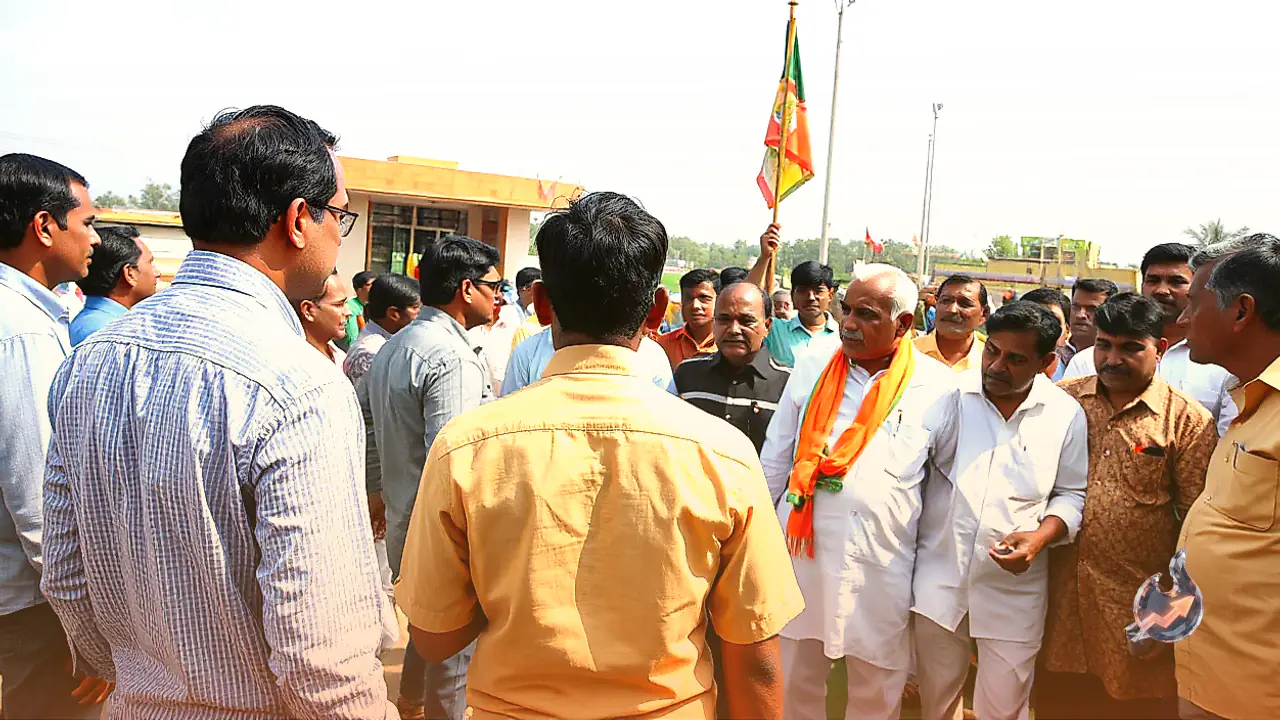

















Tensions between sugarcane cultivators and sugar mill operators in Karnataka's Belagavi district have escalated following the collapse of official pricing negotiations. Farmers have set a firm deadline for the administration to declare a remunerative rate for their produce, warning that failure to meet their terms will trigger massive public demonstrations and an aggressive 'jail bharo' agitation. The ultimatum on November 4 followed two unsuccessful rounds of discussions held on November 3, which were presided over by Satish Jarkiholi, the Minister for Public Works and district in-charge for Belagavi. Those meetings, intended to bring growers and factory managements to an agreement, ended without resolving the core disputes.
The Valuation Dispute and Price Gap
With unrest mounting across farming communities, Satish Jarkiholi scheduled another round of dialogue with sugar mill owners on Wednesday. The engagement has assumed critical urgency because farmer representatives have maintained that their agitation will continue until an acceptable purchase price is formally notified. Mill operators expressed readiness to provide 3,500 rupees per ton, but farm groups categorically dismissed the figure as unviable. Instead, the growers are pressing sugar mills to pay 4,500 rupees per ton and calling on the state administration to contribute a supplementary 1,000 rupees per ton, taking their cumulative demand to 5,500 rupees per ton.
Farmer Leadership Warns of Intensified Stir
The repeated failure to arrive at a resolution drew sharp criticism from farmer leader Choonappa Poojari. Choonappa Poojari said that holding repeated meetings without any concrete decision serves no purpose, adding that cultivators will not accept the 3,500 rupees per ton offer under any circumstances. He insisted that Chief Minister DK. Shivakumar announce a state subsidy of 1,000 rupees per ton to bridge the gap. Poojari warned that continuous disregard for the community's demands would lead to severe repercussions, cautioning that if the grievance remains unaddressed, the administration will face an intense agitation during the upcoming winter session of the Karnataka Legislative Assembly.
Protests Spread Across Multiple Districts
The unrest has spilled beyond the northern sugarcane belt into southern regions, including Mysuru and Mandya. In Mysuru, agitated farmers attempted to push their way into the premises of the Deputy Commissioner's office. In Mandya, sugarcane growers joined forces with Kannada activists to stage a sit-in outside the local Deputy Commissioner's office, shouting slogans against both the state and central governments. Over the past few weeks, the protest campaign has gathered momentum through foot marches, public rallies, and highway blockades across Karnataka. Earlier, farmers demanding higher crop rates had brought traffic to a complete standstill on the Pune-Bengaluru national highway for more than 30 hours.
Previous Agreements Left Unimplemented
The current impasse follows prior unsuccessful interventions by the state machinery. On October 26, a trilateral conference involving government authorities, mill executives, and farmer representatives was convened at the Suvarna Vidhana Soudha in Belagavi, but it failed to yield an accord. During the October 26 talks, the government urged sugar factories to disburse an additional 250 rupees per ton to the growers. However, multiple processing units did not execute that recommendation, leaving farmers aggrieved and directly triggering the current wave of protests.