
The Federal Aviation Administration has revealed that multiple factors contributed to the operational disruptions experienced on Friday afternoon. The issues involved routine infrastructure replacement, a faulty router, data overload, and communication disruptions in specific regional radio channels used by air controllers and pilots.
The Incident and Official Response
The agency subsequently described the ground stop as a measure executed out of an abundance of caution. On Wednesday, FAA administrator Bryan Bedford downplayed the incident while accepting responsibility, characterizing the outage as a mere knee scrape for which he apologized. While aviation professionals maintained that passengers remained safe throughout the event, some felt government officials downplayed the situation as air traffic controllers scrambled to backup frequencies.
One air traffic controller said that the situation proved to be the hairiest ninety minutes of their career. When contacted for comment, FAA spokesperson Steve Kulm referred inquiries to the agency online Q&A page, which states that established standard procedures exist to ensure safety during such incidents, noting that specific radio frequencies and radar feeds remained operational.
How Air Traffic Control Operates
To understand the communication failures that triggered the ground stop, it helps to examine how air traffic control functions. Airport Traffic Control Towers manage ground movements, takeoffs, and landings near airports. Once an aircraft ascends to around 10,000 feet, control transfers to Terminal Radar Approach Control facilities, which manage arrivals and departures. For the majority of the flight, aircraft are guided by Air Route Traffic Control Centers, of which there are 22 across the United States.
The communication radios utilized by these centers possess a range of approximately 150 miles, posing a challenge given that each center manages over 100,000 square miles. Consequently, telephone lines connect these centers to networks of remote transmitters. For decades, this infrastructure relied on outdated copper telecommunications lines.
Fiber-Optic Upgrades and Technical Failure
Funding provided through the Transportation Department enabled the transition from aging copper to modern fiber-optic cables. L3Harris, the network owner, manages this modernization effort, which reached roughly 70 percent completion recently. The FAA encountered difficulties during this transition phase.
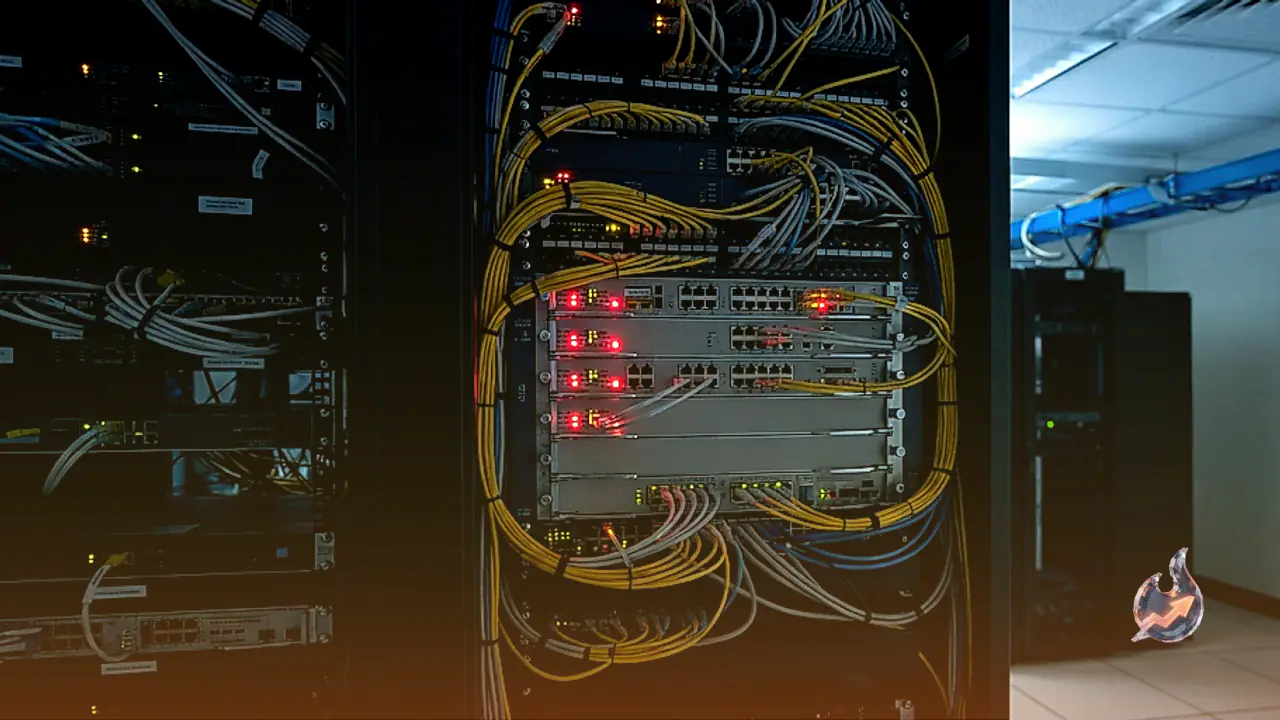
Trouble began in El Dorado, Arkansas, home to a remote communications facility tied to the Memphis Center. A contractor working for L3Harris was performing a routine switch from the legacy copper network to fiber optics. During this process, a worker plugged in a new router, though the FAA has not yet determined why the malfunction occurred.
Data Flooding and System Overload
According to the FAA, the network was flooded with data, generating one thousand connection attempts every four to five seconds. A radar-based facility in Amarillo, Texas, may have similarly contributed to the data surge. To compensate, the network attempted to engage other nodes, causing widespread overloads and disabling several radio frequencies.
The disruption initially appeared as intermittent dropouts across regional centers from Kansas City to Chicago, according to sources familiar with the matter who spoke anonymously. This severely hampered communication between centers and pilots before cascading toward Washington, DC, and New York.
System Recovery and Expert Perspective
Uncertain why the radio frequencies remained unstable, the agency instituted a nationwide ground stop. Although some communication channels experienced failures, the FAA confirmed that certain frequencies and radar feeds maintained reliability. Contractors from L3Harris ultimately blocked data from the Arkansas and Texas locations, restabilizing the network and restoring full radio contact.
The National Air Traffic Controllers Association emphasized that controllers remained diligent on the job. Scott Miller, an airline pilot and university lecturer, noted that while the technical glitch caused significant inconvenience, passengers were never in danger because pilots train for such anomalies and rely on onboard navigation systems.
Despite ongoing uncertainties regarding the router malfunction, officials have pursued additional funding, with requests submitted to Congress for billions of dollars dedicated to air traffic control modernization.