























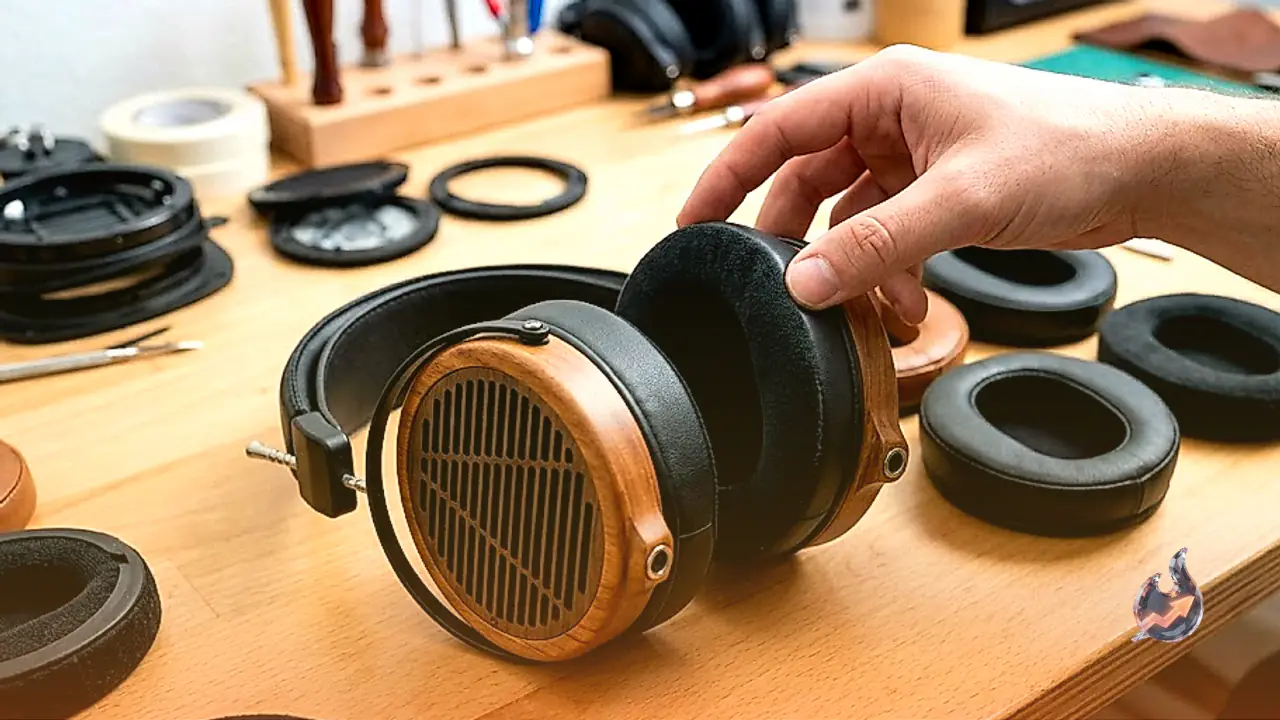

Audiophile circles have long debated the exact degree to which ear cushion geometry shapes headphone acoustics. For years, replacing stock earpads with third-party alternatives of similar dimensions was viewed primarily as a cosmetic or comfort adjustment rather than a significant sonic upgrade, especially when OEM replacements can command prices of $100 or more. However, the introduction of the SJY Zeph open-back planar magnetic headphones fundamentally challenges these assumptions by demonstrating how subtle structural variations in ear cushion design can drastically transform high-resolution audio reproduction.
Rethinking Earpad Physics and Acoustic Tuning
In high-fidelity audio equipment, particularly vintage electrostatic and modern planar magnetic headphones, the physical coupling between the transducer and the listener's ear plays a vital role in frequency response. While many enthusiasts hesitate to spend $100 or more on factory original OEM replacements and settle for generic foam and velour options, the SJY Zeph illustrates that cushion construction is an active acoustic component rather than passive padding.
By engineering a headphone around a dual-oriented cushion mechanism, the SJY Zeph provides a practical demonstration of acoustic physics. Microscopic changes in air displacement, driver distance, and structural sealing directly influence how sound waves interact before reaching the ear canal. This approach elevates earpad design from mere physical comfort to an essential tool for acoustic customization.
Dual Acoustic Signatures Through Flippable Magnetic Cushions
The defining technical innovation of the SJY Zeph is its flippable magnetic earpad system. Each cushion features two distinct sides: one crafted with pinprick-thick microperforations and the other with a completely smooth surface finish. Listeners can alter the sonic profile of the headphones simply by swapping the seam alignment between an upward and downward orientation.
When the microperforated side with millimeter-thick holes is positioned in front of the ear, the audio signature shifts toward a cooler, more expansive character. This configuration widens the soundstage, enhances spatial separation, and adds an extra layer of rhythmic pop to individual instruments. Conversely, flipping the cushions so that the perforated section sits behind the ear produces a noticeably warmer, more cohesive sound. In this orientation, complex musical mixes blend together smoothly, creating an inviting acoustic environment ideal for extended listening sessions without listener fatigue.
Although the sonic difference between these two alignments is subtle, akin to the distinction between a stirred martini and a shaken one, it remains unmistakably audible. The ability to toggle between analytical precision and warm musicality gives listeners unprecedented control over their playback experience without relying on digital equalization.
Acoustic Stress Testing and High-Resolution Detail
Planar magnetic transducers are celebrated for their speed, transient response, and micro-detail retrieval, and the SJY Zeph executes these qualities with remarkable precision. Under rigorous reference testing using uncompressed 24-bit Hi-Res FLAC digital files on desktop setups, the headphones consistently resolve intricate textures that often remain hidden on standard dynamic driver systems.
A classic test of spatial clarity occurs during the opening sequence of The Who's "Won't Get Fooled Again," where the Zeph clearly captures the mechanical sound of Keith Moon shifting on a squeaky drum stool. The headphones demonstrate equal finesse on complex modern arrangements, such as Radiohead's "Daydreaming" from the album A Moon Shaped Pool. On this track, the high-frequency glockenspiel notes cut through dense piano loops with a brilliant, shimmery resonance. Even in the less-detailed orientation with holes facing front, attentive listeners can isolate the subtle click of the studio metronome tracking in the left audio channel.
Low-frequency performance is equally controlled and robust. On Radiohead's "Identikit," the Zeph renders a thick, bouncy, and textured bass line that maintains low-end impact without bleeding into the mid-range frequencies or obscuring vocal clarity.
Architectural Minimalism and Handcrafted Houston Production
The acoustic adaptability of the SJY Zeph is made possible through an ethos of arch minimalism. The chassis is engineered with as few individual components as possible, holding every element in rigid alignment to achieve maximum sonic purity and prevent unwanted cabinet resonance. The aluminum chassis, ultra-thin diaphragm, and planar magnetic driver assembly each measure in low, single-digit millimeters. When clipped onto the magnetic earpads, the entire main housing maintains an incredibly slim profile, roughly equivalent to the thickness of a single monthly print magazine in 2026.
Despite having a substantial physical presence, the headphones are ergonomic enough to sit comfortably on a listener's head for hours at a time. The lightweight aluminum construction distributes weight evenly, ensuring that long listening sessions remain strain-free while retrieving high-resolution audio details from desktop libraries.
Challenging the Harman Curve: The Philosophy of SJY
In the modern headphone industry, many manufacturers tune their products strictly to match the Harman Curve, an empirical target frequency response designed to reflect ideal room acoustics. While the Harman Curve remains popular among commercial brands and message board enthusiasts, SJY intentionally strays from this rigid standard. Instead of forcing a single hardcoded sound curve, the company empowers the listener to adjust the frequency response physically by altering earpad orientation.
This enthusiast-centric approach reflects the unique background of the manufacturer. SJY is an independent boutique brand founded by Jeffrey Yin in 2020, launched on the day immediately following his 18th birthday. Operating out of Houston, Texas, Yin designs and hand-assembles every single unit himself. The product lineup currently features four distinct headphone models, with a fifth model currently in development.
Ultimately, the SJY Zeph stands out as a highly specialized instrument built for dedicated audiophiles. By combining handcrafted craftsmanship with innovative magnetic earpad physics, it delivers a rare combination of versatility, detail, and acoustic purity.