
























Traditional passenger sedans have steadily lost their grip on the automotive landscape across Western markets. In the United States, pickup trucks and sport utility vehicles now account for more than 80 percent of all new vehicle sales, prompting legacy domestic manufacturers like Ford to abandon the classic four-door sedan entirely. While sedans still represent roughly one-third of passenger car deliveries in China, Chinese car manufacturers recognize the Western appetite for large, elevated utility vehicles. In response, they are directing their engineering and design resources toward producing commanding SUVs capable of pulling established buyers away from heritage brands.
Xiaomi Steps Up Its Automotive Play in Beijing
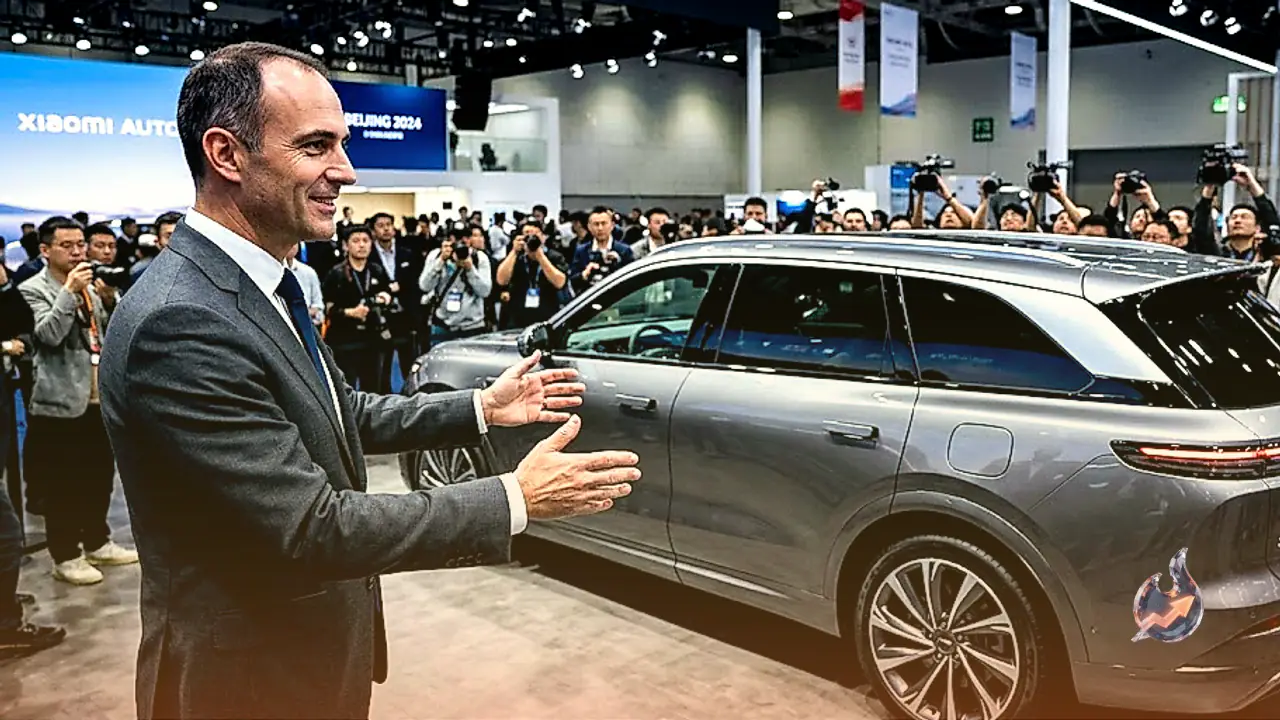
Consumer electronics giant Xiaomi has taken a decisive step into this lucrative territory, revealing the final technical specifications and complete pricing structure for its upcoming SkyNomad SUV line in Beijing. Western luxury heavyweights such as Bentley and Range Rover have only recently introduced their flagship electric sport utility vehicles, yet Xiaomi Auto's SkyNomad poses an immediate competitive threat to their pricing power and showroom foot traffic. Given the rapid trajectory of consumer technology brands entering mobility, traditional manufacturers have genuine cause for concern.
Electrifying substantial utility vehicles presents formidable engineering challenges, particularly regarding weight, battery density, and real-world range. Marc McGrath, the United States chief executive of automotive supplier Schaeffler Group, stated that the company is actively developing proprietary solid-state batteries primarily to ensure that heavy, energy-intensive trucks and SUVs favored by American drivers can be electrified effectively without performance compromises. The wider industry remains wary of repeating miscalculations like the Ford F-150 Lightning reversal, where high energy draw curtailed consumer enthusiasm.
Chinese Utility Vehicles Surge Across European Roads
The rapid commercial rise of the Jaecoo 7 demonstrates how quickly Chinese utility vehicles can secure market share. Emerging from relative obscurity as a brand-new entrant in the United Kingdom in 2025, the vehicle quickly advanced to become one of the country's best-selling new automotive offerings. Informally dubbed the "Temu Range Rover," the model is sold in both purely gasoline and hybrid configurations, supported by marketing that leans heavily on luxury branding despite an accessible sticker price of £29,210 (just above $39,000).
The physical footprint of the model has expanded dramatically throughout Britain. A representative regional Nissan dealership recently dropped the long-standing Japanese badge altogether to convert into an authorized Jaecoo retailer, adding the smaller Jaecoo 5 and larger Jaecoo 8 alongside the core 7 model. Very few automotive startups have ever matched such distribution velocity. Other Chinese automakers, including XPeng and BYD, are employing identical expansion models across continental Europe. However, the most closely monitored arrival remains Xiaomi Auto, which is on schedule to enter European markets by 2027. Despite having manufactured its very first production electric vehicle in 2024, Xiaomi secured global visibility when its SU7 Ultra earned recognition as the world's fastest sedan within that same debut year.
A Modular Interior Designed Like an Italian Living Room
Rather than competing solely on cut-rate pricing, the SkyNomad line emphasizes advanced digital integration and premium cabin furnishings. Seating across the range is engineered to emulate the feel of high-end Italian furniture. The entry five-passenger model, designated the SkyNomad N70, closely mirrors the exterior proportions and visual stance of a full-size Range Rover, especially in its Stealth Black Edition trim, achieving a much more cohesive aesthetic than rival value offerings.
For larger families and outdoor enthusiasts, the extended seven-seat N90 platform includes an adventurous Max Studio camper edition fitted with an integrated pop-up roof structure. Inside, the second-row seating can convert into a continuous sleeping surface at the touch of a button. Without requiring manual hardware disassembly or supplemental mattresses, the motorized mechanism shifts from upright passenger seats to a wide flat bed in 30 seconds.
Interior modularity serves as the core design philosophy across the platform. Built on the proprietary Kunlun platform architecture, the flat interior deck incorporates continuous sliding rails extending from the front footwells back to the tailgate. Every seating module can traverse these tracks independently. The front bucket seats pivot 180 degrees backward to face the second row, while modular tables lock directly into the floor rails to transform the passenger compartment into a mobile conference space or dining lounge. The motorized center console glides forward or rearward via dedicated controls, allowing maximum rear legroom to expand beyond 5 feet. In the N90 Max Studio, the elevated roof cap raises 100 millimeters to create a dedicated sleeping loft offering 1.8 meters of standing headroom, paired with radiant floor heating, a built-in projector, and a retractable 30-inch display canvas.
Connectivity features include a proprietary car-to-car communication tool developed by Xiaomi. Operating as an embedded walkie-talkie platform, the system relies on cellular data infrastructure rather than conventional short-range radio frequencies, allowing the automaker to market it with effectively unlimited operational range while leveraging software frameworks familiar to users of Xiaomi mobile devices.
Digital Architecture Outpaces Traditional Luxury Cabins
When evaluated against current Western luxury cabins, the contrast in functional utility is sharp. Many European and American luxury marques currently limit interior novelties to motorized soft-close doors, multi-chamber pneumatic massage cushions, fragranced ambient climate cycles, and center consoles with roughly 10 centimeters of power travel. The dynamic adaptability of the SkyNomad highlights an engineering conservatism among legacy builders at a moment when competitive agility is essential.
The digital cockpit provides comprehensive conversational voice control and an adaptable head-up display system. Autonomous driving assistance is managed through Level 2-plus hardware comprising integrated lidar sensors, high-resolution visual cameras, and Nvidia's automotive-grade Thor-U processing silicon. An optimized low-voltage architecture maintains perimeter security sentry monitoring while draining fewer than 5 kilometers of available driving range overnight. This efficiency allows the vehicle's integrated 0.72 kilowatt-hour daily refrigeration unit to deliver uninterrupted 24-hour cooling.
Extended-Range Hybrid Mechanics and Value Proposition
Underneath its body panels, the SkyNomad utilizes an extended-range plug-in hybrid electric powertrain. A 1.5-liter turbocharged internal combustion generator operates alongside high-capacity traction battery packs and dual electric propulsion motors. The gasoline engine serves exclusively as an on-board electrical generator and never mechanically drives the wheels. Rapid direct-current charging replenishes the battery from 20 percent to 80 percent capacity in 18 minutes. Fully charged, the vehicle achieves more than 300 miles of purely electric operation and delivers a cumulative combined range of 1,000 miles according to China's CLTC testing regime, which translates to roughly 700 miles under the United States EPA evaluation cycles.
The competitive disruption peaks with the vehicle's pricing schedule. The flagship N90 Max Studio, inclusive of the pop-up camper roof and ceiling-mounted cinema suite, is listed at RMB 299,900, which converts to approximately $44,700. The foundational rear-wheel-drive N70 Pro five-seater, retaining the lidar sensor array, movable Italian-style seating, long-range battery, and a 14-speaker sound system equipped with a subwoofer and headrest drivers, carries a retail price of RMB 209,900, or just over $31,000. In practical terms, this places a luxury-proportioned, lidar-equipped modular SUV at the approximate price point of a standard 2026 Hyundai Tucson.
Skepticism from entrenched automotive executives has historically preceded major market shifts. During an industry conversation earlier this month, a Western luxury brand chief executive dismissed Xiaomi Auto with a chuckle, remarking that the company was merely a maker of household vacuum cleaners. The dismissive reaction closely mirrors an on-camera Bloomberg interview from 2011, where Elon Musk publicly laughed off BYD as a serious electric vehicle competitor to Tesla. Today, BYD's global manufacturing volume is no laughing matter, and Xiaomi Auto's rapid engineering execution indicates that established luxury automakers may soon face a similar transformation.