






















Unusual warming across the Pacific Ocean has destabilized meteorological patterns across the globe, pushing vast expanses of the Asian continent toward a critical humanitarian and environmental dilemma. Climatologists warn that the prevailing El Nino cycle risks eclipsing several multi-decade benchmarks, driven to unprecedented intensity by its convergence with broader climate change dynamics. The fallout carries immense consequences, with global relief institutions warning that roughly fifty million individuals could be plunged into severe hunger. Highlighting the unfolding emergency, United Nations Secretary-General Antonio Guterres stated, "El Nino is worsening right before our eyes, and in the days ahead, its impact could fill people's lives with hardship."
Drought Pressures Mount on Indian Agriculture
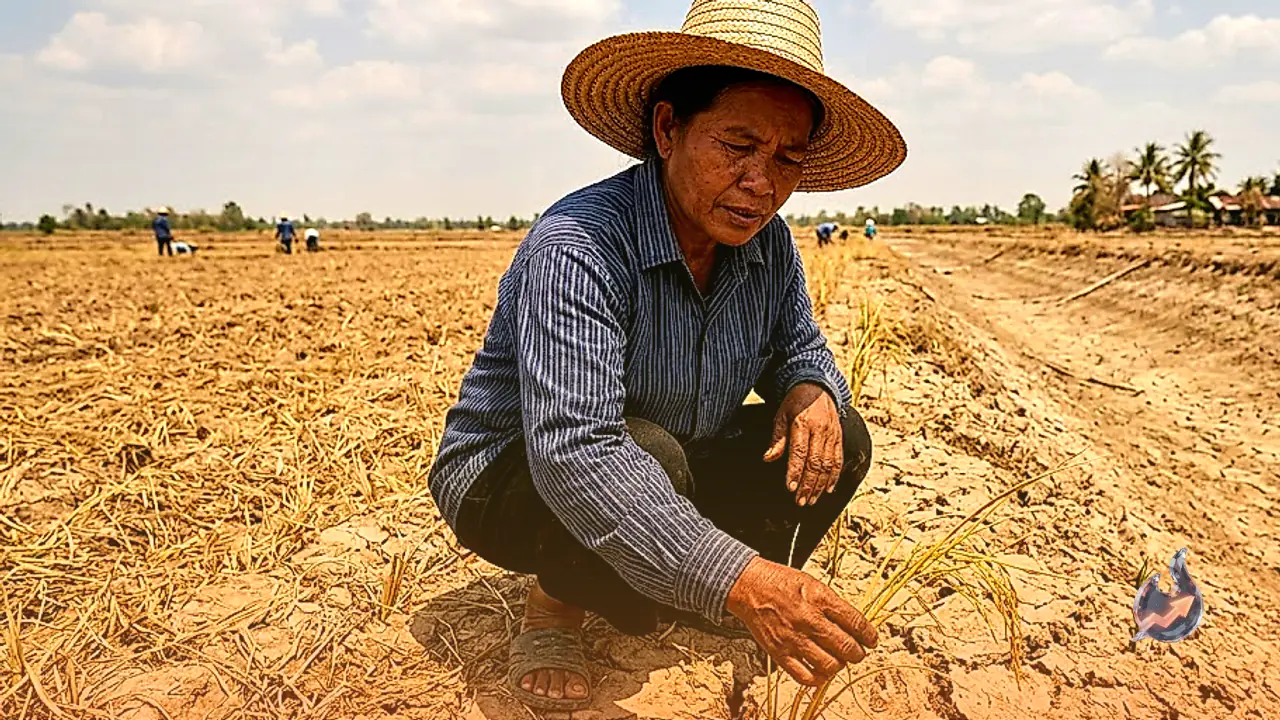
Signs of systemic climate strain surfaced early during India's crucial four-month southwest monsoon stretch running from June through September. Notable deficits during June and August gave way to a September where rainfall totals in multiple agrarian belts plummeted to nearly half of historic norms. Rural districts across Maharashtra have already plunged into severe drought-like distress. These prolonged dry spells directly jeopardize vital kharif crops, including staples and commercial commodities such as rice, diverse pulses, cotton, and maize. Agricultural economists caution that sharp drops in seasonal harvests could trigger acute food inflation in the coming cycles. The resulting financial shock is poised to fall hardest on lower-middle-class and low-income families, intensifying vulnerability around basic nutrition and food security.
State Intervention and Water Conservation Measures
Faced with scientific advisories issued consistently over the preceding four months, policy authorities in New Delhi have initiated targeted protective frameworks. Agriculture Minister Shivraj Singh Chouhan stated, "A protective shield is being prepared for farmers." Ground initiatives aimed at water conservation have been accelerated across more than three hundred and fifty vulnerable administrative districts. Agronomists are actively steering cultivators away from water-heavy staples, incentivizing shorter-duration and drought-tolerant alternatives such as pulses and millet. Concurrently, government agencies are intensifying rainwater harvesting drives and groundwater recharge programs to cushion rural economies against intensifying moisture stress.
Severe Water Crises Grip Sri Lanka
Across the southern maritime border, Sri Lanka is wrestling with its most destructive drought conditions in ten years. Over one hundred and sixty thousand citizens are currently contending with severe shortages of safe drinking water as major reservoirs run dry. The environmental collapse prompted authorities to shut public access to prominent wildlife havens like Yala National Park, relying on emergency water tankers to sustain wild animal populations. In the island nation's northeastern wetlands, evaporating ponds have triggered mass die-offs of freshwater fish. Although emergency disaster officials are pushing plans to deploy seawater desalination systems, the country's limited operational capacity leaves critical population centers acutely vulnerable.
Grain Supply Disruptions across Southeast Asia
Alarm is equally pronounced throughout Southeast Asia, where structural agricultural systems face serious operational setbacks despite previous experiences with climate anomalies. Regional rice production is projected to contract by eight to ten percent over the cycle. In nations like Indonesia and the Philippines, where ordinary households commit a substantial share of daily earnings strictly to sustenance, even minor spikes in staple prices threaten to trigger widespread social friction. Agricultural strategists point out that sustaining food supplies has transcended routine farm policy to become an imperative of national security. In response, regional governments are increasingly shifting policy incentives toward organic soil enrichment and regenerative farming systems to insulate agricultural output.
East Asia Faces Scorching Heat and Cyclonic Storms
East Asian nations are confronting a compounding hazard of historical heatwaves and volatile storm fronts. South Korea experienced its driest July on record before sudden, catastrophic cloudbursts unleashed extensive structural damage. In response to these erratic swings, authorities enacted the first comprehensive overhaul of the national heatwave alert protocol in eighteen years, advising all outdoor labor to cease whenever perceived temperatures breach thirty-eight degrees Celsius. Meanwhile, Japan officially documented its first extreme heat classification as mercury levels topped forty degrees Celsius. Compounding the thermal stress, meteorological agencies are bracing for super typhoons, prompting official directives for households to reinforce residences and stockpile emergency essentials, alongside preemptive closures of vulnerable highway underpasses during torrential downpours.
Mitigation Drills and Workplace Mandates in China and Taiwan
Aggressive administrative defenses are also taking shape in neighboring economic hubs. In Hong Kong, regulatory mandates have made it compulsory for commercial employers to provide cooling facilities and structured rest intervals for outdoor staff during severe thermal peaks. Mainland China has rolled out a targeted hundred-day emergency campaign, ordering urban planners to draft comprehensive climate risk zoning maps. Taiwan conducted extensive three-day simulated response drills to test infrastructure resilience under sustained conditions exceeding forty degrees Celsius. Taken together, the ongoing El Nino cycle has evolved beyond a transient weather quirk into an overarching regional crisis touching water reserves, public health, food logistics, and national economies.