






















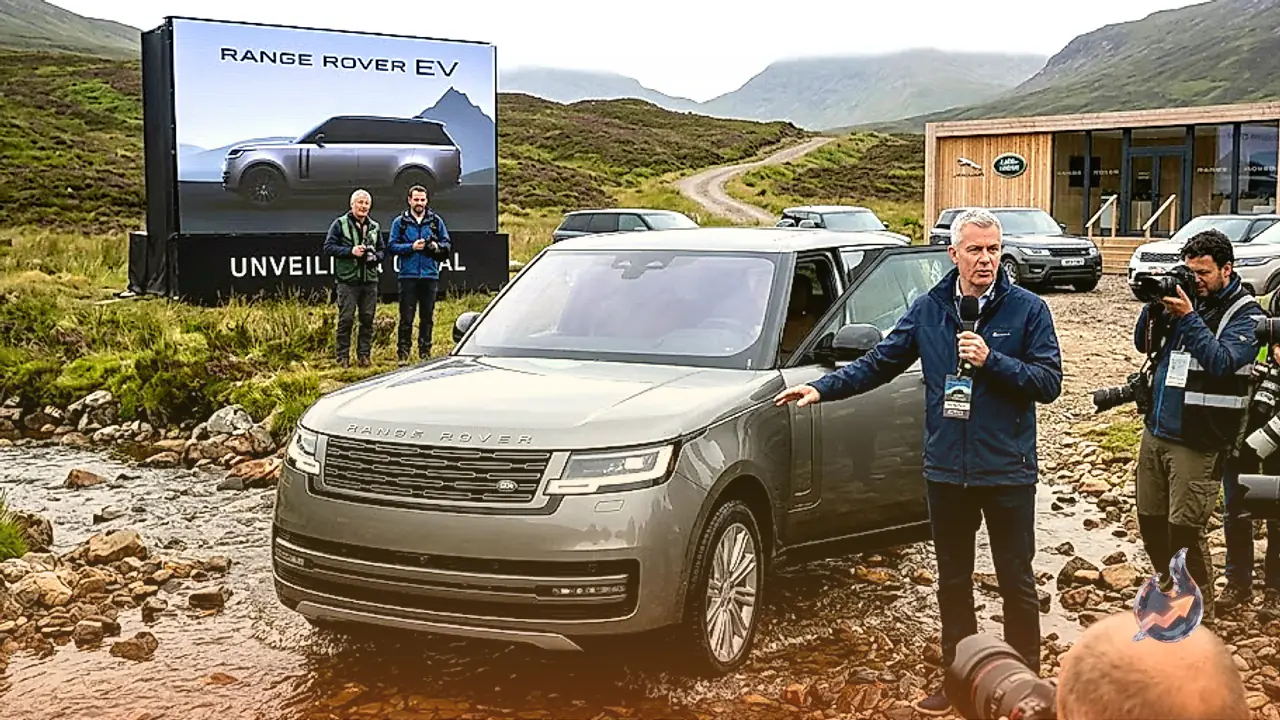

Jaguar Land Rover has officially revealed its long-awaited all-electric Range Rover, blending the brand’s flagship luxury heritage with advanced battery performance. Despite recent headwinds facing high-end electric vehicles globally, the automaker is positioning its new flagship SUV with extreme power ratings, rapid charging infrastructure, and heavy-duty off-road engineering.
Powertrain, Acceleration, and Battery Capabilities
At the mechanical core of the Range Rover Electric are dual 260-kilowatt motors designed to deliver V8 levels of performance. Together, the powertrain generates up to 542 horsepower and 850 newton-meters of torque. According to JLR, these electric drive units deliver 20 percent higher power density than motors of equivalent physical dimensions. Despite carrying a heavy battery array, the SUV accelerates from zero to 60 mph in just 4.3 seconds.
Energy storage is handled by a double-stacked 118.5-kWh battery pack incorporating 800-volt split-charging technology. Using compatible high-speed DC chargers, the vehicle can recharge from 10 to 80 percent state-of-charge in 22 minutes. A brief 10-minute session adds approximately 137 miles of driving range. Official WLTP testing rates the maximum operating range at 372 miles, with JLR estimating real-world usable range at up to 333 miles on a single charge.
Pricing Strategy Across Global Markets
Pricing for the new electric flagship lands in the upper strata of luxury automotive offerings. In the United Kingdom, the entry-level Autobiography specification carries an opening price of £154,070 (around $208,000). Moving up to the top-tier SV Black long-wheelbase edition increases the cost to £225,240 (north of $304,000). Ultra-exclusive derivatives are listed as price on application, reserving specific figures for direct buyer consultations. In the United States market, a lower SE specification starts at $138,00, plus an additional $2,550 for delivery and destination charges.
Off-Road Tech, Patent Innovations, and Interior Design
Engineering teams built the vehicle under a strict "Range Rover first, electric second" design philosophy to retain signature off-road functionality. The updated traction management system modulates motor speed within 50 milliseconds, controlling wheel slip up to 100 times faster than conventional internal combustion setups. Single-pedal driving remains operational on steep inclines reaching up to 45 degrees, complemented by a 900-millimeter water-wading depth capability. Development of the vehicle generated over 300 individual patent applications, marking a record figure for any single platform in JLR history.
Inside the cabin, the layout maintains a high standard of luxury finishings. Rather than reverting toward traditional physical switchgear, the interior relies on a central high-definition touchscreen interface paired with multi-function steering wheel controls for primary vehicle settings.
Market Challenges and Extreme Endurance Testing
The prolonged timeline prior to launch coincided with broader hesitation across the ultra-luxury EV market. Key competitors, such as the electric Mercedes G-Wagen, experienced soft retail demand alongside similar sales slow-downs reported by rival brands including Porsche and Audi.
JLR utilized the extended development window to subject the vehicle to intensive durability testing. Live battery modules underwent severe thermal shock and vibration cycles across temperatures spanning –40°C to +90°C. Prototype units logged physical test mileage equivalent to 38 trips around the globe, supported by more than 250,000 cumulative hours of virtual simulation testing. Reflecting this development process, JLR provides an eight-year or 100,000-mile factory warranty on the electric model.
What Comes Next: Electrified Modular Architecture and the Range Rover GT
Looking ahead, JLR continues expanding its electrified portfolio following its July announcement teasing the most car-like Range Rover ever created. The company is actively testing the Range Rover GT, an all-electric grand tourer built upon its Electrified Modular Architecture (EMA). This shared platform will also underpin future mid-sized vehicles across the corporate lineup, with the GT expected to reach full launch status later this year.