
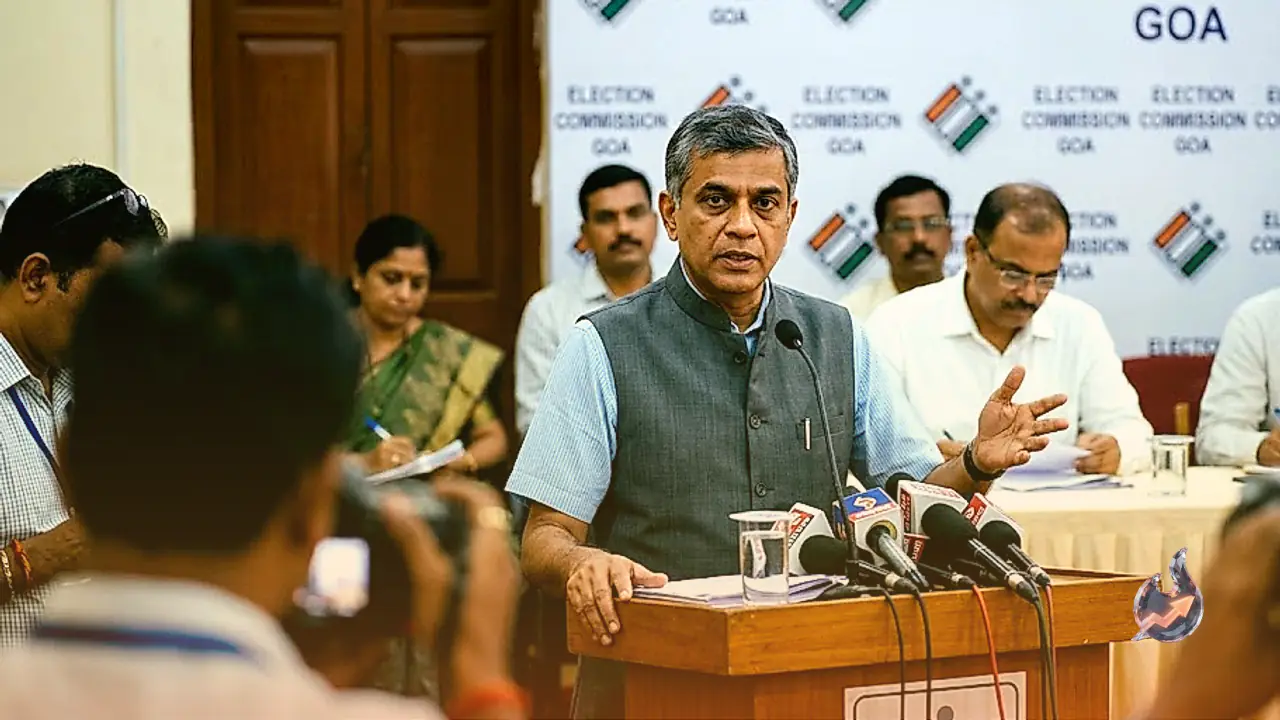


















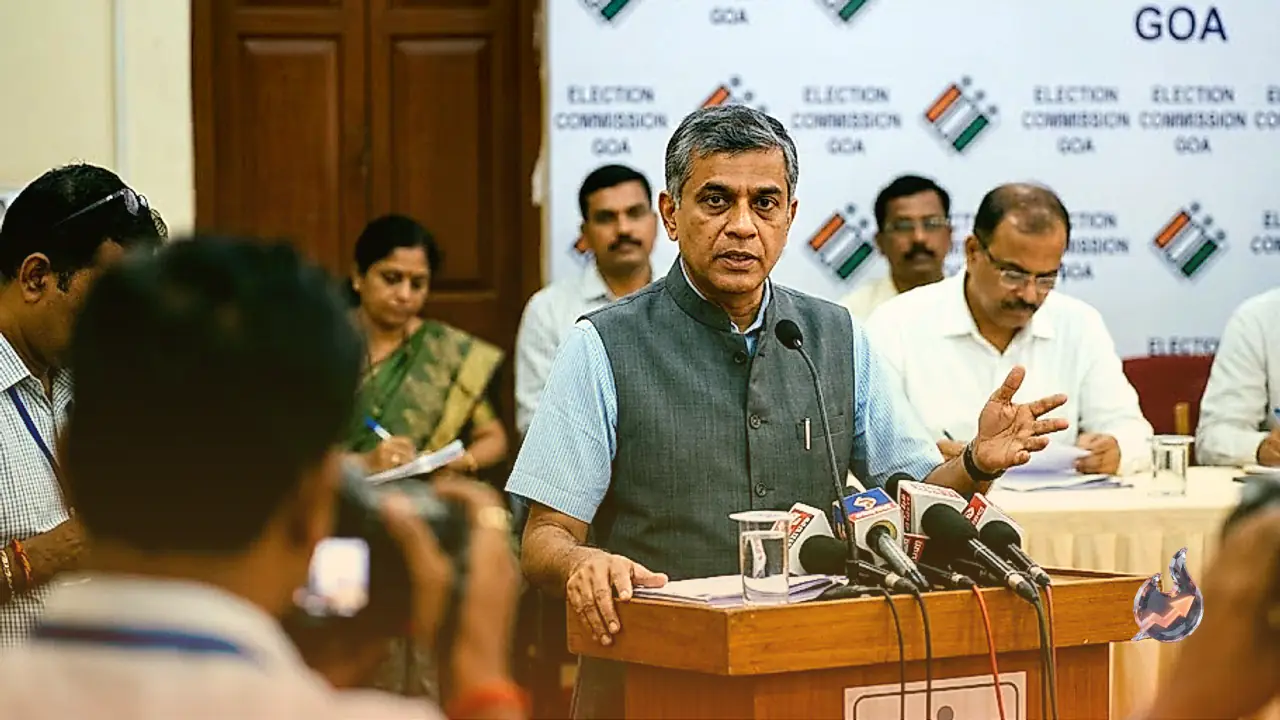

The Election Commission has addressed growing political tension in Goa over the Special Intensive Revision of voter rolls, following allegations from opposition parties that the process was being manipulated ahead of upcoming elections. Opposition leaders had alleged that Chief Election Commissioner Gyanesh Kumar and the ruling Bharatiya Janata Party were using the voter list revision to influence electoral outcomes, demanding that the exercise be withdrawn. Responding to these concerns, the commission issued a statement explaining that booth level officers had conducted door-to-door visits to collect Form 6 for 97 cases not included in the final electoral roll published in February 2026. The poll body noted that several names have already been added while the remaining cases are under process, reiterating that no eligible voter will be excluded.
Congress Alleges Manipulation in Voter Enrolment
Opposition parties anchored their protests around reports indicating that Election Commissioners Sukhbir Singh Sandhu and Vivek Joshi had expressed concerns over the deletion of voters under the revision drive across several regions, including Goa. Addressing reporters in Panaji, Sunil Kawthankar, working president of the Goa Pradesh Congress Committee, stated that the ruling party was attempting to secure electoral advantages through the revision process because returning to power in Goa posed a stiff challenge for the establishment.
The Congress leader argued that removing legitimate citizens from voter registries constitutes electoral manipulation. He contended that the commission was functioning as an extension of the ruling party to facilitate poll victories. Kawthankar asserted that growing public support for the opposition had unsettled the government, leading to such administrative maneuvers, and demanded an immediate rollback of the entire revision exercise.
Goa Forward Party Demands Scrapping of Revision Drive
In a separate media briefing, Goa Forward Party president Vijai Sardesai demanded the immediate reinstatement of all deleted voters, excluding only deceased individuals. Sardesai claimed that nearly 1.8 lakh voters were removed from the electoral rolls during the exercise. He pointed out that assembly contests in Goa are historically decided by extremely narrow margins, with victory gaps occasionally falling below 100 votes.
Given these delicate margins, Sardesai warned that large-scale voter deletions could distort the true mandate in the 2027 assembly elections. He argued that with elections approaching and the poll panel lacking the time required to conduct a fresh revision from scratch, the only prudent approach would be to completely scrap the controversial process and restore the earlier registrations.
AAP Claims Field Level Election Machinery Weakened
The Aam Aadmi Party also escalated its opposition against the electoral exercise, seeking accountability from the Chief Election Commissioner. Valmiki Naik, president of the party's Goa unit, alleged that the revision mechanism had effectively undermined the authority and autonomy of grassroots electoral officials. Expressing alarm, he remarking that residents were already facing threats to their land and were now seeing their voting rights jeopardized.
Naik suggested that the developments in Goa might represent merely a fraction of a broader systemic problem across constituencies. He alleged that citizens who did not support the ruling party were being specifically targeted through strategic disenfranchisement to alter local voting dynamics. Despite the official clarification provided by the election authorities, opposition groups continue to demand rigorous oversight and the restoration of purged voters.