




















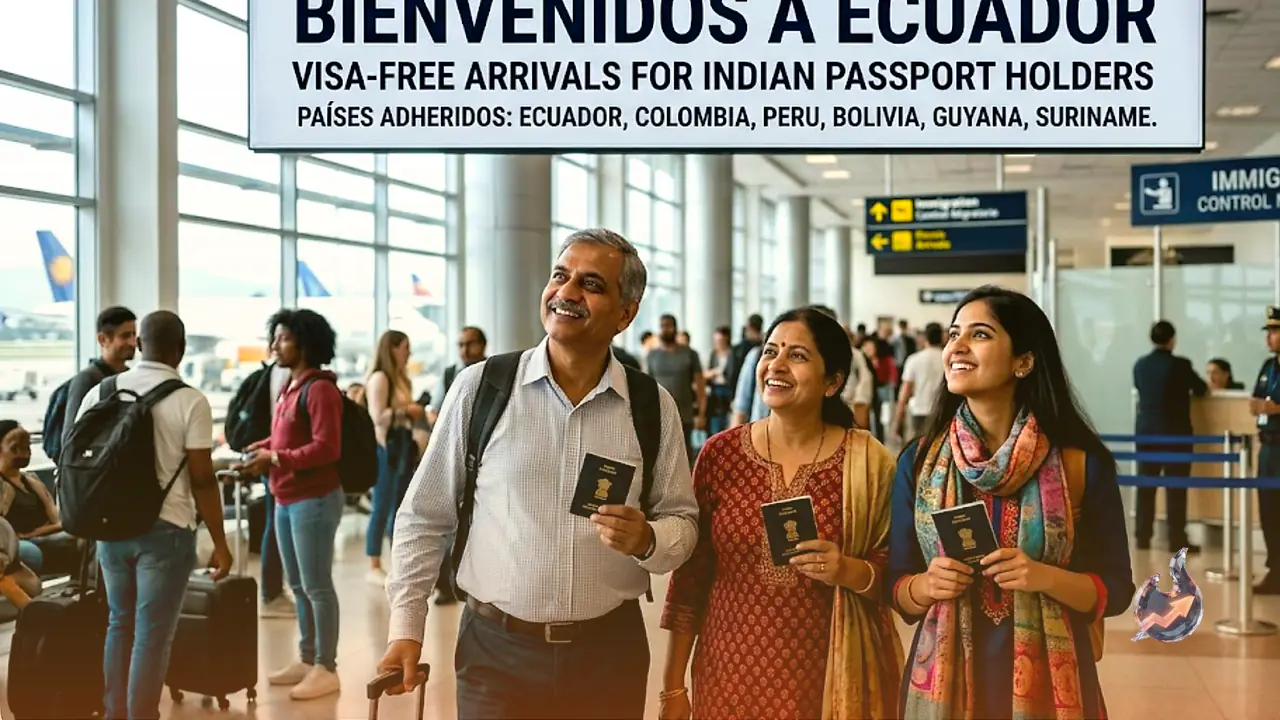

A growing number of Indian holidaymakers are looking past Europe's crowded summer circuits and setting their sights on South America instead, drawn by a wave of relaxed entry rules that several countries on the continent have rolled out for Indian passport holders heading into 2026. Ecuador, Guyana, Colombia, Peru, Bolivia and Suriname all now offer some form of easy access, whether that means skipping the visa process entirely or securing one at the airport on arrival. For travellers who once ruled out Latin America because of paperwork, the calculus has changed considerably this year.
Why Indians Are Looking Beyond Europe
The pull toward South America is largely about novelty. A significant share of Indian tourists have already ticked off the familiar European circuit and are now hunting for destinations that feel less saturated. Latin America answers that call with a mix of colonial-era towns, dense rainforest, and landscapes that range from coastline to high-altitude plateau. Entry, in most cases, requires nothing more than a valid passport and proof that you can support yourself financially during the trip. Travellers are advised to check the specific rules for their chosen country well before booking flights, since a missed requirement at check-in can derail an itinerary.
Where Indians Can Travel Without a Visa
Ecuador is drawing the most attention, letting Indian citizens stay for up to 90 days without applying for any visa at all, a window long enough to cover both the Galapagos Islands and the country's colonial-era towns at a relaxed pace. Guyana takes a slightly different approach, issuing a visa on arrival that is valid for 30 days. Both countries are positioning themselves to capture more of India's expanding middle-class travel market, and the visa-on-arrival route means travellers can head into the Amazon rainforest without first making a trip to an embassy.
Where Entry Depends on Other Visas or Fees
Colombia and Peru take a conditional approach: Indians holding a valid United States visa are exempted from applying separately, and in many cases a valid Schengen visa unlocks the same exemption. Travellers without either of those qualify differently. Bolivia issues a visa on arrival at its major entry points, but expects visitors to carry return air tickets along with a yellow fever vaccination certificate, both of which are treated as essential for a smooth entry. Suriname, meanwhile, does not waive its entry fee, though the stay it permits stretches to 90 days once that fee is paid.
Entry Rules at a Glance
- Ecuador: Visa-free entry, stay up to 90 days
- Guyana: Visa on arrival, stay up to 30 days
- Suriname: Entry fee required, stay up to 90 days
- Bolivia: Visa on arrival, stay up to 30 days
Planning the Trip Around Cost and Weather
None of this comes cheap on the flight front. Airfare from India to South America remains steep, and travellers should budget for that upfront. Once on the ground, though, day-to-day costs, from meals to local transport, tend to land in the same range as spending in many major Indian cities, which softens the blow of the flight bill. The stretch between June and September brings the most favourable weather across the Andes region, making it the window worth targeting for anyone hoping to trek or sightsee without fighting the elements. A multi-currency card is also worth carrying, since it cuts down on the conversion fees that can quietly eat into a travel budget across multiple local currencies.
What This Means for Indian Explorers
Taken together, the mix of visa-free entry, visa-on-arrival options and conditional exemptions makes South America meaningfully easier to reach than it used to be for Indian citizens. Picking the right combination of destinations, whether that's Ecuador's 90-day window paired with a Guyana stopover or a Bolivia leg tacked onto a Peru trip, can save real time that would otherwise go into visa paperwork. Travellers are still urged to verify the latest entry requirements before locking in international flights, since rules can shift. With the right documents in hand and an itinerary mapped out in advance, 2026 is shaping up as a strong year for Indians to finally cross South America off the list.