























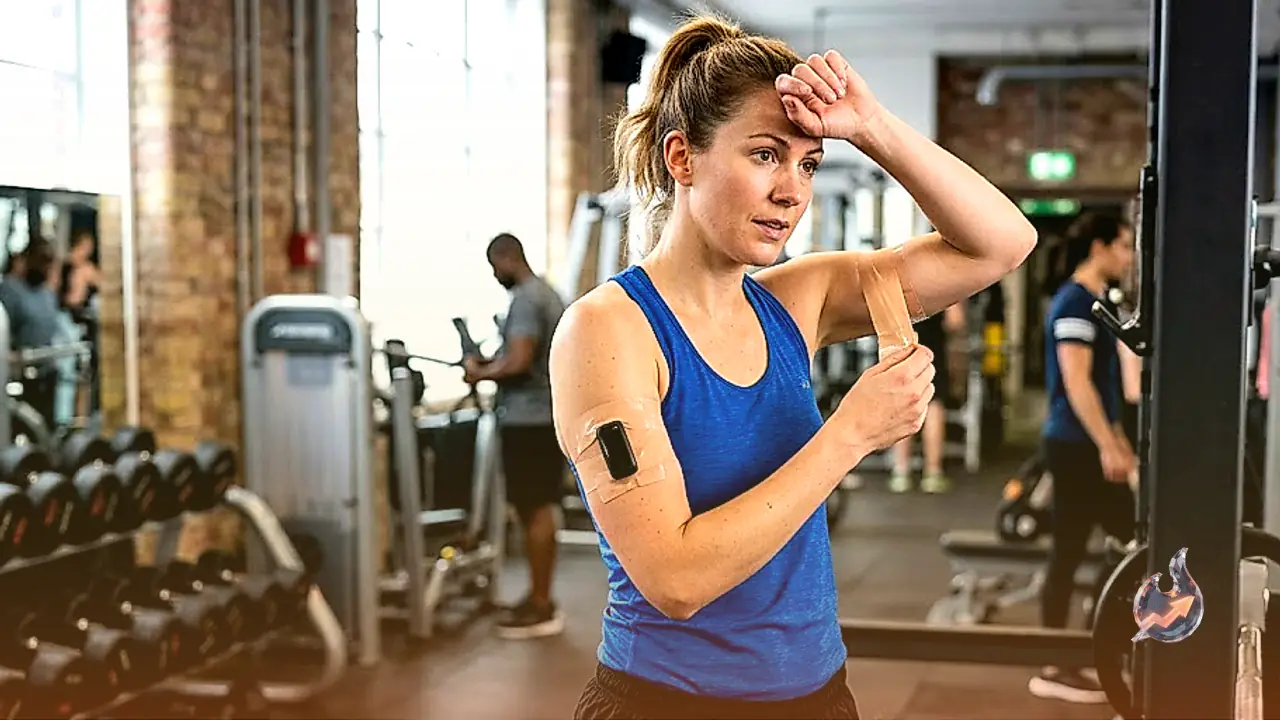

A major advantage of a screenless smart band is that it does not carry the bulk of a standard watch and does not necessarily have to live on a wrist. Competing products like Whoop popularized this flexibility by offering dedicated bicep bands and alternative clothing attachments. Because Google has not introduced a dedicated bicep band for the Fitbit Air, several users are taking matters into their own hands, securing the bare tracking module to their skin with rolls of adhesive tape.
The Practical Appeal of Freeing Up the Wrist
Stripping the wristband off a Fitbit Air and affixing the sensor module straight onto an arm immediately removes hardware clutter from the wrist. For people engaging in strength training, kettlebell routines, or weightlifting sessions requiring supportive wrist wraps, a conventional wrist accessory constantly interferes with joint motion and equipment contact. Taping the sensor out of the way also lets individuals wear tight sleeves or everyday accessories without having a fitness tracker disrupt their comfort or style, making it easy to forget a tracking device is even present.
Choosing the Right Adhesive and Why Athletic Tape Falls Short
Those experimenting with this approach have tested several bonding solutions. Common choices include medical tape, traditional athletic tape, and KT tape, which athletes routinely use to stabilize sore muscles or joints. However, standard kinesiology tape often fails when applied in tiny footprints. While large strips retain enough total surface adhesive to stay attached, a small cut made to cover the compact Fitbit Air struggles to hold firm. Heavy perspiration during vigorous exercise, followed by everyday showering, can cause basic athletic tape to lift away in just a single day.
A far more durable alternative is an overpatch intended for a continuous glucose monitor, commonly known as a CGM. These medical monitors sit against the back of the upper arm, and manufacturers pair them with large, water-resistant adhesive covers called overpatches to keep the sensor secure. Because a standard CGM patch is rated to remain anchored for approximately two weeks, it comfortably outlasts the roughly 7 days of battery life provided by the Fitbit Air, holding the tracker firmly in place through sweaty training sessions and daily showers.
Impact on Heart Rate Accuracy and Exercise Detection
Affixing the tracker to the back of the upper arm beneath a tight CGM patch provides firm, consistent skin contact. The patch shields the optical sensor from surrounding ambient light, which actually helps the hardware capture cleaner pulse measurements. In practical running scenarios, heart rate readings recorded from the back of the arm align closely with data captured simultaneously by other dedicated fitness devices.
Nevertheless, physiological differences mean not every spot on the arm yields ideal blood vessel exposure for optical sensors across all body types. A more pronounced functional issue relates to automated workout detection. Fitbit algorithms expect motion profiles generated by swinging wrists rather than the subdued movement of an upper arm. Consequently, background tracking may fail to register an outdoor jog automatically, requiring users to manually trigger workout tracking inside the companion software to record sessions reliably.
Removal Struggles, Skin Discomfort, and Ongoing Costs
Despite its practicality for specialized workouts, adhering a fitness tracker presents noticeable drawbacks. The primary hurdle occurs when the device needs recharging. While the Fitbit Air battery lasts approximately one week, the heavy-duty adhesive on a two-week medical patch remains extremely aggressive when peeled early. Pulling that adhesive off dry skin can be tough and painful, though peeling the patch under a warm shower helps soften the glue.
Additionally, replacing disposable patches on a weekly basis adds a recurring financial expense over time. While relying on adhesive patches is not an everyday setup for everyone, it offers a functional workaround for fitness enthusiasts determined to keep their wrists entirely unobstructed.