



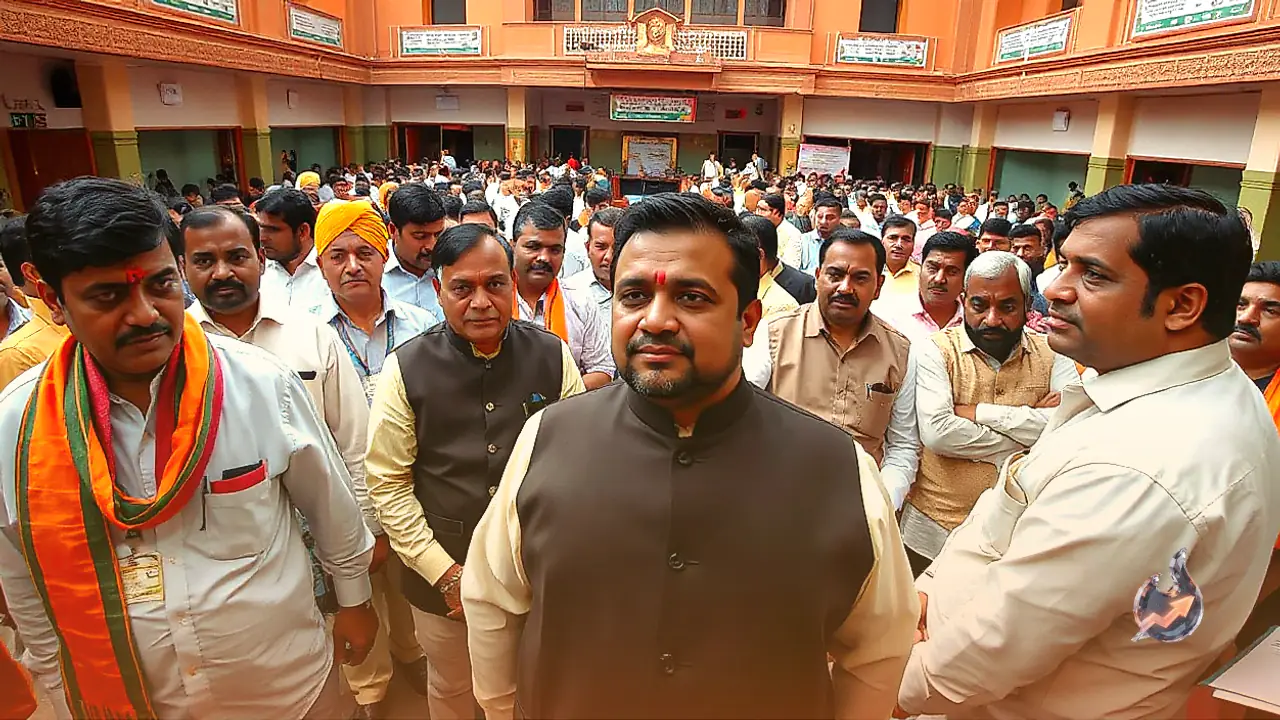
















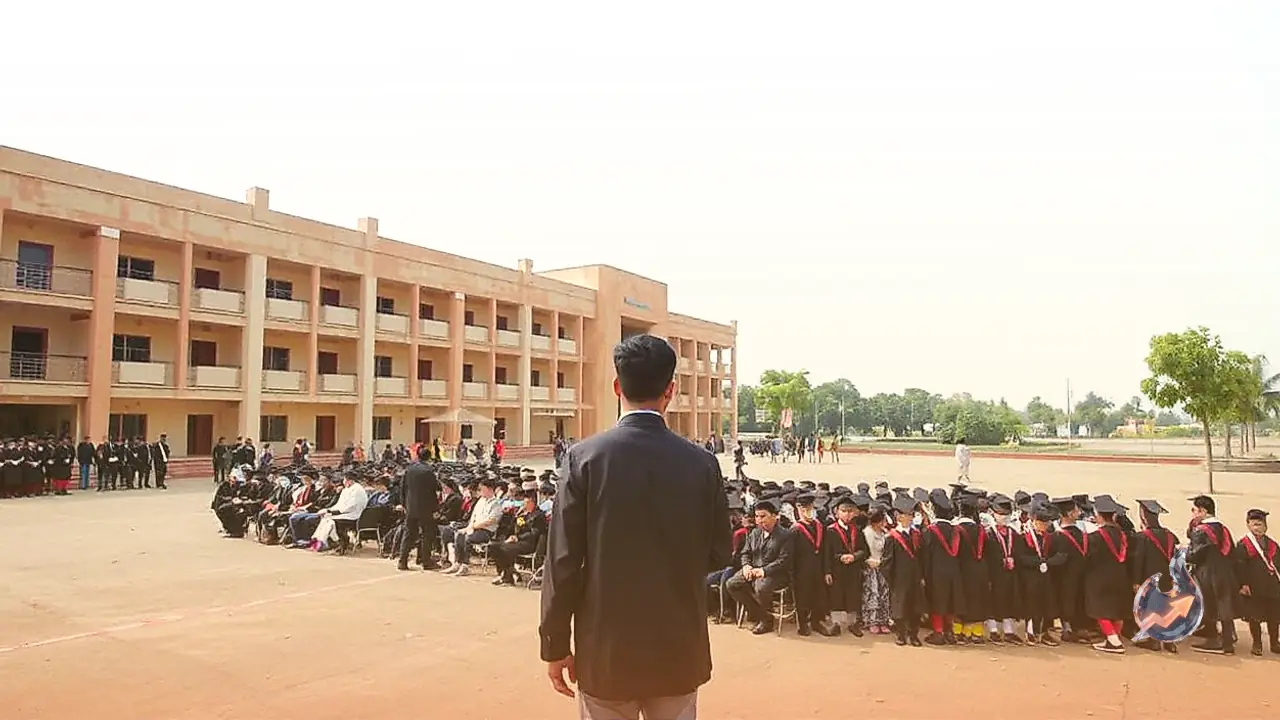

Adani University celebrated its third convocation ceremony on Saturday in Ahmedabad, marking the formal graduation of 374 students from the batch of 2026. The milestone academic event brought together educators, industry leaders, and families to commemorate student achievement across diverse professional disciplines. In recognition of distinguished academic merit, 10 outstanding graduates were presented with prestigious medals, comprising five gold, three silver, and two bronze honours. The gathering was presided over by Dr. Priti Adani, President of Adani University, while Prof. Govindan Rangarajan, Director of the Indian Institute of Science, served as the chief guest for the occasion.
Aligning Industrial Reality with Academic Innovation
Welcoming the chief guest, Dr. Priti Adani highlighted Prof. Govindan Rangarajan's significant body of work in mathematics, scientific research, and institution building, noting that his academic trajectory serves as an enduring inspiration for emerging scholars. She emphasized that his seasoned insight remains invaluable in guiding Adani University toward establishing itself as a premier research-oriented destination for higher learning.
Addressing the broader picture of national progress, Dr. Adani stressed that innovation and targeted scientific inquiry must serve as the backbone for sustainable economic expansion. While observing that India has successfully developed physical infrastructure at a monumental scale, she asserted that the country must now build an equivalent capacity for large-scale innovation and creative ideation. She underlined the vital necessity of forging deeper, systemic ties between university lecture halls and industrial workspaces.
Dr. Adani maintained that the interaction between enterprises and academic campuses should avoid unidirectional dynamics where businesses simply dictate syllabi to educators. Instead, meaningful collaboration must draw from genuine real-world friction to unearth novel questions and develop fresh solutions that neither party could formulate in isolation. She urged the graduating cohort to channel their technical training, creative thinking, and research acumen into creating technologies that directly improve the circumstances of marginalized communities across society.
Navigating the Dual Edge of Artificial Intelligence
Delivering his convocation address, Indian Institute of Science Director Prof. Govindan Rangarajan examined the rapidly expanding footprint of artificial intelligence, unpacking both its immense promises and structural hazards. He observed that AI is introducing unprecedented frontiers in postsecondary learning and scientific discovery, notably by tackling sophisticated computations and accelerating the pace of empirical investigation.
However, Prof. Rangarajan cautioned that the proliferation of advanced digital tools has introduced profound friction regarding public trust, verifiable truth, and genuine human connection. With generative technologies capable of creating remarkably lifelike imagery, video material, and synthetic discourse, the line between fact and fabricated reality is becoming increasingly precarious for ordinary citizens.
Reflecting on this technological shift, he questioned whether the rush toward digital closeness is paradoxically eroding interpersonal warmth and authentic communal bonds. While advocating for the responsible adoption of artificial intelligence capabilities, he insisted that society must soberly evaluate the intangible human values that risk being compromised during unchecked technological adoption.
Institutional Trajectory and Academic Expansion
Presenting the university's annual operational review, Provost Prof. Dr. Dhaval Pujara detailed recent milestones across academic curricula, ongoing research ventures, and active industry partnerships. He commended the collective dedication of faculty instructors, administrative staff, student researchers, and external corporate collaborators for advancing the campus vision of multidisciplinary education tailored to national advancement.
Founded in 2022, Adani University has structured its educational programs to directly reflect industrial requirements, integrating classroom theory with practical internships and research incubation. The campus currently accommodates more than 1,800 enrolled students. The institution's establishment focused on core developmental pillars, fostering interdisciplinary investigation across infrastructure, sustainable energy, advanced engineering, and digital healthcare ecosystems.
The institution operates through an ecosystem methodology that combines degree training with professional skilling, educator development, commercial enterprise incubation, product prototyping, intellectual property generation, technical consulting, and cross-border collaborative research initiatives. Today, the university offers undergraduate and postgraduate qualifications across engineering, technology, and commercial business administration, including B.Tech., M.Tech., and MBA curricula. Complementing these are integrated B.Tech.-MBA pathways and interdisciplinary doctoral research programs structured around the National Education Policy. Adani University also holds the distinction of being the first university in Gujarat to attain the internationally recognized ISO 21001:2018 certification for higher education management systems.