























In this modern era of rapidly shifting fashion trends, the demand for newly designed apparel remains consistently high. For individuals seeking employment or looking to establish a small-scale venture from the comfort of their homes, the clothing trade presents a highly lucrative, low-cost business opportunity. Launching this venture does not necessitate leasing a large retail storefront or committing substantial financial resources. By sourcing high-quality garments at wholesale prices from the renowned textile markets of Ambala, anyone can easily set up a successful retail operation directly from their home.
Ambala as a Prominent Regional Textile Hub
The textile market of Ambala has long served as a crucial trading hub for commercial buyers across northern India. Retailers and small business owners from various districts of Punjab, Himachal Pradesh, and Haryana regularly visit this market to purchase bulk inventory at highly competitive rates. Many enterprising individuals secure their stock from this wholesale hub and resell the items in their local towns at healthy profit margins. Today, the widespread adoption of social media networks and online communication platforms has streamlined this business model even further, allowing entrepreneurs to bridge the geographical gap effortlessly.
A Journey of Perseverance in the Textile Trade
Amanpreet Singh, an experienced professional with two decades of active involvement in the clothing industry, explains that his career began on a very humble note. He started his journey working as a shop helper on a modest monthly salary of just 1,500 rupees. Over the course of fifteen years spent working on retail shop floors, he mastered the intricacies of garment sourcing, pricing strategies, and customer psychology. Utilizing this extensive on-the-ground experience, he eventually built direct sourcing channels stretching across major textile centers including Delhi, Banaras, Kolkata, Jaipur, and Bareilly.
Core Competencies Required for Business Success
According to Amanpreet Singh, formal higher education is not a strict prerequisite for entering the clothing business. Instead, success hinges on basic arithmetic skills, a general understanding of commercial transactions, and an intuitive grasp of market demand. The most critical factor is identifying current fashion trends, understanding which designs are appealing to buyers, and knowing what colors and fabric qualities are in high demand. Many novice traders who purchase stock from him frequently seek guidance on product selection, color combinations, and inventory management strategies to ensure quick turnover.
Empowering Women with Micro-Entrepreneurship Opportunities
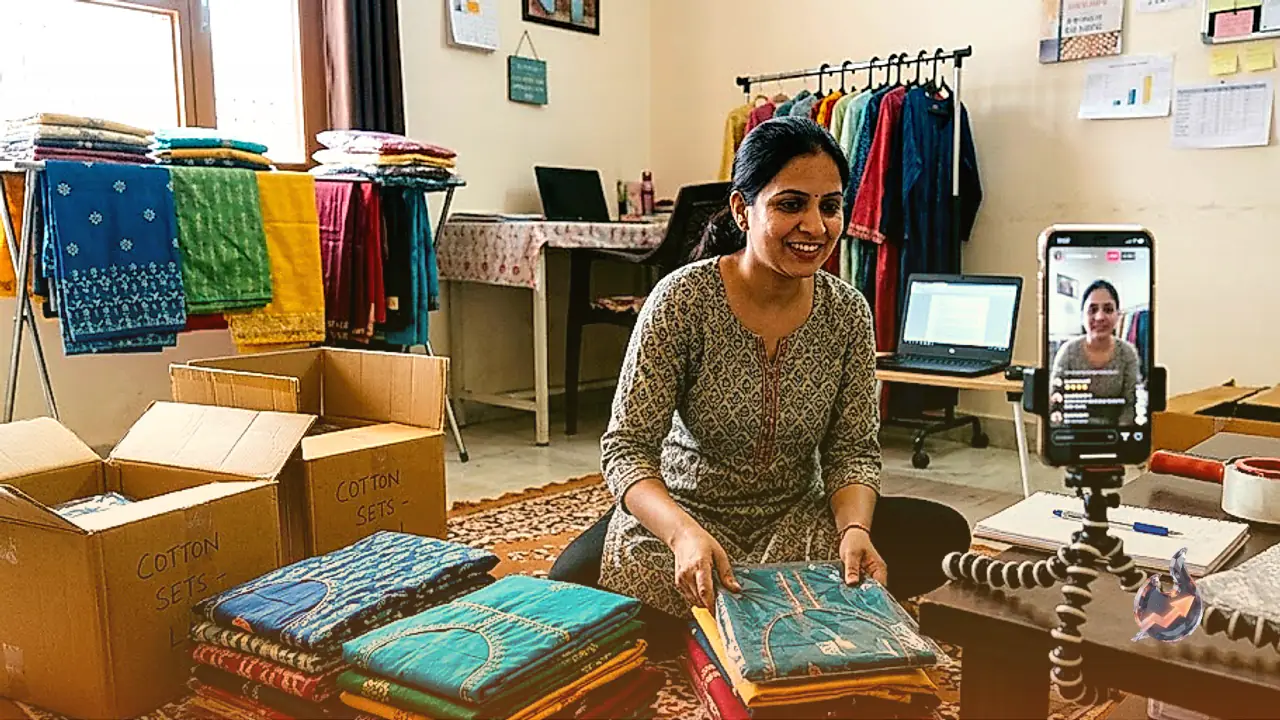
For women and homemakers looking to generate an independent income while managing domestic responsibilities, this home-based model is highly suitable. The business can be initiated with a modest startup capital ranging from 10,000 to 15,000 rupees. Entrepreneurs can purchase an assortment of wholesale suits in diverse designs, photograph them attractively, and share these visuals on digital platforms. As potential buyers interact with these online updates, order inquiries begin to flow, allowing the business to expand organically in response to actual consumer demand.
The Mathematics of Profits and Operating Margins
The financial viability of this model is supported by attractive profit margins. Amanpreet Singh points out that a standard ladies' suit can easily command a net profit margin of 200 to 300 rupees. If an individual successfully manages to sell about 5 to 10 suits on a daily basis, the resulting daily and monthly income can accumulate into a very stable source of revenue. Naturally, the final profitability of the business will depend on factors such as original purchase prices, design exclusivity, selected distribution channels, and minor operational overheads. Starting small allows the business owner to learn without high stakes before scaling up operations.
Navigating Seasonal Demands and Festive Inventories
The clothing sector operates in close alignment with seasonal cycles and major festival calendars. Currently, there is a strong market demand for fancy party wear and ceremonial outfits. However, as the month of October draws to a close, consumer preferences begin to shift rapidly toward winter clothing and woolen apparel. Successful retail operators maintain high agility, shifting their inventory ahead of seasonal transitions. Ambala wholesale market offers an expansive collection of woolen wear, with basic woolen suits available for wholesale prices of around 200 to 300 rupees, offering substantial room for retail markup. Additionally, wedding essentials like heavy lehengas present excellent high-value earning opportunities during the festive season.
Using Social Media as a Zero-Overhead Virtual Showroom
Modern digital technology has dismantled the traditional barriers to entry in retail. Home-based business owners do not need to incur the high fixed costs of renting physical retail space or paying commercial security deposits. By storing a curated, limited quantity of inventory at home, entrepreneurs can utilize WhatsApp and other social media applications as virtual showrooms to display new designs. Once the volume of orders registers consistent growth, business owners can progressively reinvest their earnings to expand their catalog and stock variety, keeping financial risks to an absolute minimum.