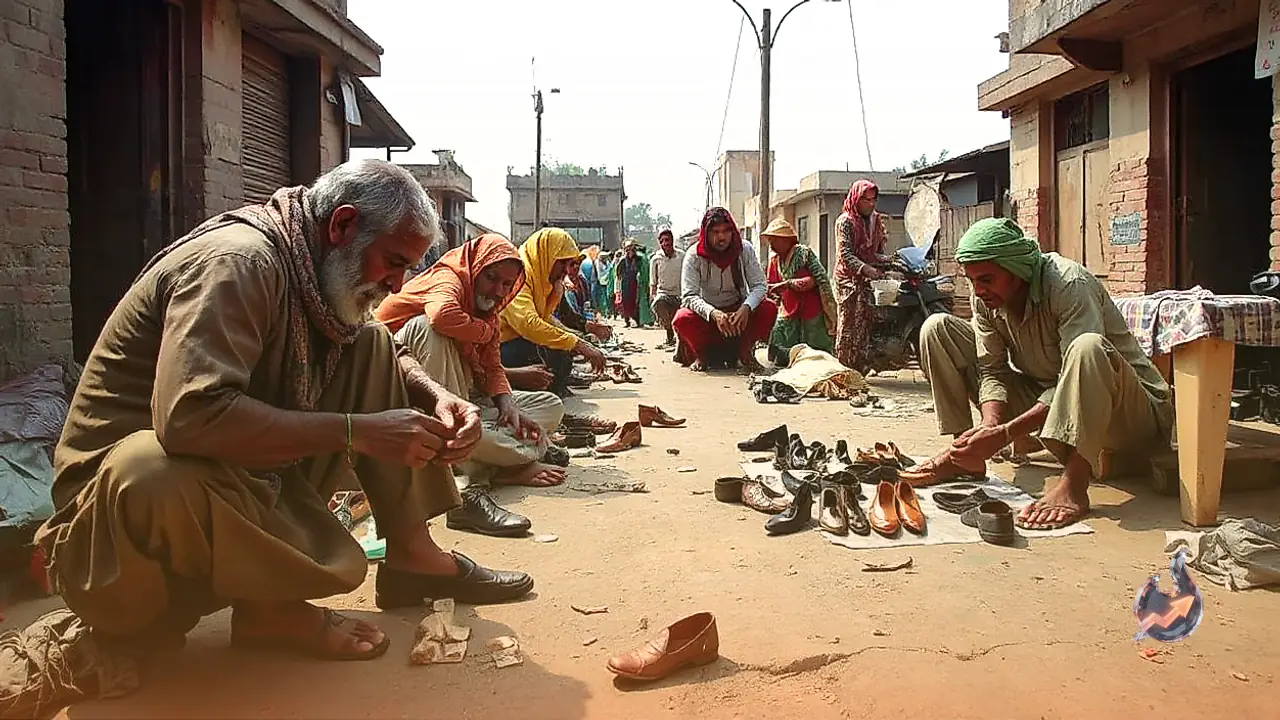














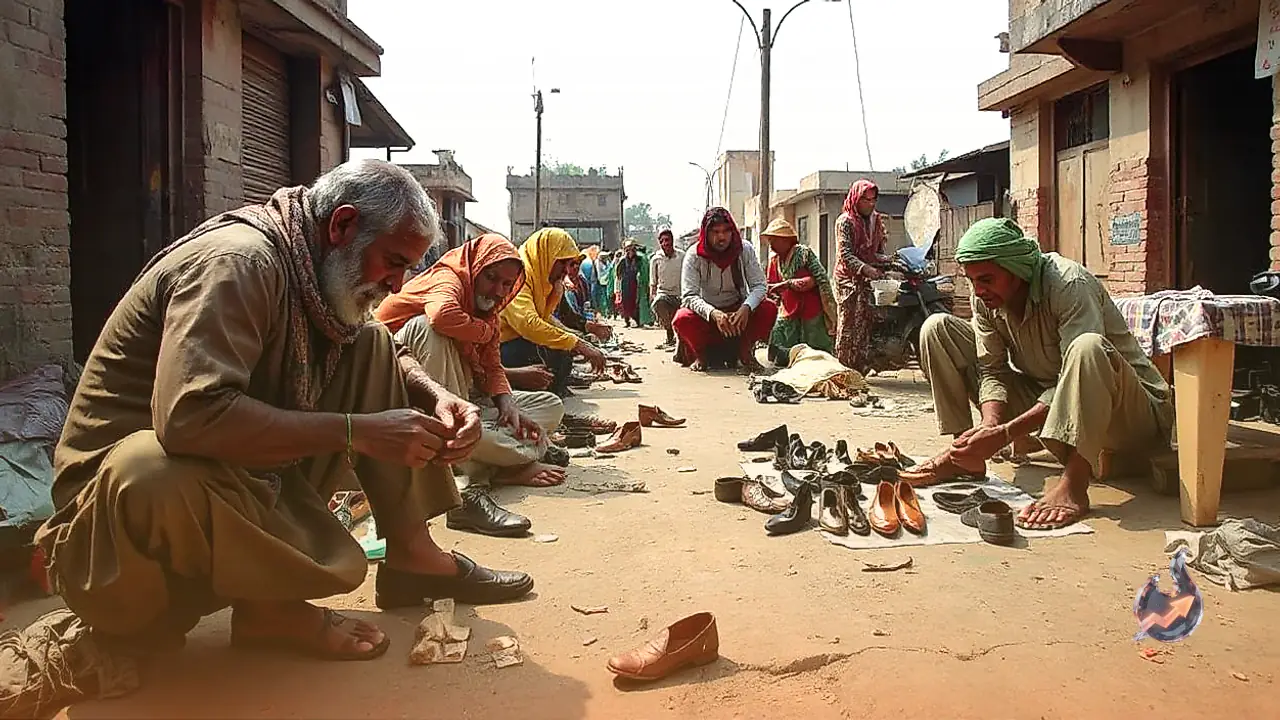

Amidst a relentless wave of inflation where the prices of everyday essentials continue to rise steeply, there remain hardworking individuals whose earnings have actually shrunk to a fraction of what they used to be. Cobblers who sit at busy street corners and intersections to mend worn-out shoes and slippers belong squarely to this vulnerable group. Once able to earn a decent livelihood through stitching, inserting patches, and applying rubber soles, these traditional artisans now face a severe threat to their daily survival. The surging market demand for ready-made and fashionable footwear has heavily impacted their traditional trade. The reality today is that whereas they previously made five hundred to six hundred rupees in a single day, they now struggle to take home barely two hundred and fifty to three hundred rupees after toiling from morning till evening.
Decades of Labor at CM Chowk in Bilaspur
Gopal Ahirwar, a cobbler who has spent the past twenty-five years working at CM Chowk in Bilaspur, shared his mounting difficulties. The location is also widely known as Company Garden Chowk and Santosh Bhavan Chowk. He noted that he has been tied to this profession for nearly forty years with unwavering dedication. Mending torn footwear, driving in tacks, and gluing loose soles together form the core of his daily work to feed his dependents. While leather shoes used to bring in a variety of repair jobs in earlier times, those tasks have dwindled significantly over the years.
Ready-Made Footwear Eclipses Traditional Repairs
Explaining the shift in consumer habits, Gopal Ahirwar pointed out that people traditionally wore sturdy leather shoes in the past. Such footwear required regular stitching, rubber reinforcement, and maintenance, ensuring a steady stream of work for local cobblers. However, the commercial landscape has shifted completely with the widespread popularity of ready-made and modern fashion footwear. Many of these contemporary shoes neither require manual stitching nor permit traditional rubber-soling techniques. This fundamental change is the primary reason behind the roughly fifty percent decline in their traditional trade.
Daily Earnings Cut in Half Amid Rising Costs
Detailing the drop in his daily income, Gopal Ahirwar stated that while he used to earn up to five hundred to six hundred rupees daily in the past, he now barely manages to collect two hundred and fifty to three hundred rupees. On average, only eight to ten customers visit him throughout the entire day. Some patrons pay ten rupees while others offer twenty rupees for minor fixes. These tiny transactions make up his total daily collection. He emphasized that his income has dropped by about half compared to earlier years, even as inflation keeps marching upward.
Supporting a Four-Member Family on Meager Income
Gopal Ahirwar carries the sole financial responsibility for a household of four members. His total monthly earnings hover around six thousand to seven thousand rupees. Running a family household on such a restricted budget is far from easy. He explained that out of sheer compulsion, whatever small amount he earns is stretched to buy basic food items and keep his family afloat. At present, he possesses no alternative source of income outside of this traditional craft.
Scanty Government Support and Basic Facilities
When asked about welfare assistance or facilities provided by the government to cobblers, Gopal Ahirwar expressed considerable frustration. He recalled that his family received a small kiosk roughly forty to forty-five years ago. Following that, the municipal corporation handed out a small utility box, but apart from these basic items, they received no special financial assistance or government backing. He remarked that while talks of welfare schemes and government benefits happen frequently, the ground reality is that such advantages rarely reach grassroots workers.
Plea to Administration for Proper Shop Allotment
Making a direct appeal to the governance and administration, Gopal Ahirwar requested that whenever new commercial complexes are developed within the city, cobblers and other small traditional artisans should be given priority in shop allotments. He noted that although several commercial complexes have come up across Bilaspur, hardworking workers like him have not received a single shop to this day. Sitting by the roadside and at major intersections often makes it difficult for regular customers to locate them. If they were provided with a fixed and secure place to operate, they could carry out their work more efficiently and better provide for their dependents. This narrative goes beyond the declining earnings of a single cobbler, reflecting the broader struggle faced by numerous traditional artisans striving to preserve their livelihoods in an evolving commercial market.