





















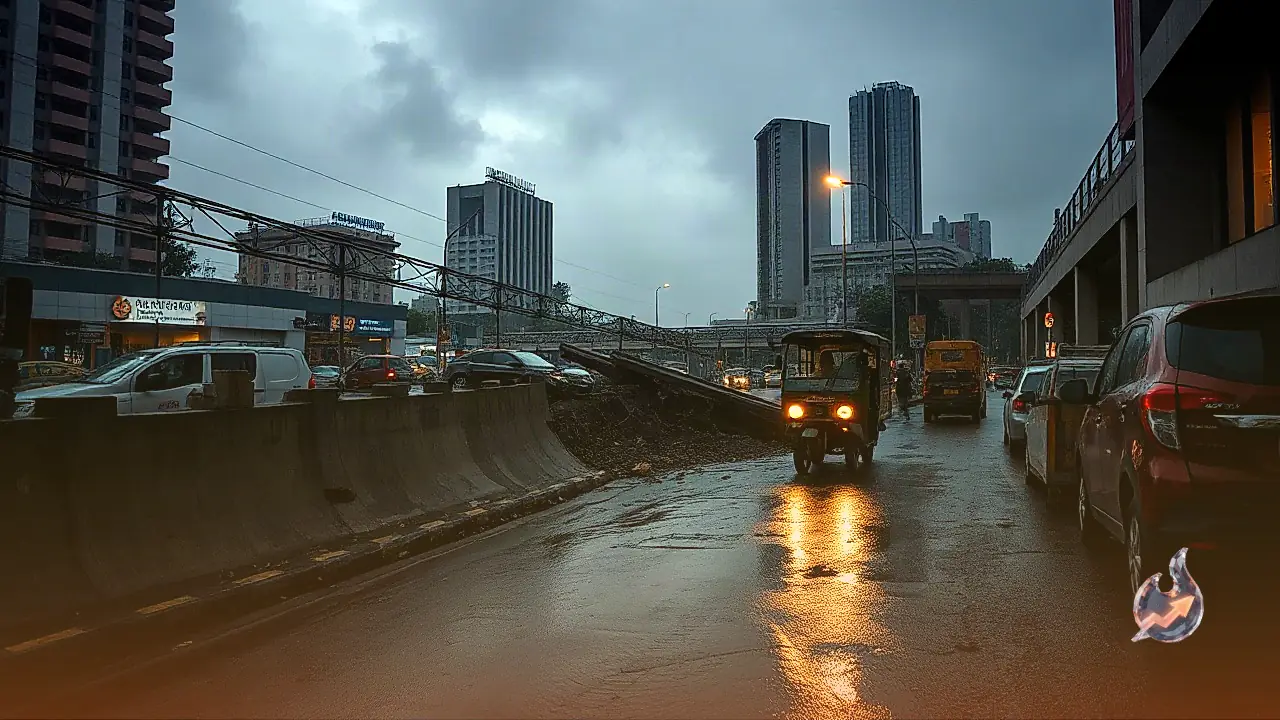

Traffic movement across Gurugram has come to a near standstill following a major road collapse at Iffco Chowk, widely regarded as the transit lifeline of the city. Heavy downpours on Tuesday caused severe structural damage beneath the road, forcing municipal and highway authorities to shut down the crucial service lane connecting the Delhi-Gurugram portion of the Delhi-Jaipur highway. The sudden closure of this arterial passage has caused massive vehicle tailbacks, leaving motorists stranded in multi-hour gridlocks. Compounding the vehicular crisis, tens of thousands of daily commuters attempting to escape the clogged highways shifted to the Delhi Metro, causing unprecedented overcrowding on the Yellow Line, where passengers during peak hours are forced to skip up to eight consecutive trains and endure 30-minute delays on packed platforms.
Sewer Line Leakage and Emergency Dewatering Operations
The severe disruption was triggered on Tuesday when relentless rain led to a heavy leakage in an underground sewer line managed by the Gurugram Metropolitan Development Authority (GMDA). The pressure of the escaping water eroded the sub-surface soil supporting MG Road near the highway entry point, causing the asphalt to collapse into a large, deep cavity. Recognizing the extreme risk to commuters, local authorities and traffic police immediately cordoned off the hazardous area with heavy barricades and suspended all vehicular traffic along the service lane heading toward Jaipur. The underground crater remains filled with pooled water and mud, hindering immediate repair efforts. Officials from the National Highways Authority of India (NHAI) have deployed five industrial-grade motor pumps to continuously drain the water. Only after complete dewatering can engineers backfill the structural void, stabilize the foundation, and relay the road surface, a complex task expected to stretch over several days.
Strategic Importance of the Iffco Chowk Transit Hub
Iffco Chowk serves as the nerve center of Gurugram's road transportation network. Approximately 90 percent of all commuters traveling through this part of the city rely on one of three primary arterial routes that intersect at this junction
- Delhi-Jaipur Highway Link: It serves as the main vehicular entry ramp for traffic moving from Delhi and Noida toward Jaipur, Ajmer, and broader Rajasthan.
- Gurugram-Faridabad Intercity Corridor: The junction acts as the primary transit conduit connecting thousands of daily office-goers and commercial freight between Gurugram and Faridabad.
- Old and New Gurugram Arterial Connection: It forms the vital link bridging the heavily populated residential sectors of Old Gurugram with the commercial business districts and corporate hubs of New Gurugram.
Adding to the complexity, the nearby Iffco Chowk Metro Station experiences heavy pedestrian footfall throughout the day. Thousands of commuters arriving from Delhi and Noida exit the station at this point, creating dense pedestrian movement along the surface roads that further compounds the vehicular congestion.
MG Road Gridlock and Secondary Bottlenecks at Shankar Chowk
With the primary service lane blocked off, the entire volume of highway-bound traffic has spilled over onto MG Road and adjacent internal sector routes. During peak morning and evening hours, vehicles line up bumper-to-bumper for several kilometers. Motorists attempting to navigate through lower surface roads face prolonged delays. Meanwhile, drivers attempting to bypass the blocked junction by taking the upper flyover face their own challenges, as they are forced to travel extra distances up to Shankar Chowk before finding a turnaround or exit point. This diversion has created secondary bottlenecks at Shankar Chowk, demonstrating how a localized structural failure at one junction can destabilize traffic flow across the entire municipal network.
Extreme Overcrowding and Delays on Delhi Metro's Yellow Line
As road travel ground to a halt, commuters turned en masse to public rail transport, pushing the Delhi Metro system to its operational limits. The Yellow Line, which connects Samaypur Badli in Delhi to Millennium City Centre in Gurugram, experienced a massive spike in passenger volume. During peak commuting hours, platforms at key stations became dangerously packed. Trains arriving at stations were already filled to capacity, making it impossible for waiting passengers to board. Multiple commuters reported having to wait through seven to eight train cycles, with platform waiting times exceeding 30 minutes. Inside the coaches, extreme crowding left no space to stand comfortably, let alone secure a seat, turning routine commutes into lengthy ordeals.
Interchange Bottlenecks and Commuter Struggles
The cascading impact of the road closure extended deep into the Delhi Metro network, creating severe bottlenecks at major transfer stations. Daily commuter Meghshyam, who travels regularly between Noida and Gurugram, described his ordeal during Monday's rush hours. Upon reaching the Hauz Khas interchange station, he found the platform so overwhelmed by surging crowds that transferring directly to the Yellow Line proved impossible. To avoid the crushing crowd, he was forced to board a train in the opposite direction back to Green Park Station to make a safer transfer onto a Gurugram-bound train.
Similar chaotic scenes were reported across other high-density interchange hubs, including Rajiv Chowk, Central Secretariat, and Botanical Garden. Security checkpoints, escalator landings, and platform edge lines at these stations saw massive queues, as thousands of commuters struggled simultaneously to complete their daily transit shifts.
Commuter Advisory for the Week Ahead
Engineers and administrative teams working at the site emphasize that repairing the collapsed section involves significant technical challenges. Restoring the underground utility lines, pumping out residual groundwater, compacting fresh subsoil, and laying heavy-duty asphalt will require sustained work over the coming days. Authorities have advised commuters traveling between Delhi, Gurugram, Jaipur, and Faridabad to exercise caution throughout the week. Commuters are urged to plan their journeys well in advance, utilize real-time navigation tools, explore remote work arrangements where possible, or avoid peak travel windows until full road connectivity is restored at Iffco Chowk.