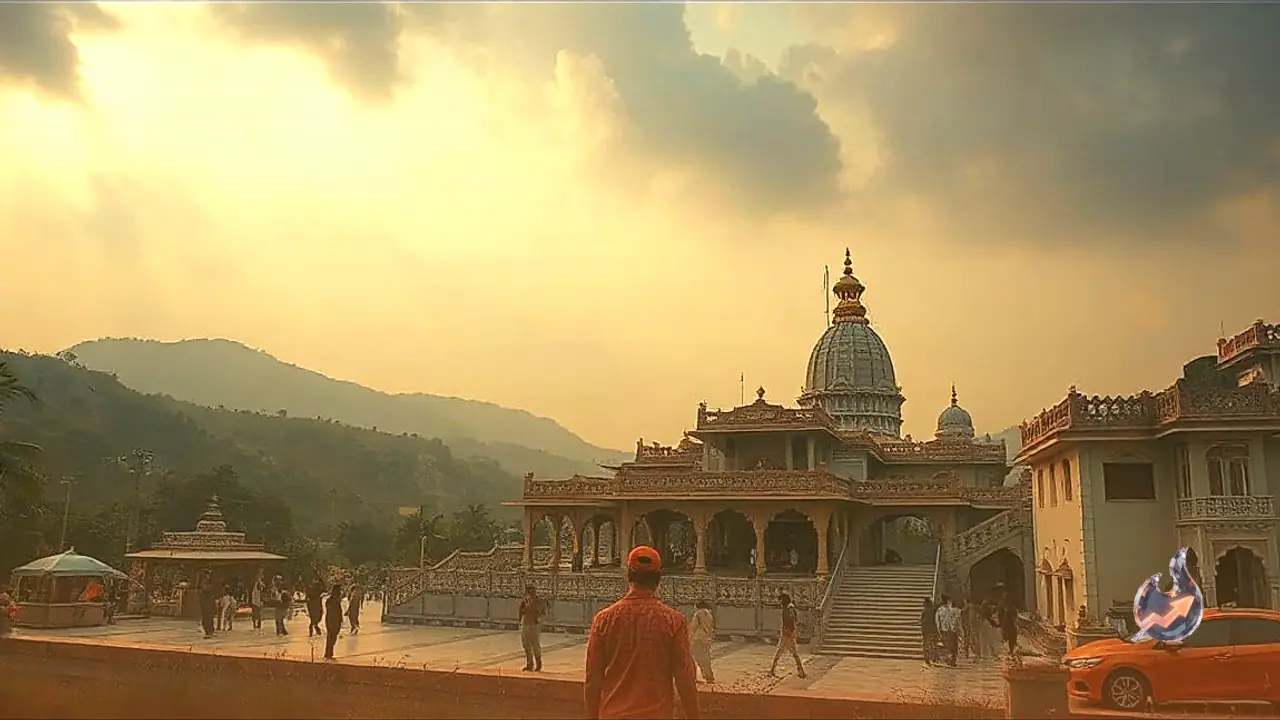























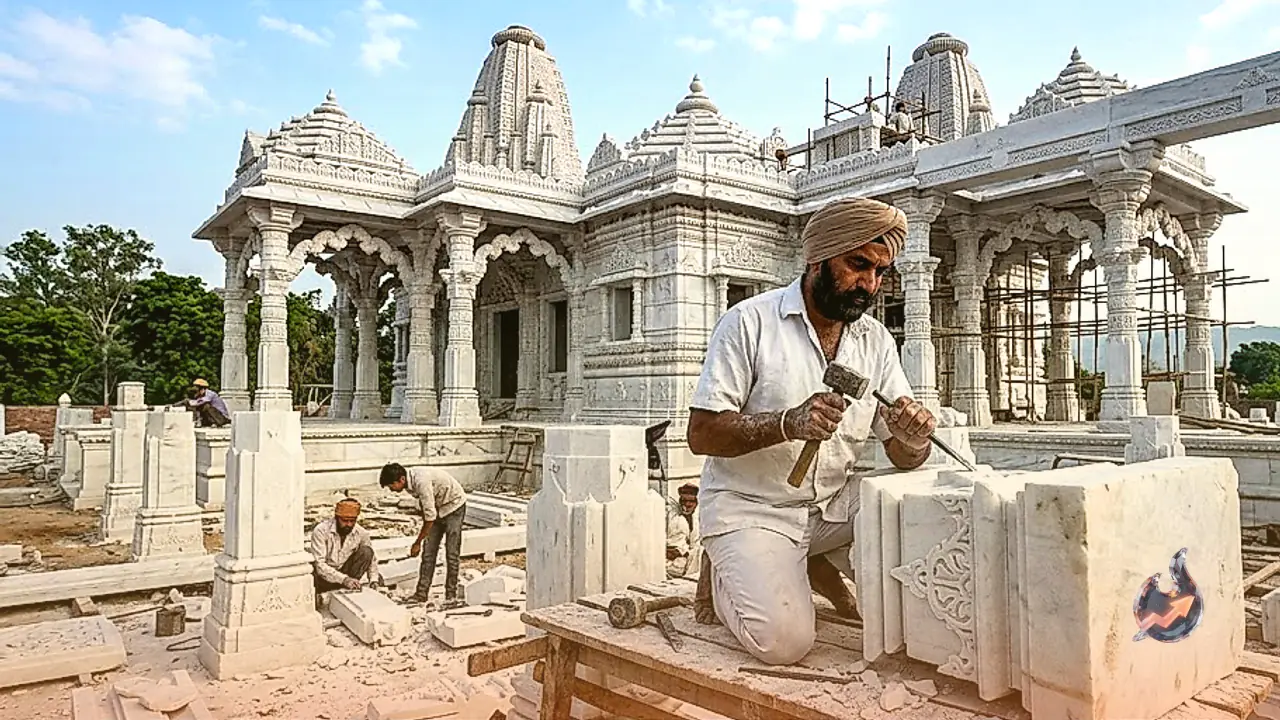

A remarkable and magnificent Jain temple is currently taking shape in Ambala, featuring a construction style that sets it apart from conventional religious monuments. Spanning an area of roughly two and a half acres, this entire complex completely steers clear of modern construction materials like concrete, iron, and steel. The most striking characteristic of this ongoing project is its complete reliance on ancient architectural techniques that bypass modern metal reinforcements entirely.
Traditional arch techniques and Makrana marble
The entire structure of this sacred site is being built exclusively using premium marble stones brought directly from Makrana in Rajasthan. While contemporary buildings routinely rely on modern concrete lintels and iron rods for structural support, this temple employs the ancient Indian arch technique. In this traditional method, individual stones are meticulously interlocked with one another using specialized engineering to ensure the edifice remains sturdy and enduring for centuries. Because of this intricate and painstaking stonework, the construction process demands significantly more time, as every single component must be fitted with precision.
Vision and spiritual guidance
The conceptualization of this grand project is modeled after the mythical Vinita Nagari, which was originally built by Kuber for the first Jain Tirthankara, Lord Adinath. The construction initially commenced under the guidance and traditional blueprint prepared by Jain Muni Vijay Ratnakar Surishwar. At present, the building work is progressing at a rapid pace under the direct supervision of Acharya Shrimad Vijay Dharmadhurandhar Surishwar Ji Maharaj, with the ultimate goal of establishing a timeless masterpiece of Indian architecture for future generations.
Detailed architecture and campus layout
Temple committee member Atul Jain explained that the site is being developed not merely as a place of worship, but as a monumental heritage of religion and architecture for posterity. The primary sanctuary is being constructed across an area of approximately 500 yards. Within the sprawling complex, a total of 36 domes are being erected, beneath which the forms and statues of 108 Acharya Bhagvants belonging to the Jain tradition will be established.
Depicting sacred narratives on stone
The outer walls of the temple feature intricate stone carvings that are roughly 6 inches deep, showcasing extraordinary craftsmanship alongside the grand marble structure. Visitors and devotees will not only witness the grandeur of white marble but will also experience fine sculptural art carved directly into the stone surfaces. Additionally, the temple grounds will house an ashram, a dining hall, and various other essential amenities to cater to the comfort of pilgrims and visitors.
The walls of the complex will narrate stories and legends associated with major Jain pilgrimage sites and sacred events through detailed stone carvings. Narratives related to the Shankheshwar pilgrimage will display depictions of Lord Krishna, Balram, Lord Neminath, and Dharanendra-Padmavati. The Jirawala pilgrimage will feature sculptures portraying the dreams experienced by an Acharya and a merchant, alongside the discovery of an idol from a mountain. Similarly, the Stambhanath pilgrimage will highlight the blue jewel idol, the devotion of Nagakumars, and the emergence of an idol from the ocean.
The legend of Navkhanda Parshvanath will showcase the striking depiction of an idol breaking into nine pieces and subsequently rejoining safely. The depiction of Sammed Shikhar will illustrate the Nirvana of Lord Parshvanath and the arrival of Acharyas via the skies. The narrative tied to the Antariksh pilgrimage will capture the tale of an idol made of sand under Ravon's command turning adamantine. The exterior portions of the structure will be adorned with royal processions featuring kings and queens, while the rear wall will feature a special sculpture dedicated to Kalikund Parshvanath. Ongoing since 2011, this ambitious architectural endeavor stands as a tribute to classical Indian artistry.