























In the agricultural fields, village grounds, household courtyards, gardens, and along the public roadsides of Gonda district in Uttar Pradesh, Doob grass is frequently dismissed as a useless weed and cleared away. However, this ordinary-looking vegetation holds a highly respected position in the ancient traditional system of medicine and Ayurveda. Botanically designated in scientific literature as Cynodon dactylon, this resilient perennial grass is known locally across diverse cultural regions of India as Durva or Doob. Beyond its broad therapeutic applications, Durva carries immense sacred value in traditional Hindu rituals, religious ceremonies, and worship procedures.
Role of Doob Grass in Traditional Medicine and Ayurveda
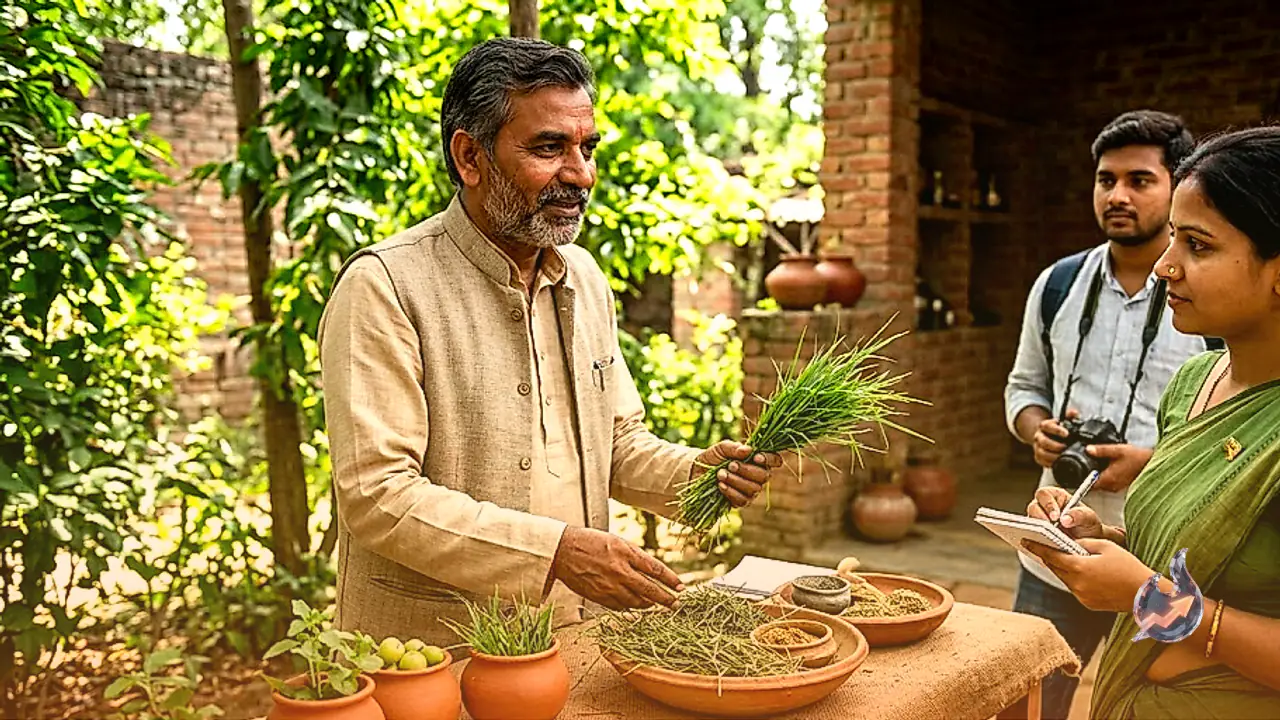
According to Vaidya Vishnu Dutt Prajapati, a practitioner of traditional healthcare in Gonda district, Doob grass has been actively utilized for centuries in Ayurvedic and folk medicine to manage a variety of physical ailments. According to traditional medical concepts, the grass functions primarily as an internal cooling agent for the human body, an aid in checking hemorrhage, and a supportive natural herb for healing external wounds and abrasions. Vaidya Vishnu Dutt Prajapati firmly emphasizes that despite these documented traditional benefits, individuals must never attempt to use this plant for self-medication or disease treatment without consulting a qualified medical expert.
Traditional Usage in Bleeding Control and Epistaxis Management
In Ayurvedic principles and rural healing practices, Doob grass is prominently cited as a traditional remedy for epistaxis, commonly referred to as nosebleeds. There is a long-standing belief that the plant inherently contains natural hemostatic properties capable of checking blood flow and assisting in blood coagulation. Consequently, rural communities across northern India have historically resorted to applying fresh, thoroughly cleaned leaf extracts of Doob during sudden occurrences of nasal bleeding.
However, modern health professionals and clinical experts caution that recurring episodes of nosebleeds should never be dismissed as minor or temporary issues. Frequent epistaxis can be an indicator of significant underlying health problems, such as systemic hypertension or vascular fragility. Under such circumstances, relying exclusively on home remedies or traditional folk practices rather than seeking a thorough clinical diagnosis from a medical doctor presents serious health risks.
Applications in Skin Irritations, Wounds, and Healing Traditions
Doob grass has also been traditionally used in the preliminary care of minor cuts, abrasions, and superficial skin wounds. In numerous rural communities, an established folk practice involves crushing clean parts of the plant and applying the resulting paste directly to affected skin areas. The underlying rationale for this practice stems from the belief that the plant possesses natural restorative elements that support skin tissue repair.
Nevertheless, medical practitioners and Ayurvedic experts issue strong warnings regarding open or deep wounds. Applying raw plant juices or unsterilized pastes onto open wounds without clinical guidance is extremely dangerous. Exposure to soil particles, dust, or contaminated plant surfaces can easily introduce pathogens into the open tissue, drastically elevating the risk of severe bacterial infections. Proper scientific wound cleansing and clinical evaluation must always take priority.
Effects on Body Inflammation and Gastrointestinal Health
Classical Ayurvedic literature credits Doob grass with anti-inflammatory properties, recommending its application to reduce swelling across various body parts. In modern scientific research, studies conducted on Cynodon dactylon have also explored the presence of bioactive compounds that exhibit potential anti-inflammatory actions. While these studies support its multi-purpose reputation in traditional medicine, experts stress that individuals suffering from chronic or persistent swelling must seek a medical diagnosis to identify the root cause rather than attempting self-treatment with herbal remedies.
Furthermore, traditional healing methods incorporate Doob grass in managing certain digestive tract issues. Rural remedy formulations have historically included the herb in traditional decoctions aimed at regulating digestive functions and soothing gastrointestinal discomfort. However, if a patient exhibits severe symptoms such as intense abdominal pain, continuous vomiting, persistent diarrhea, or gastrointestinal bleeding, immediate medical evaluation at a hospital is mandatory rather than experimenting with household preparations.
Cooling Thermal Nature and Critical Usage Precautions
In Ayurvedic medical principles, Doob grass is categorized as possessing a cooling thermal property (Sheetal Prakriti). Due to this cooling characteristic, traditional summer drinks and herbal formulations have historically included Doob extracts to help regulate body temperature and mitigate excess internal heat. In rural society, it remains widely recognized as a natural thermal regulator for the body.
Vaidya Vishnu Dutt Prajapati clarifies that because every human body possesses a distinct constitution and metabolic profile, the effects of any herbal remedy will naturally vary from person to person. Therefore, vulnerable populations, including pregnant women, young children, elderly persons, and individuals with chronic medical conditions, must strictly refrain from consuming Doob grass preparations without expert guidance.
Essential Guidelines on Hygiene, Dosage, and Medication Interactions
Using Doob grass as a blanket remedy for various diseases without comprehensive knowledge can pose serious risks to human health. Botanical compounds present in plants exert real physiological effects on the human body. Critical factors such as the harvesting environment, freedom from chemical contamination, thorough hygienic washing, and exact dosage controls must be rigorously observed before any application.
Ingesting raw Doob juice or concentrated herbal decoctions on a regular basis without professional consultation is unsafe. Individuals who are already taking prescription medications for existing medical conditions or dealing with chronic illnesses must exercise heightened caution and obtain explicit approval from their attending physician prior to starting any herbal intervention.